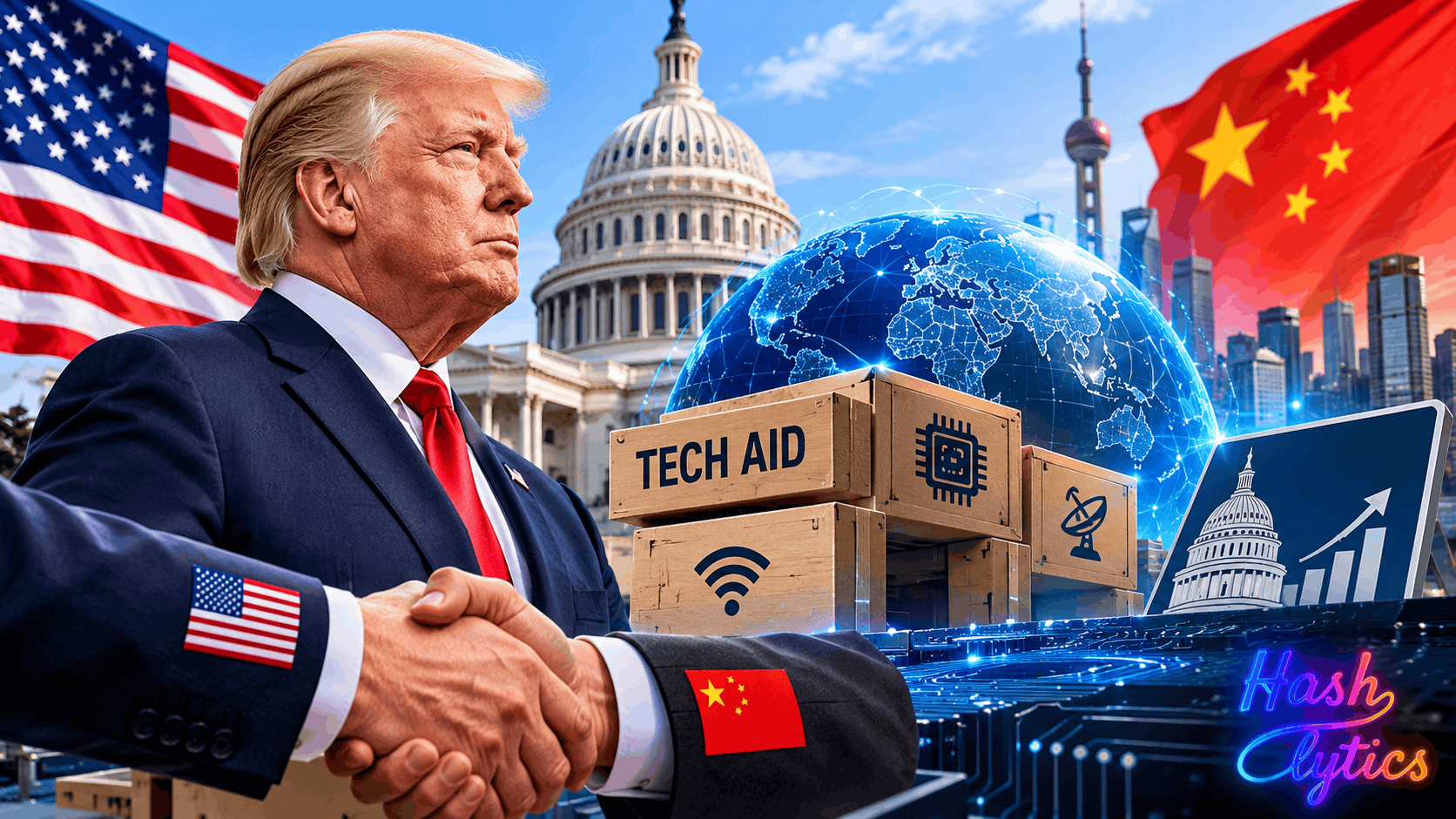
The replacement leans on export credits and traditional lending through vehicles such as the America First Opportunity Fund and National Security Investment Programs. The bet is that financing closes deals faster than ecosystem building ever did.
The timing is awkward, because price is not the only thing foreign buyers are weighing. Many are looking for alternatives to American cloud services and AI models out of concern that access could be cut off without warning. Reports around Starlink and the abrupt termination of access to Anthropic models have fed that worry. Partners fear Washington could pull a digital kill switch through export controls or executive orders, and Microsoft has reported wider international uptake of alternatives such as the Chinese model DeepSeek.
Beijing Is Still Writing the Bigger Checks
China has spent far more on technology deployment abroad than the United States. Between 2000 and 2023 it put $2.2 trillion into 30,000 projects across 217 countries, roughly $1.50 for every dollar Washington provided. That money shows up in procurement. Vietnamese operators signed about $43 million in equipment contracts with Huawei and ZTE.
Analysts say US agencies are poorly placed to respond because they lack data on how competitors finance these deals. Their proposed fix has three parts:
- Rebuild data collection so agencies can see where state-backed Chinese financing carries the most weight
- Pair intelligence inputs with commercial metrics, so public lending backs deployments that can last
- Have the State and Commerce Departments work with industry groups to explain data sovereignty rules such as the CLOUD Act to foreign buyers
Greg Francis and Trevor Rudolph argue that none of this lands unless American suppliers can show reliable local governance and stable data residency options. In their view, transparent data policies and long-term commercial engagement are what close contracts abroad.
Hashlytics Take
Export credit solves a financing problem, and financing is not what is slowing American vendors down. A buyer worried about a kill switch is pricing political risk, and a cheaper loan does not change that risk. It may even make the choice sharper, since a heavily financed contract is one the buyer can least afford to see interrupted. The grant programs that were cut were slow and diffuse, but they were also the part of the American offer that looked like a long-term relationship rather than a sale. Washington can sell on credit, but the buyers who matter most are asking for guarantees about continuity, and a lending program cannot supply those. Until the US says plainly what it will and will not do with access to cloud and AI services once they are sold, Huawei, ZTE and DeepSeek will keep winning on certainty even where they lose on reputation.
Follow Hashlytics on Bluesky, Facebook, LinkedIn , Telegram and X to Get Instant Updates