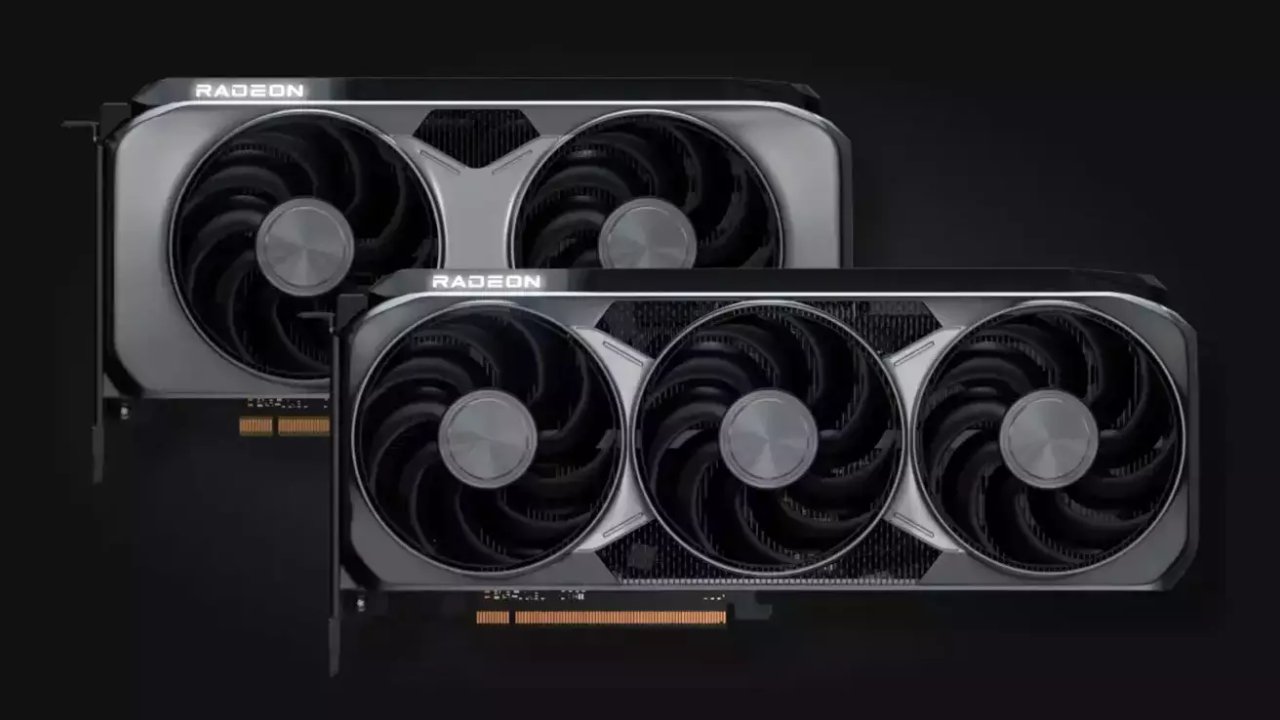
Firmware patches do not grab headlines the way benchmark leaks do, but they are crucial clues in any hardware release cycle. Graphics hardware requires display, power management, compute, and driver infrastructure to all be in place before products reach consumers. AMD pushing these components upstream suggests advanced enablement work is already underway for its upcoming mobile GPUs, which makes the rumored Radeon RX 8000M series considerably more interesting. If AMD follows its historical patterns, these early patches point toward a launch sometime in the fall or winter window.
Why Efficiency Matters More on Laptops Than Desktops
RDNA 4M is not simply a ported version of the desktop architecture. Mobile GPUs operate under strict thermal and power limits, and every watt has to deliver useful performance in that constrained environment.
Desktops can lean on larger coolers or louder fans to push more power through a card. Laptops do not have that luxury. The GPU shares a fixed thermal envelope and battery capacity with the CPU, so sustained performance depends on a careful balance of temperature, noise, and battery life.
This is where RDNA 4’s architectural priorities line up well with what notebooks actually need. AMD has focused on improving hardware ray tracing while also boosting power efficiency, and ray tracing has traditionally carried a steep performance and power cost. Efficient dedicated hardware becomes critical for mobile gaming in a way it simply is not for desktop rigs. If RDNA 4 can deliver stronger ray tracing without a proportional jump in power draw, AMD has a genuinely compelling architecture for premium gaming notebooks.
The Real Fight Is Over OEM Design Wins
Building a competitive GPU is only half the battle. AMD’s bigger hurdle is securing design wins in enough laptops to matter. NVIDIA holds a dominant position in the gaming notebook market, and GeForce remains the default choice across the vast majority of systems.
Major manufacturers like ASUS, Lenovo, and MSI have years of experience building around GeForce GPUs, and consumers are equally familiar with NVIDIA’s software and features. That familiarity creates a difficult cycle for AMD to break:
- Fewer Radeon laptop designs mean fewer chances to prove competitive performance
- Limited visibility reinforces OEM and consumer preference for GeForce
- Breaking that cycle takes more than a single strong GPU generation
The early RDNA 4M firmware push indicates AMD understands that software enablement has to come before hardware availability. Getting Linux support out early gives developers and OEM engineers time to prepare, which hints at a broader hardware initiative rather than a single isolated product launch.
What Could Actually Sway Manufacturers
A technically impressive Radeon GPU means little if it only shows up in limited, expensive laptop configurations. AMD needs to convince OEMs that RDNA 4M offers commercial appeal that goes beyond spec sheets, and power efficiency could be the strongest argument it has.
Laptop manufacturers are constantly trying to shave down system thickness, control fan noise, and stretch battery life further. A GPU that delivers more gaming performance within a fixed thermal envelope gives OEMs real design flexibility to work with, not just marginally better frame rates.
Of course, the GPU itself is only one piece of the puzzle. Strong ray tracing, efficient rasterization, competitive upscaling, capable media engines, and mature drivers all shape the overall laptop experience. NVIDIA’s advantage extends well beyond raw GPU performance too, built on years of software development, OEM relationships, and platform technologies like DLSS. RDNA 4M needs to give both manufacturers and consumers a genuinely clear reason to pick Radeon over the incumbent.
Hashlytics Take
AMD has had competitive mobile silicon before and still lost the laptop shelf space war to NVIDIA’s ecosystem lock-in. The firmware timing here matters less as a performance signal and more as a seriousness signal. Pushing Linux support upstream months ahead of launch is what a company does when it actually expects OEMs to commit engineering resources, not just evaluate a reference design and pass. Whether that translates into shelf space still comes down to whether AMD can get ASUS, Lenovo, and MSI to build flagship configurations around it, not just budget ones.
Follow Hashlytics on Bluesky, Facebook, LinkedIn , Telegram and X to Get Instant Updates