David Vernet, a Linux kernel engineer at Meta, has been developing and presenting patches specifically focused on gaming workloads. He detailed the work recently at the Linux Plumbers Conference in Prague.
Frame Rates Up by as Much as 31%
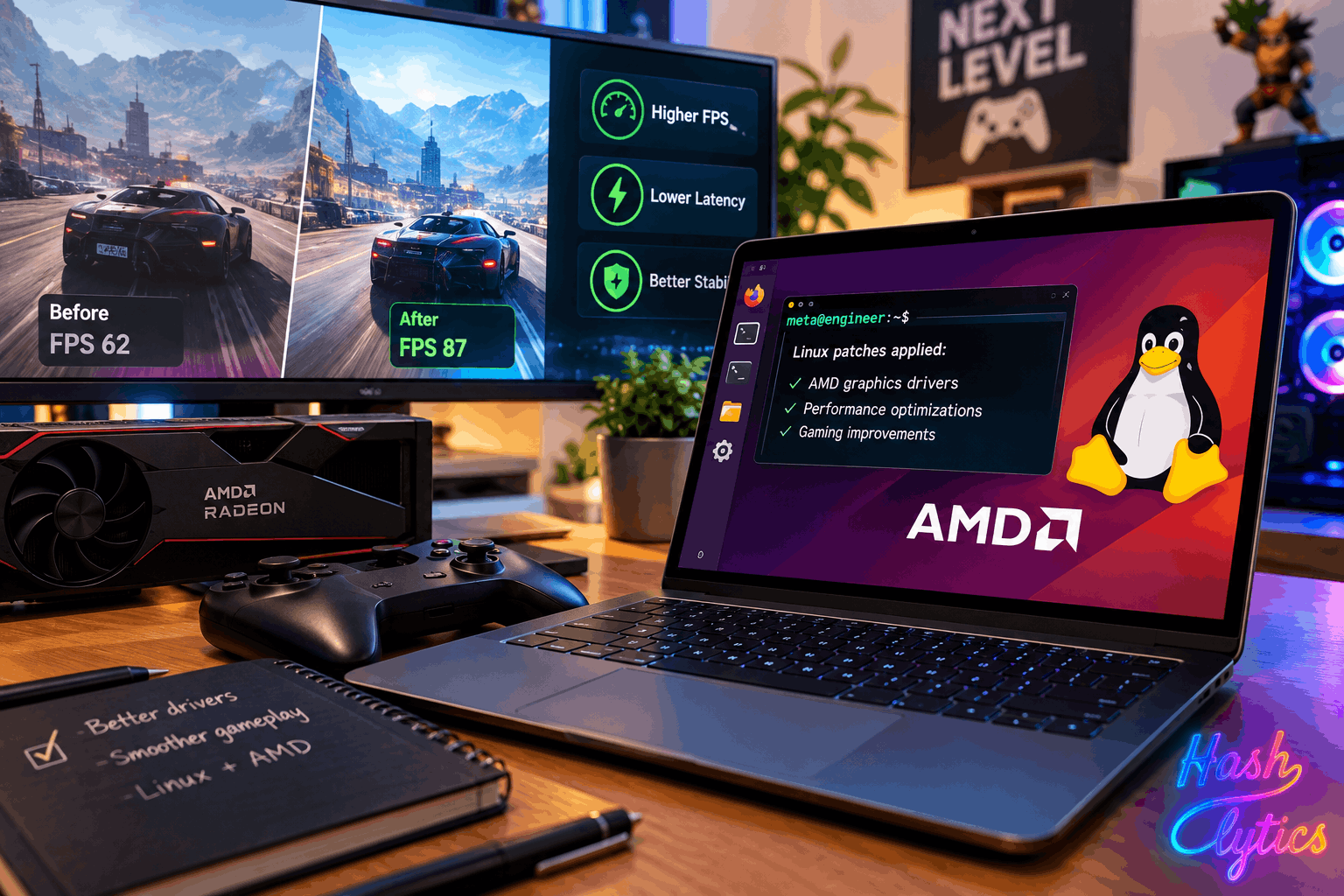
Earlier reports from July already hinted at the scale of impact here. Vernet’s initial patches showed improvements in 1% low frame rates of up to 31%, a figure that matters because that metric is one of the clearest indicators of how smooth a game actually feels during demanding moments, not just how high the average frame rate climbs.
The core of Vernet’s proposal is a per-CPU Energy Performance Preference (EPP) boost heuristic that targets recently busy CPU cores. It is designed to outperform the stock EPP behavior baked into the AMD P-State driver, with a specific focus on tightening frame time tails and reducing load times.
From Driver Tweak to Governor-Level Change
Initial code review pushed the idea further than originally scoped. Reviewers suggested evolving the fix from a simple driver heuristic into a governor level mechanism, with the new proposal favoring a dynamic governor to drive EPP behavior instead.
Discussions around the patches have also opened the door to integrating thread hints with Wine and Proton, which would allow further optimization specifically for the compatibility layers most Linux gaming already depends on.
- Targets AMD P-State driver performance on gaming workloads
- Up to 31% improvement in 1% low frame rates
- Proposal shifting from driver level to governor level implementation
- Potential Wine and Proton thread hint integration
Where This Leaves Steam Deck Owners
Devices built around AMD hardware, Steam Deck chief among them, stand to see the benefit first and most directly once these changes land. The goal is a gaming environment on Linux that feels more consistent and responsive rather than one that occasionally stutters under load.
Michael Larabel of Phoronix, who founded the site in 2004 to document and improve the Linux hardware experience, has covered these developments closely. Those wanting the technical deep dive can find the full presentation assets on lpc.events, and Larabel’s ongoing coverage is available on Twitter or LinkedIn.
Code review on the patches continues, with Vernet’s shared results pointing to gains on both the power efficiency and raw performance side. The end goal remains full integration into the Linux kernel for broader, default adoption rather than something gamers need to patch in manually.
Follow Hashlytics on Bluesky, Facebook, LinkedIn , Telegram and X to Get Instant Updates