What’s Being Added
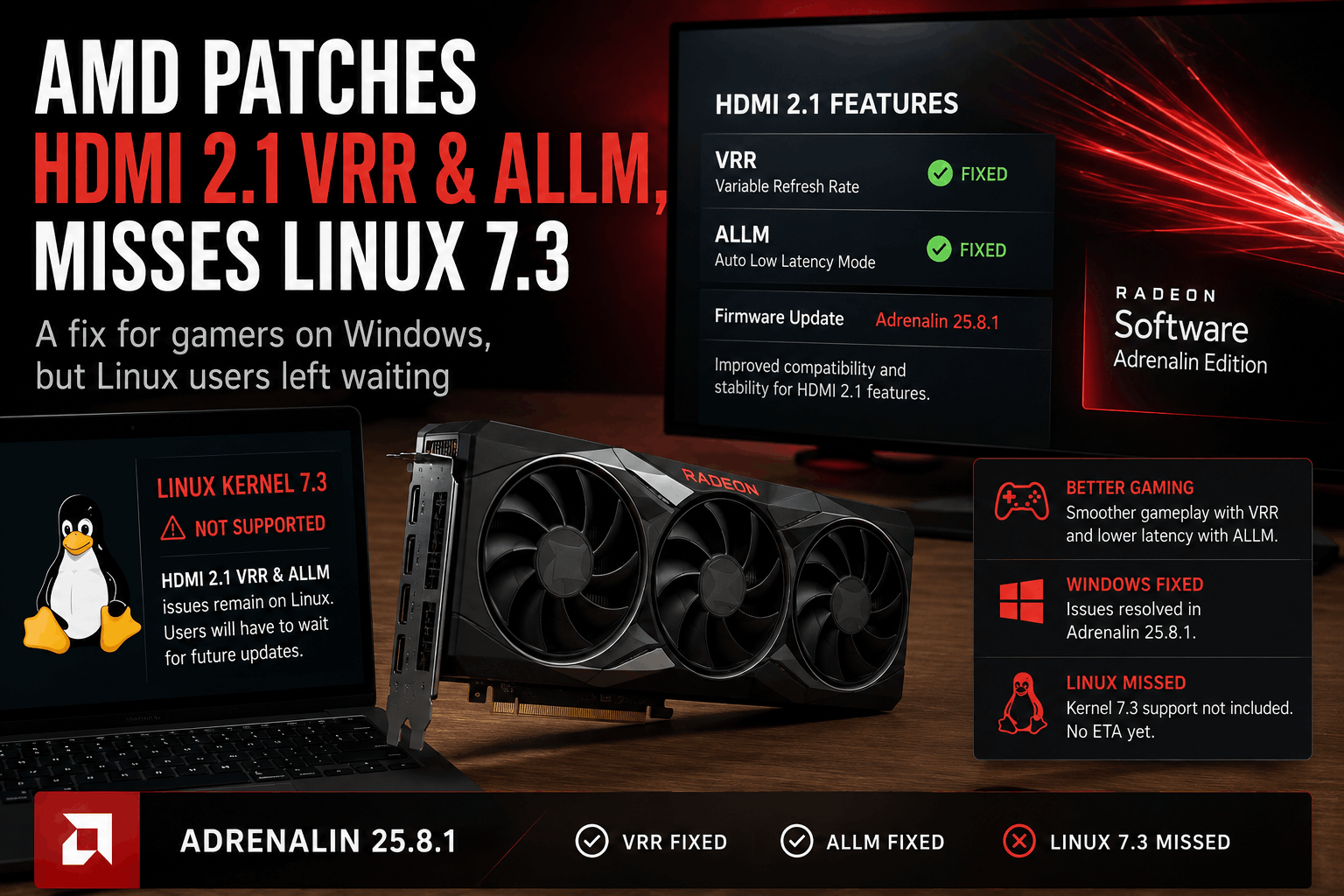
AMD’s new patches introduce full HDMI 2.1 VRR and ALLM support to the open-source Radeon graphics driver. Both features derive from the HF-VSDB gaming capabilities standard.
This matters because these aren’t cosmetic updates. VRR synchronizes your monitor’s refresh rate to your graphics card’s output, eliminating screen tearing during gameplay. ALLM automatically reduces input lag when gaming is detected. Together, they’re what separates a gaming-capable display from a basic one.
These patches build on existing drm/edid work and represent the second iteration of the implementation, including minor code improvements and restructuring.
The Timing Problem
Here’s where the story takes a turn. AMD sent out its final feature pull request for Linux 7.3 to DRM-Next yesterday. The DRM-Next merge window cutoff arrives this week, which means there’s no time to queue the new HDMI 2.1 code in time for the kernel’s release in the second half of August.
The patches will apply against the latest amd-staging-drm-next Git state but won’t make the Linux 7.3 merge window. For users waiting on these features, that means a one-cycle delay.
When Linux Users Will Get This
Full VRR and ALLM support is now targeted for the Linux 7.4 kernel cycle. That timeline would bring the features to users by the end of the calendar year.
While one cycle might sound trivial to casual observers, Linux kernel development moves fast. Missing a cutoff by a single merge window means users have to wait roughly two months for the next window. For open-source enthusiasts and Linux gamers who’ve been waiting for complete HDMI 2.1 support in the Radeon driver, that’s meaningful.
What’s Already Working
This isn’t starting from zero. Fixed Rate Link (FRL) support for HDMI 2.1 is already part of the Linux kernel. The new patches simply complete the picture by adding the gaming-specific features that make HDMI 2.1 actually useful for modern displays and gaming setups.
Once Linux 7.4 lands, AMD’s open-source Radeon driver will finally have full HDMI 2.1 support across all the features that matter for gaming. That’s a significant milestone for a driver that’s steadily become more feature-complete over the past few years.
Follow Hashlytics on Bluesky, Facebook, LinkedIn, Telegram and X to Get Instant Updates