What Changes on October 9
Anyone using the Gemini app without a paid subscription will be limited to Gemini 3.5 Flash-Lite, losing access to the heavier Flash and Pro models previously available. Google’s $4.99 a month AI Plus plan also loses its top model, Pro.
Only the $19.99 AI Pro plan retains access to all three models. It also adds Deep Think, a feature that processes multiple lines of reasoning concurrently and was previously exclusive to Google’s most expensive tier.
For Plus subscribers, the loss of Pro access rolls out on an account-specific basis rather than all at once. Google says it will notify users of their individual cutoff dates by email. Full details are available on Google’s official announcement.
Antigravity Loses Older Claude Models Too
The Gemini app isn’t the only product tightening access. On November 2, Google’s Antigravity coding platform removes Claude Opus 4.6, Claude Sonnet 4.6, and GPT-OSS-120B from its model lineup entirely.
Google is adding Claude Opus 5.5 and Sonnet 5.5 in their place, but only for Google AI Pro and Ultra subscribers. Free and Plus users are left with nothing to replace what’s being removed, since the 4.6 models were the only Claude access those tiers had.
Anyone running autonomous coding agents on the older Claude models has about a month to migrate existing prompts and workflows before the cutoff.
What This Costs Teams Relying on Free Tools
The quality of AI output will quietly decline for many free users. Teams relying on the free Gemini app for drafting emails or summarizing documents will now get responses from a noticeably weaker model, which risks lower-quality outputs reaching customers unnoticed.
Businesses now need to treat informal AI use as a real budget line item.
- Identify which employees are using free AI tools for work tasks
- Decide which of those tasks actually justify a paid subscription
- Account for the fact that $19.99 per seat adds up fast across a team
Building critical workflows on a free consumer product carries real risk, since terms, limits, and model access can change with little notice. Processes tied to customer-facing output or revenue need either a paid plan or an API with predictable pricing.
Where This Leaves Businesses
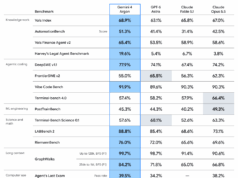
These changes strengthen the case for comparing AI vendors rather than defaulting to whichever tool is free. Competitors like OpenAI have been adjusting their own pricing structures, and GPT-6.1 Sol currently offers competitive performance at lower token costs compared to Astra.
Companies locked into a single free tier lose negotiating leverage the moment that tier shrinks. Before October 9, employees relying on the free Gemini app for work should wrap up anything requiring Flash or Pro. Plus subscribers should watch their email for their specific Pro cutoff date, and anyone building on Antigravity’s older Claude models should start migrating before November 2.
Hashlytics Take
Two products, two deadlines, one pattern. Google is restructuring free and mid-tier access across Gemini and Antigravity at nearly the same time, and that’s not a coincidence of scheduling. Running expensive models at scale for free users has a real cost, and Google is clearly deciding that cost belongs to Pro and Ultra subscribers now, not the company. The businesses that get caught off guard here won’t be the ones using AI casually. It’ll be the ones who quietly built real workflows on free tiers and assumed free meant stable.
Follow Hashlytics on Bluesky, Facebook, LinkedIn , Telegram and X to Get Instant Updates