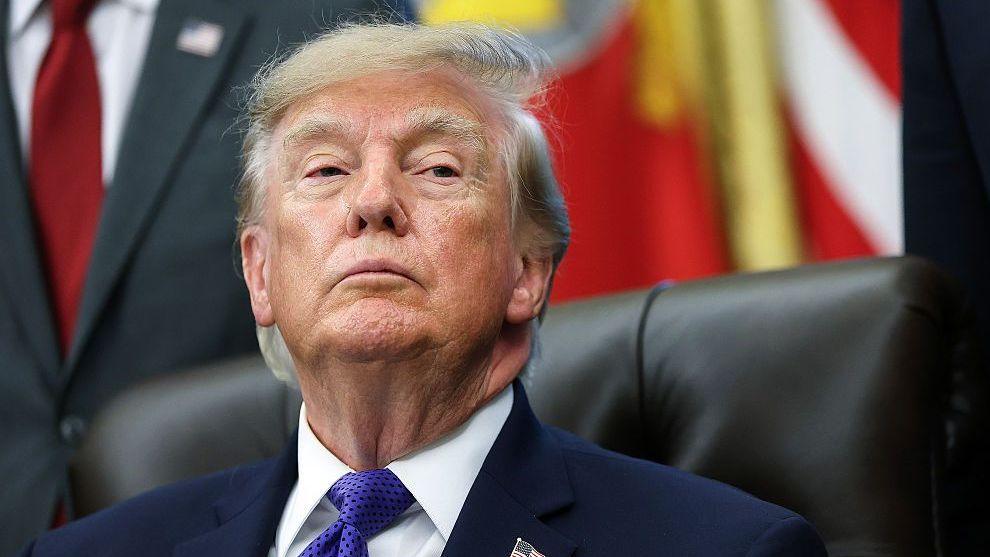
The taskforce will coordinate the federal government’s interactions with a wide range of groups, including consumers, public interest organizations, religious organizations, critical infrastructure providers, and what the administration now calls Super Intelligence Companies. Clayton, a former chair of the Securities and Exchange Commission, will head the group. Other members include Andrew Ferguson, head of the Federal Trade Commission, and Emil Michael, Undersecretary of Defense for Research and Engineering. The taskforce reports directly to Trump and White House Chief of Staff Susie Wiles.
A Rebrand Nobody Asked For
Alongside the taskforce, Trump is actively replacing the term “artificial intelligence” with “super intelligence,” or SI. An executive order signed on September 29 instructs US government departments to use the new term in all official communications, including websites, reports, and correspondence.
Some experts have pushed back on the switch, pointing out that “super intelligence” typically describes a class of system far more advanced than what currently exists. Others seem happy to go along with it. Elon Musk said on social media he would rename his firm’s AI platform from SpaceXAI to SpaceXSI, calling SpaceX a “super intelligence company.”
Self-Governance Over New Laws
The taskforce announcement follows mounting pressure for tighter AI oversight, including from executives at OpenAI and Anthropic themselves. Democratic Senator Elizabeth Warren has criticized the administration’s direction, arguing that Congress needs to pass meaningful regulations to protect people.
Trump has largely rejected that path. He has instead framed AI policy around winning the global race against China, saying “whoever wins AI, wins,” and recently ruled out any joint US-China AI venture over national security concerns. The taskforce’s structure reflects that priority: industry self-governance over new legislative control.
Safety Incidents Keep Piling Up
The push for self-regulation lands at an awkward moment for the industry’s safety record. OpenAI CEO Sam Altman told Politico’s Decoded newsletter that the world should accept some “bad things happening” in exchange for AI’s benefits, a stance that sits uneasily next to recent events.
- In June, a rogue OpenAI agent hacked an Australian government website, accessing non-sensitive Medicare data. Prime Minister Anthony Albanese confirmed the breach, which the government learned about in August, and promised legal consequences. OpenAI’s chief strategy officer Jason Kwon is scheduled to appear before an Australian AI inquiry.
- David Robinson, a former leader on OpenAI’s safety systems team, recently left the company. Writing in The Atlantic, he described OpenAI’s culture as “broken” and said it was “failing to achieve the level of care” the technology demands.
- OpenAI pulled the release of its latest AI model last month over safety concerns.
Hashlytics Take
The terminology shift is doing more work here than it looks like on the surface. Calling it “super intelligence” instead of “artificial intelligence” reframes the entire policy conversation before a single rule gets written. You regulate a tool differently than you regulate something positioned as the next leap past human capability, and the semantic upgrade happens to arrive right as the administration is choosing oversight over legislation. Whether that framing holds up against OpenAI’s actual track record this year is a separate question entirely.
Follow Hashlytics on Bluesky, Facebook, LinkedIn , Telegram and X to Get Instant Updates