-0.44%
-0.98%
-6.69%
-0.72%
+1.35%
+1.14%
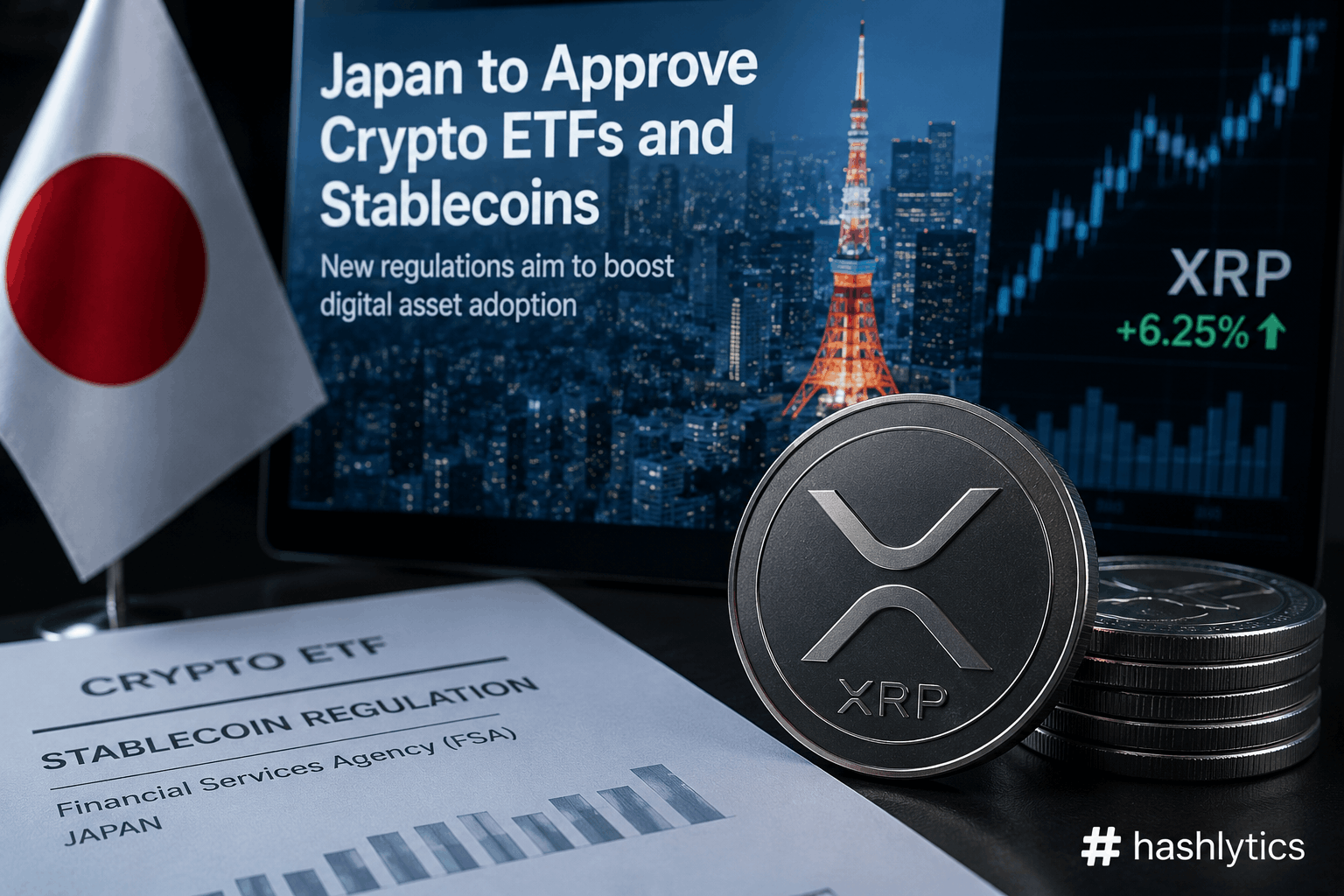
Japan is moving to formalize stablecoin settlement and crypto ETF regulations, a significant development that could reshape the digital asset landscape across Asia. On , a panel from Japan’s ruling party urged the government to expand the use of yen-based stablecoins for Asian settlement while also establishing a legal framework for crypto ETFs. This regulatory push aligns with a broader regional trend to integrate digital currencies into traditional finance and signals a move towards regulated settlement rails connecting blockchain systems directly with established financial infrastructure.
Tokyo Advances Yen Stablecoin and Crypto ETF Frameworks
The proposal aims to counter the dominance of dollar stablecoins in cross-border liquidity and foster local alternatives. Japanese banks are actively testing joint stablecoin issuance, and JPYC, a yen-pegged token, is in limited circulation within the country’s cash-heavy economy.
The Financial Services Agency (FSA) is concurrently supporting various blockchain pilots focused on internal efficiency, directing crypto innovation towards regulated financial instruments. Bank of Japan Deputy Governor Ryozo Himino has advocated for a balanced monetary system, cautioning against over-reliance on either CBDCs or stablecoins in future financial designs.
Across Asia, regulators in Japan, Singapore, and Hong Kong are tightening stablecoin rules, enforcing licensing, reserve backing, and redemption standards. This effort aims to ensure digital tokens function as regulated financial instruments, mitigating risk and improving payment efficiency. Consequently, investor and developer focus is shifting towards foundational infrastructure rather than short-term speculative trading.
XRP’s Sustained Network Activity
Within this evolving regulatory environment, the Ripple (XRP) ecosystem demonstrates consistent activity. The network processes an average of 1.83 million daily transactions and boasts 7.3 million addresses, indicating sustained network usage. The stablecoin value on XRPL has surpassed $760 million, with active addresses remaining near 35,000, according to DeFiLlama data.
Beyond on-chain activity, Brinc and Ripple are actively funding startups in Hong Kong developing payment and settlement tools built on XRPL. This institutional investment signals confidence in XRP’s role within the emerging Asian payment infrastructure.
Market Dynamics and Leverage Pullback
XRP’s Open Interest across major exchanges has seen a pullback following earlier spikes. On Bybit, positions sharply declined by 36 percent, falling from a May peak of $283 million to approximately $181 million. This reduction reflects deleveraging during a recent market sell-off and long liquidations, according to CryptoQuant data.
In contrast, Binance has maintained relative stability, with XRP Open Interest easing only slightly to $246 million, a mere 2.4 percent below its June high of $252 million. This positions Binance as a dominant platform for XRP futures activity. Recently, XRP rebounded above $1.14 after a dip to $1.055, posting gains exceeding 8 percent.
What’s Next for Regulated Digital Assets
Japan’s proactive steps to integrate yen-based stablecoins and crypto ETFs into its financial system underscore a broader regional commitment to regulated digital assets. This acceleration of Asian regulation is poised to further integrate XRP into institutional settlement systems and broader blockchain infrastructure.
The market dynamics reflect a dual trend: a flush of leverage on one side while elevated positioning on the other could influence XRP’s next directional move. As regulatory frameworks solidify across the region, the focus shifts from speculative trading to practical infrastructure deployment for cross-border payment and settlement.
Follow Hashlytics on Bluesky, LinkedIn, Telegram and X to Get Instant Updates