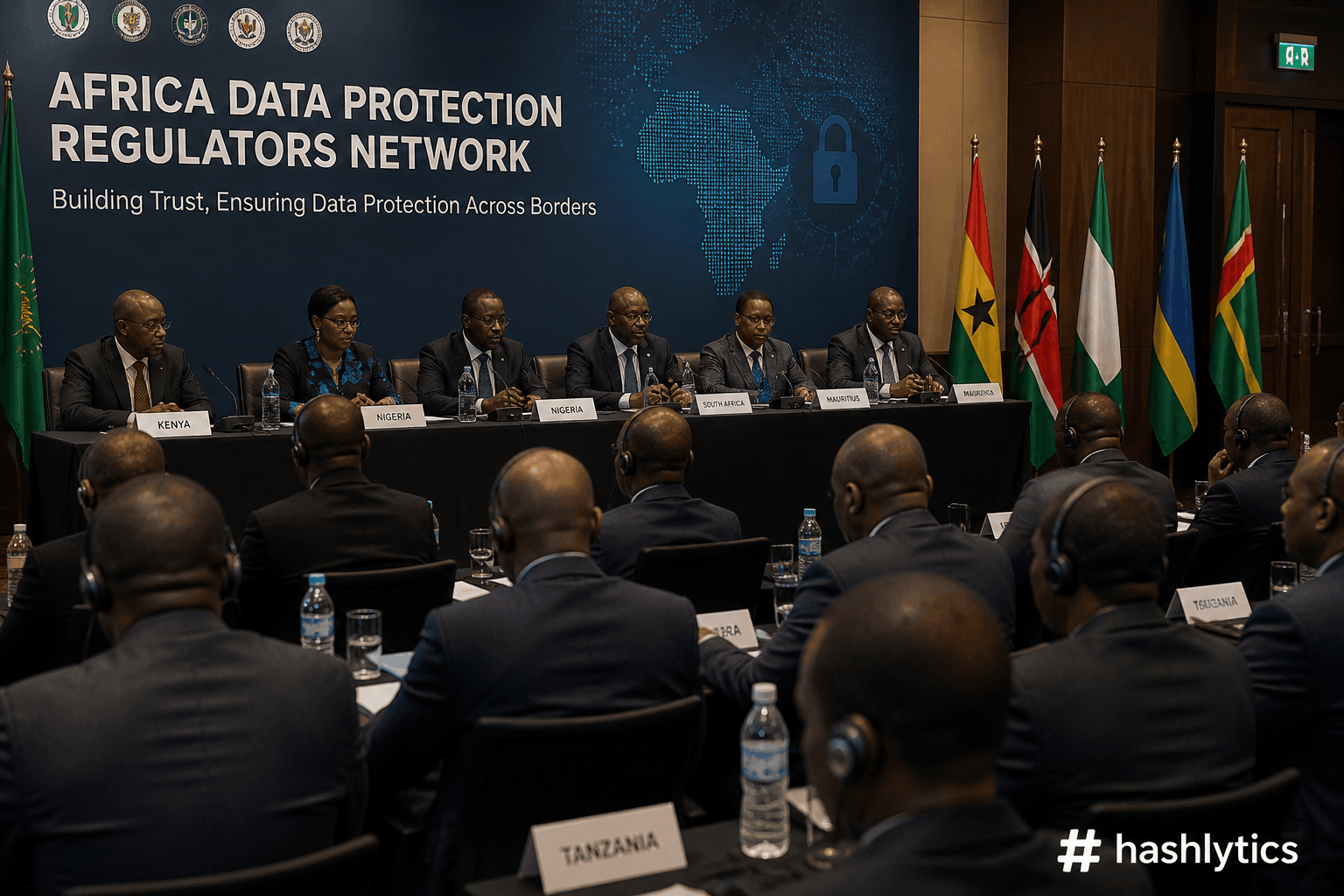
Nine African Nations Converge on Data Governance Standards
The Nigeria Data Protection Commission is leading the engagement in partnership with the World Bank and Smart Africa. Regulators from The Gambia, Burundi, Sierra Leone, Somalia, Liberia, Malawi, Zambia, Ethiopia, and Kenya are participating alongside regional bodies including the Economic Community of West African States, Economic and Monetary Community of Central Africa, and Intergovernmental Authority on Development.
The gathering represents a coordinated push to harmonize data governance across the continent. It reflects growing recognition that digital economies require interoperable regulatory ecosystems, particularly as trade intensifies under the African Continental Free Trade Area framework.
Nigeria’s Regulatory Blueprint Becomes Continental Reference
NDPC National Commissioner Vincent Olatunji highlighted Nigeria’s progression from legislation to operational implementation. He credited the Data Protection Act signed by President Bola Tinubu in 2024 as foundational to building a structured regulatory ecosystem that now serves as a model for peer nations.
Olatunji emphasized Nigeria’s development of indigenous digital tools for registration, licensing, and compliance monitoring. These homegrown solutions strengthen data sovereignty while reducing dependency on external platforms, he explained, addressing a critical gap in Africa’s digital infrastructure.
Cross-Border Data Transfer Emerges as Central Challenge
The engagement prioritizes safe personal data movement across national boundaries with enforceable legal safeguards. Olatunji stated that establishing trust mechanisms and protective frameworks is essential as African economies deepen integration under continental trade agreements.
Senior Counsel at the World Bank, Elena Gasol, reframed the continent’s data protection challenge. She noted that Africa’s regulatory bottleneck is no longer the absence of laws but rather the capacity to enforce them consistently and develop institutional maturity. The programme functions as a practical peer-learning platform rather than theoretical training, enabling regulators to exchange real-world enforcement experiences and institutional strategies.
Enforcement Readiness Becomes Africa’s Next Regulatory Frontier
The convergence signals a maturation phase in African data governance. While legislative frameworks have proliferated across the continent, regulators now confront the operational challenge of sustaining enforcement amid resource constraints and jurisdictional complexity. Success hinges on whether peer-learning mechanisms translate into concrete enforcement capacity and whether harmonized standards gain adoption across nations with varying institutional capabilities.
Follow Hashlytics on Bluesky, LinkedIn , Telegram and X to Get Instant Updates