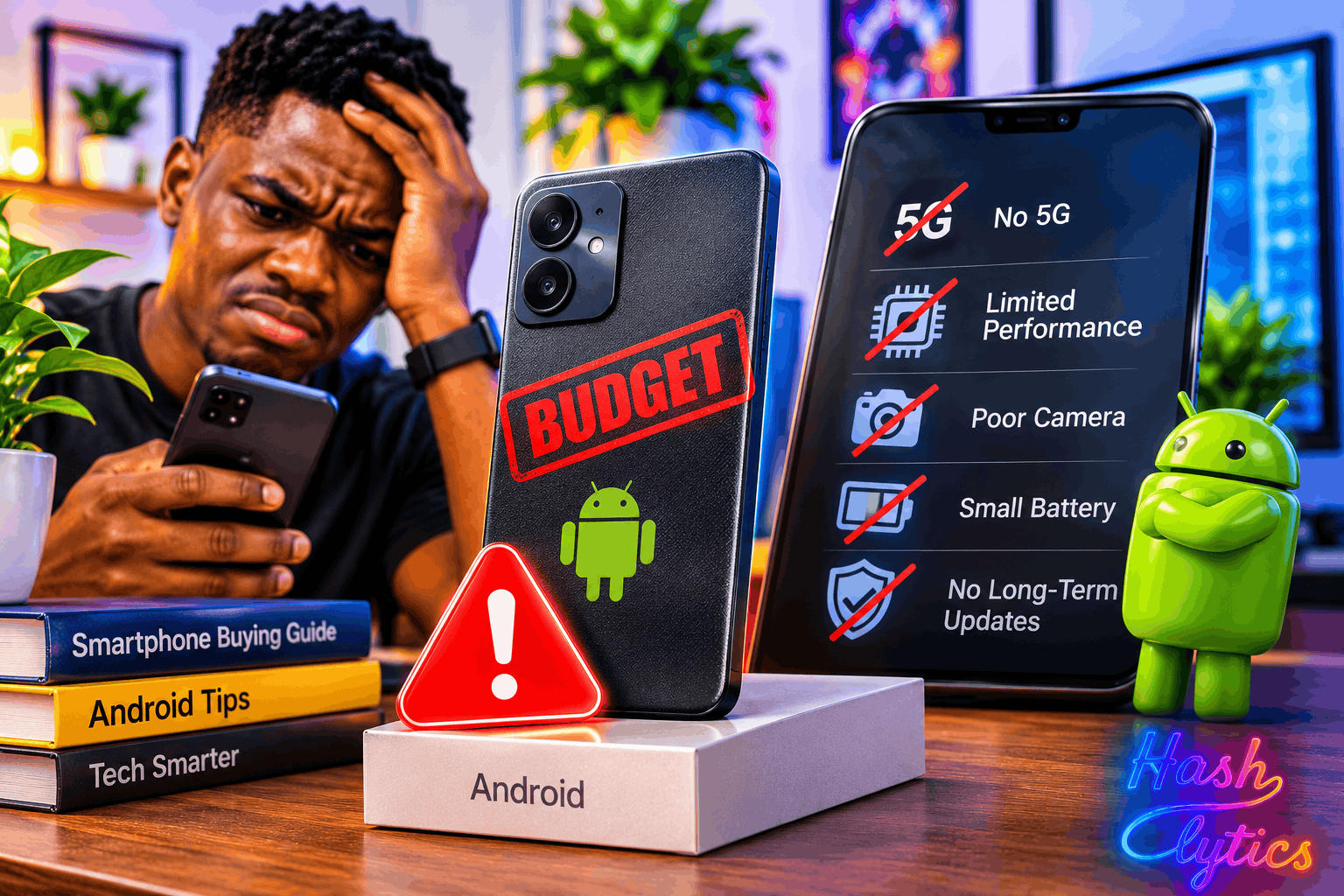
- RAM: 6GB or more, with 4GB as the bare minimum
- Wired charging: at least 25W
- Software support: long-term security patches, ideally seven years
4GB of RAM Is a Floor, Not a Target
RAM is your phone’s short-term workspace. It decides how many apps the device can keep alive at once, and a low count is the fastest route to a sluggish phone. Google will require at least 4GB of RAM for devices to run Google Mobile Services starting in 2025, which covers essentials like the Google Play Store. That makes 4GB the entry ticket rather than a recommendation.
For smoother multitasking, aim for 6GB or more. That gives you headroom to juggle a WhatsApp call and rideshare tracking without the phone dropping either. Samsung’s Galaxy A27 offers 6GB at an MSRP of $380, while Motorola’s Moto G Power steps up to 8GB for $400.
Big Batteries Mean Little Without Fast Charging
Budget phones increasingly carry flagship-sized batteries. The Galaxy A27 and the Galaxy S26 Ultra both pack 5,000mAh cells, for instance. But capacity only tells half the story. How quickly the phone refills matters just as much when you need a top-up in the middle of a busy day.
A sensible baseline is a minimum wired charging speed of 25 watts. The Galaxy A27 charges at 25W and takes about 90 minutes to reach full. The Nothing Phone (4a) Pro, at $499, supports 50W and can fill a similar battery in roughly an hour. At the other end, the $200 Moto G Play manages only 18W, which is the kind of slow rate worth avoiding.
Update Policy Is Where Brands Split
Regular security patches are non-negotiable for smartphone safety. A phone that no longer receives updates stays exposed to newly discovered threats, however well it runs.
Google and Samsung lead here. Pixel phones from the Pixel 8 series onward receive seven years of monthly OS and security updates, counted from release, and most Galaxy phones made after 2024 qualify for seven years as well. Motorola trails, typically offering two years of OS updates and three years of security patches on its non-foldable devices. Reviewers have also noted that those updates sometimes arrive late.
Hashlytics Take
RAM and charging speed are printed on the box. Update length usually is not, and it is the spec that quietly decides how long the phone stays safe to use. A $200 phone with three years of security patches and a $380 phone with seven are not really competing on price. One of them has to be replaced far sooner, so judge budget Android phones on cost per supported year, not on the number on the tag.
Follow Hashlytics on Bluesky, Facebook, LinkedIn , Telegram and X to Get Instant Updates