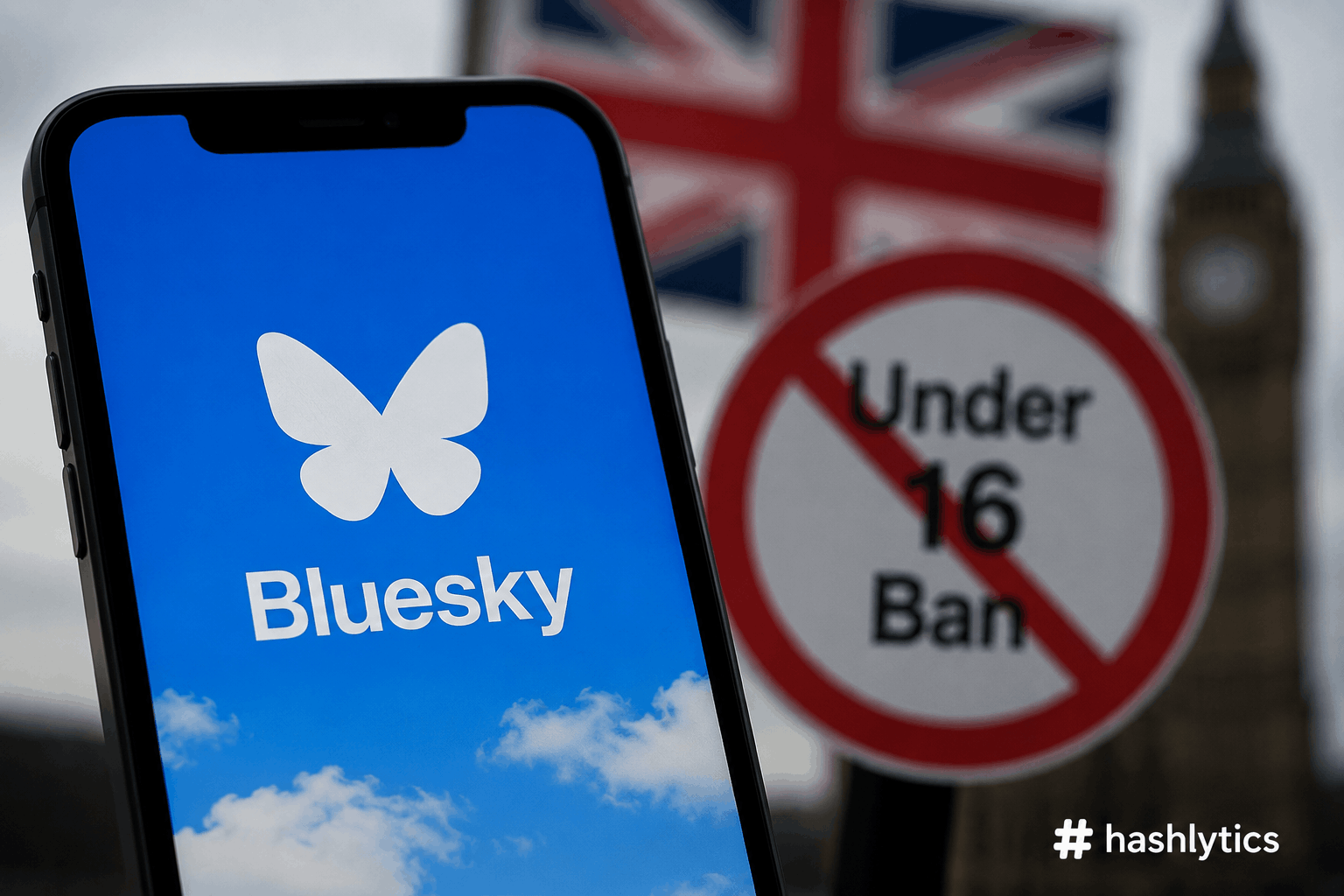
Bluesky will not fall under the UK’s planned under-16 social media restrictions, according to reporting that emerged this week as the government’s Children’s Wellbeing and Schools Act 2026 moves toward implementing age or functionality limits for minors. The exemption sits awkwardly alongside Keir Starmer’s separate ultimatum to Apple and Google over device-level nudity controls, raising the same question that dogged Australia’s earlier rollout: who decides which platforms count as social media, and on what basis.
What Platforms Are Actually Affected
New reporting names ten platforms set to fall under the UK’s under-16 restrictions: TikTok, YouTube, Snapchat, Instagram, X, Reddit, Facebook, Twitch, Kick, and Threads. Bluesky’s absence from that list, despite functioning similarly to X and Threads in structure and use, is the gap drawing scrutiny.
Australia’s blanket ban, in force since December 2025, applies to TikTok, Instagram, Snapchat, X, Facebook, and YouTube, with fines up to 49.5 million Australian dollars for non-compliance. Wizz and Lemon8 were added to the restricted list through 2025 and early 2026, each set to enforce a minimum age of 16. Match Group services including Tinder, Hinge, and OKCupid confirmed they meet the criteria but apply an 18+ floor instead.
Bluesky’s position is more complicated. Australia’s eSafety Commissioner lists Bluesky as an age-restricted platform applying a 16+ minimum for Australian account holders, notified in November 2025. Yet UK reporting now suggests Bluesky sits outside the under-16 restrictions Westminster is preparing. The platform’s chief operating officer told CNBC that blanket bans risk entrenching Big Tech’s dominance, since smaller entrants like Bluesky lack the compliance infrastructure larger rivals can absorb. Whether that argument, rather than a functional distinction, explains any UK exemption remains unclear.
The exemption has also drawn criticism from commentators who allege it reflects political favoritism rather than child safety logic, pointing to Bluesky’s left-leaning user base relative to platforms like X. The government has not addressed that framing directly, and officials have not published a public-facing rationale for which platforms were assessed and excluded.
The YouTube Precedent Repeats
Australia faced near identical backlash when YouTube was exempted from its ban while Instagram, TikTok, and Snapchat were not. TikTok’s public policy director called it illogical to restrict two platforms while exempting the third, comparing it to banning soft drinks for minors while exempting Coca-Cola. The Albanese government justified YouTube’s exemption on educational use grounds, alongside services like Kids Helpline’s MyCircle and Google Classroom.
The UK risks the same complaint with Bluesky. If the platform offers the same interactive, content-posting, follow-based structure as X or Instagram, an exemption needs a clearer functional justification than size or political profile. Europe’s W Platform, launched with mandatory ID verification as an X alternative, shows regulators are already comfortable applying different identity requirements to different platforms depending on their position in the market, not just their function.
The Verification Infrastructure Question
Any platform-specific exemption depends on enforcement happening somewhere. Systemd’s new birth date field signals where this is heading, embedding age data at the operating system level so any app can query it rather than each platform building separate verification. That architecture makes platform-by-platform exemptions harder to justify long term. Once a device carries a verified birth date, a 15-year-old’s age is the same fact whether they open Instagram or Bluesky.
California’s reversal on forcing Linux distributions to track user identity is the cautionary note here. Age verification infrastructure built for one policy goal tends to expand toward others, and implementations that ignore how operating systems and open platforms actually work tend to collapse under technical and legal pressure. The UK’s exemption list, whatever it ends up containing, will face the same test Australia did: does the line between included and excluded platforms reflect genuine risk to children, or does it reflect which companies had the lobbying reach to argue their case first.
Follow us on Bluesky, LinkedIn, X, and Telegram to Get Instant Updates