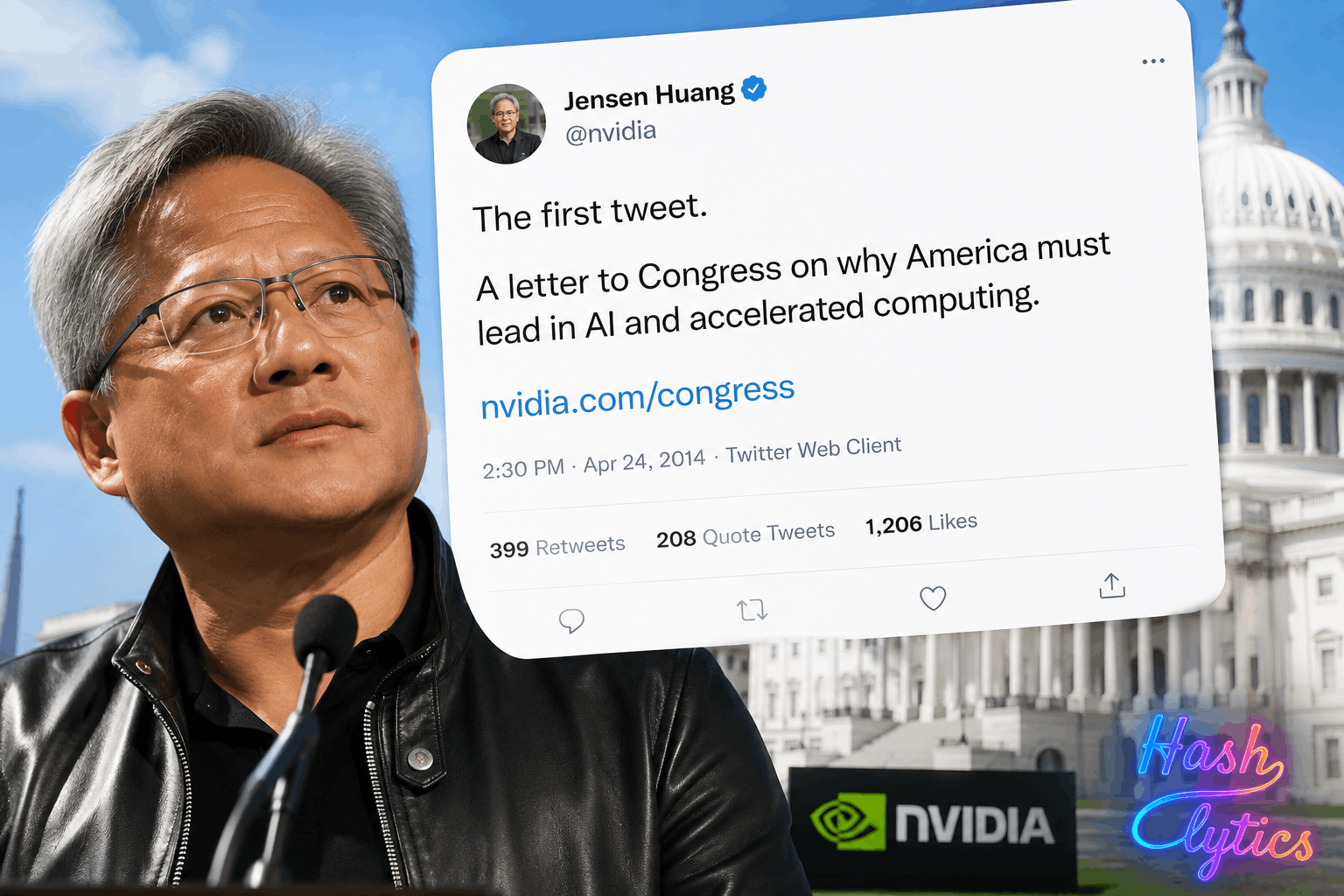
The letter landed four days after reports that the Trump administration is reviving a push to ban Chinese AI models, though the document never names China, DeepSeek, or Moonshot AI directly. Nvidia’s aggressive GPU financing push and its $26B cloud capacity bet both depend on AI adoption spreading as widely as possible, which is the commercial logic sitting quietly beneath the open-model advocacy.
Who Signed, and Who Didn’t
- Signed: Nvidia, Microsoft, Meta, Dell, IBM, Palantir, Hugging Face, Mozilla, Mistral, Replit, Perplexity, CrowdStrike, ServiceNow, Andreessen Horowitz, Y Combinator, and 10 others
- Absent: OpenAI, Anthropic, Google
The missing three are the labs actually running the world’s leading closed frontier models. Their absence is the story the signatory list tells on its own: the companies pushing hardest for open weights are largely the ones that sell infrastructure, hosting, and services around models rather than the ones that build and sell closed frontier models directly.
The Self-Interest Problem
Every signatory profits when AI models get cheaper or free to run. Nvidia sells GPUs regardless of who trains what. Microsoft hosts the letter on its own site while continuing to sell closed Azure models alongside open ones. Meta signed a letter celebrating open weights while reportedly building its next flagship models as closed products available only through an API, the exact practice it spent years criticising rivals for. Not one signatory has committed to releasing a new open frontier model as a result of the letter.
Huang has made this argument before. At CES 2026 he said one in every four tokens generated today comes from an open model, framing openness as market reality rather than pure principle. That figure supports the letter’s economic argument even as it exposes the letter’s real target: cost efficiency and reduced dependence on any single closed provider, not an ideological commitment to transparency.
What This Actually Signals
Coming days after the Chinese model ban reports, the letter reads as a pre-emptive defence of the open-source ecosystem that Chinese labs like DeepSeek have used to compete globally. Restricting downloadable models broadly, to block Chinese competitors, would also restrict Meta’s Llama, Mistral’s models, and the infrastructure Nvidia sells hardware to run. The letter asks Congress to legislate around the technology’s openness, not its origin, which happens to protect every American signatory’s business model in the process.
Follow us on Bluesky, LinkedIn, X, and Telegram to Get Instant Updates