
-0.70%
-1.44%
-2.34%
+5.64%
+0.00%
-2.87%
A shallow dive into open-source chip design, Buterin argues that the chips inside secure devices should be open and inspectable all the way down to the factory drawings. Owning your private keys means little, he warns, if the silicon holding them cannot be trusted.
He expects hardware to eventually split into two camps: performance chips and secure chips. The secure kind might be ten times less efficient, but it would stay transparent enough to handle critical security tasks. Parts of the idea are already being tested in real products, though Buterin’s framework would not make a device completely trustless.
Verification is the hard part. Buterin notes that chips can be inspected by photographing their insides with infrared light, which lets independent specialists compare the physical silicon against the published design. Catching subtler tampering takes a destructive, layer-by-layer teardown, so only sample batches could ever get the full treatment. Not every unit a customer buys would be checked.
Ledger Says Open Source Is Not a Security Property
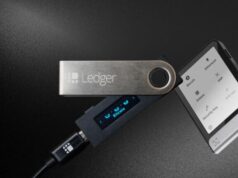
Ledger CTO Charles Guillemet rejects the premise. Back in August he argued that open source is not a security property, since published designs cannot prove that the component that was actually manufactured matches its blueprint. He also maintains that a closed architecture makes life harder for an attacker who gets physical hold of a device.
Even the researcher Buterin leaned on for infrared inspection describes a less comfortable status quo. Hardware hacker Andrew “bunnie” Huang has described the industry’s usual model as one where users simply hand trust to the vendor, because anti-tamper measures are prioritized over letting anyone inspect the chip.
Trezor’s TROPIC01 Turned Into the Test Case
The debate already has a live example. The Trezor Safe 7 pairs a certified, closed chip from Infineon with TROPIC01, an open-design chip from Tropic Square. Trezor says the seed is encrypted on the main microcontroller using keys from both elements, so it never rests inside a single secure chip.
Then the transparency cut both ways. Researchers on Ledger’s Donjon team used a laser to bypass TROPIC01’s firmware signature check, and they noted that the published code showed them exactly how the check worked and which step to target. Trezor countered that the issue was disclosed publicly with a patch in progress, and that its layered design stopped the flaw alone from exposing user PINs or funds.
Hashlytics Take
The TROPIC01 episode undercuts both camps a little. Open design did hand attackers a map, which is Ledger’s point. But the attack still did not reach anyone’s funds, and that was down to Trezor splitting the keys across two chips, not to anything about licensing. The more useful question for buyers is not open versus closed but how many independent things an attacker has to break at once. Buterin’s sample-batch inspection also makes open hardware a statistical guarantee, not a per-device one, and wallet makers should say so plainly.
Follow Hashlytics on Bluesky, Facebook, LinkedIn , Telegram and X to Get Instant Updates