The protocol arrived with the Windows 7/Vista Platform Update and let older portable music players sync files wirelessly. What stays is the part people actually use: standard file sharing through the OBEX Object Push Profile, along with wired MTP over USB, both of which remain fully supported.
The deprecation fits a wider pattern of Microsoft clearing out old device categories. Android users who want wireless access to their files already have Link to Windows, which lets them browse phone folders inside File Explorer without leaning on the legacy Bluetooth stack.
Receiving Files From a Phone Over Bluetooth
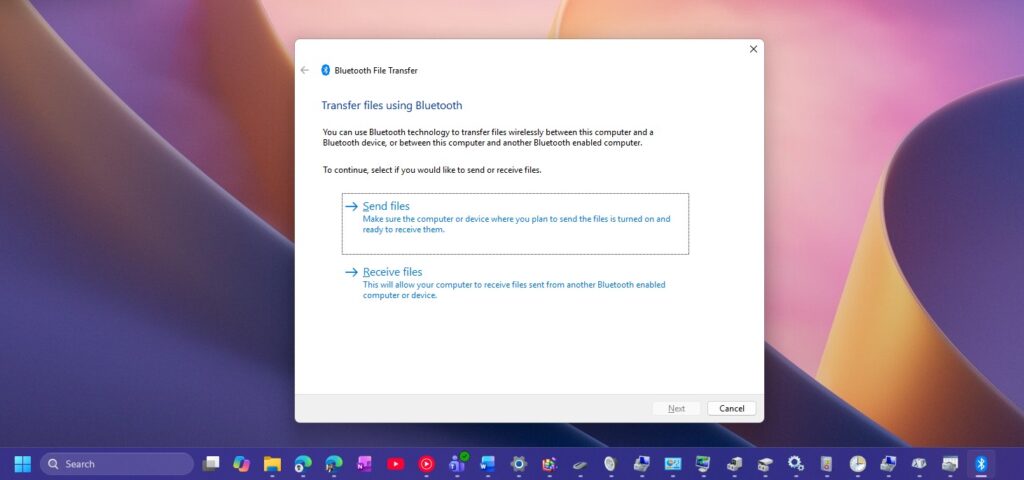
The OBEX route that survives the cut is built into Windows 11 and works for single documents or media files between paired devices:
- Pair your phone with your Windows 11 PC through system settings.
- Press Windows + R to open the Run dialog.
- Type
fsquirtand press Enter. - Choose
Receive filesin theBluetooth File Transfer Wizard. - On your phone, open the file you want to send and share it via Bluetooth.
- Pick your PC from the list of discovered devices and confirm the prompt.
Who Will Actually Notice
Almost nobody. Audio through classic Bluetooth headphones runs on the A2DP standard, which is untouched. Recent platform updates have also streamlined hardware handshakes, letting compatible AirPods pair up to 15 seconds faster and clearing persistent audio status bugs in Quick Settings.
Wired and wireless alternatives deliver faster data throughput than the old Bluetooth transport, so the removal reads as a cleanup of aging code rather than a loss. Anyone still syncing music to a dedicated legacy player over Bluetooth is the exception, and they should plan around the cutoff.
Follow Hashlytics on Bluesky, Facebook, LinkedIn , Telegram and X to Get Instant Updates