+1.44%
+1.98%
+9.20%
+0.00%
+7.56%
+2.09%
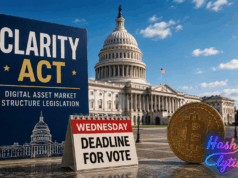
The CLARITY Act failed a procedural vote in the Senate on September 15, receiving 49 yes votes against the 60 needed to advance. Senators Kirsten Gillibrand, Angela Alsobrooks, Cory Booker, Catherine Cortez Masto, Ruben Gallego, Mark Warner, and Raphael Warnock all signed the statement. This week was a setback, but not the end of that important work,
the senators wrote.
Two Years of Work, Still Unresolved
The senators say two years of work went into the legislation, aimed at expanding opportunity, protecting consumers, and punishing bad actors in the crypto space. Their goals also included establishing regulatory certainty and adding ethics provisions for elected officials.
We remain committed to working in a bipartisan fashion to get this legislation passed,
their statement read. Opposition to the current version stemmed largely from concerns over President Trump’s crypto interests, along with the view that the bill’s ethics provisions were insufficient. Republicans rejected a Democratic counterproposal, closing the door on compromise before the vote.
Analysts Call It Dead for This Congress
Financial analysts at StoneX believe the bill is effectively finished for this session, with fewer than 14 working days left before campaign season takes over the legislative calendar.
Bernstein analysts expect the SEC and CFTC to step in and address the regulatory gap through direct rulemaking instead. That expectation reflects a broader industry reaction to the bill’s failure, one that has already shifted focus away from Congress and toward the agencies.
What Regulators Could Do Instead
SEC and CFTC rulemaking could classify native crypto tokens, address protections for decentralized finance and self-custody infrastructure, and tackle equity tokenization. JPMorgan analysts suggest agency rulemaking could provide guardrails
that appease the crypto-ecosystem and instill some confidence into incremental capital flows.
The catch is durability. Rules written by agencies carry far less staying power than legislation passed by Congress. A future administration could reverse them with a simple policy change, and they remain vulnerable to court challenges in ways a statute generally isn’t.
Hashlytics Take
The senators framing this as a pause rather than an ending misses the more interesting shift happening underneath it. When Congress fails to legislate, the rulemaking pen doesn’t disappear, it just moves to agencies that answer to a president rather than to voters directly. That’s a meaningfully different kind of regulatory certainty than what CLARITY promised, and it’s one that can be rewritten every four years without a single vote in the Senate. Crypto firms celebrating the prospect of SEC and CFTC guardrails should read the fine print on how fast those same guardrails can vanish.
Follow Hashlytics on Bluesky, Facebook, LinkedIn , Telegram and X to Get Instant Updates