The BC-250 board, originally built for cryptocurrency mining, features PlayStation 5 class silicon combining Zen 2 CPU cores with RDNA 2 graphics. Stock boards typically offer six CPU cores and 24 graphics compute units, though community firmware projects have reportedly unlocked up to eight cores and 40 compute units on some samples. These former mining boards now serve as experimental Linux gaming systems, with prices starting around $170 depending on condition and configuration.
What Changed in RC9
Version 4.0.0-rc9 of the BC-250 FSR 4 fork, released on September 11, introduces integer processing optimizations built specifically for the board’s Ariel/Oberon-derived processor. The update moves the project’s INT8 optimizations into a portable FidelityFX DLL. The developer confirmed 12 shader slots changed from rc8, and 19 from rc7, with all 348 shaders producing matching output and 220 automated tests passing.
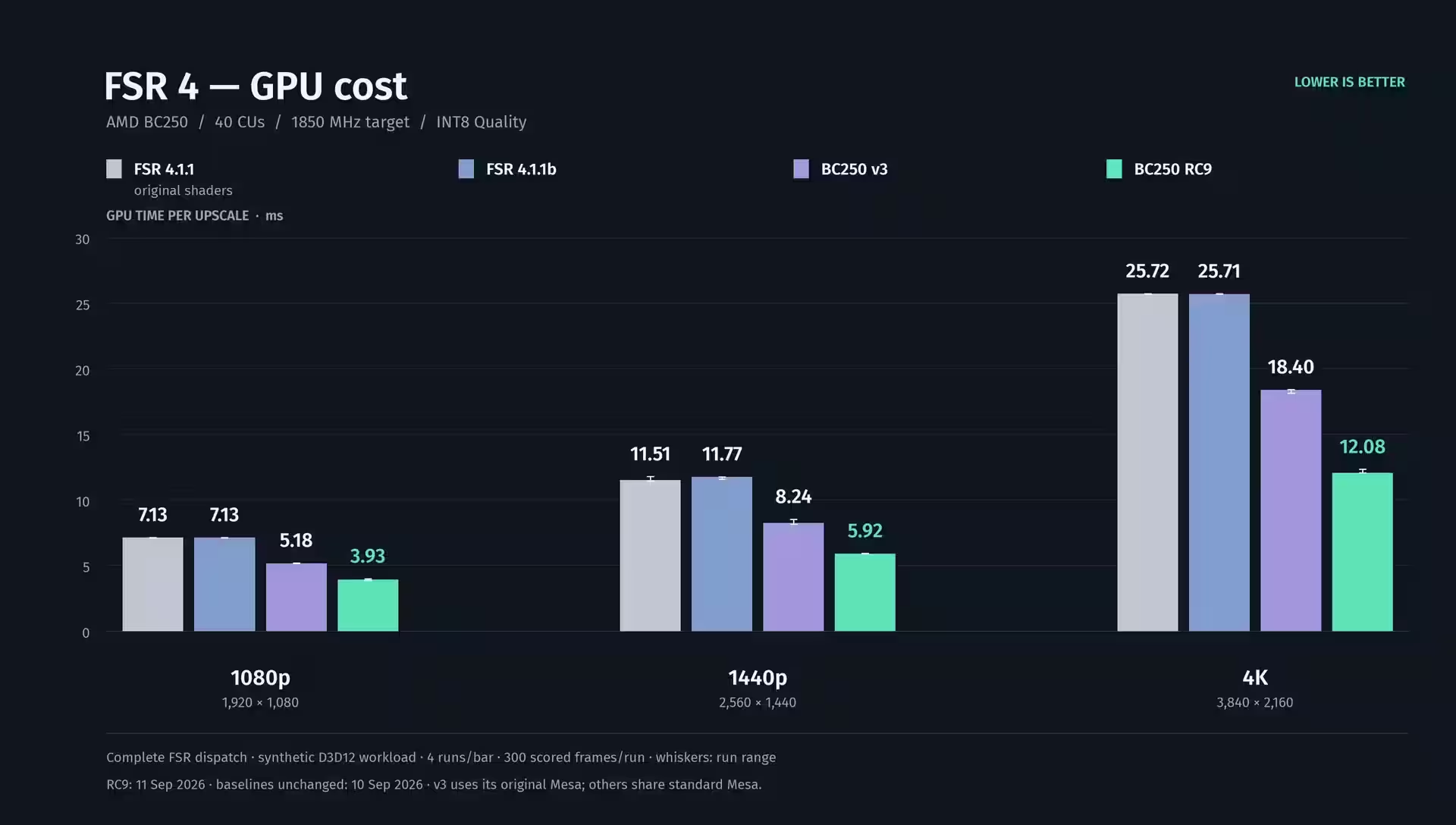
The performance gains are substantial. In controlled BC-250 benchmarks, the median FSR 4 dispatch time at 1920 by 1080 dropped from 7.13ms to 3.93ms.
| Resolution | Previous Result | Version 4.0.0-rc9 |
|---|---|---|
| 1920 x 1080 | 7.13ms | 3.93ms |
| 2560 x 1440 | 11.51ms | 5.92ms |
| 3840 x 2160 | 25.72ms | 12.08ms |
These figures represent only the upscaling pass itself, not complete game frame times, and the output remained byte-identical in testing, confirming no image data was altered in the process.
1440p Is the Sweet Spot, Not 4K
The 1440p result is where this update actually matters for gamers. A 5.92ms upscaling cost leaves far more frame time available for game processing, a considerable improvement over the previous 11.51ms. At 4K, though, a 12.08ms upscaling pass consumes most of the 16.67ms budget needed to hit 60 frames per second. The project itself suggests 1440p as the practical upper target for the BC-250 rather than pushing for 4K.
A few caveats are worth noting before treating this as a finished product:
- The software currently targets Linux using Mesa and GE-Proton only
- Windows compatibility and other Radeon architectures remain untested
- Frame generation behavior is unqualified
- The release did not add new game compatibility or endurance testing
That last point matters most. A synthetic benchmark improvement does not guarantee reliable operation across every FSR 4 title, so early adopters should treat this as a promising foundation rather than a polished release. More detail on the benchmark methodology is available on Guru3D, along with a second results image.
This remains an unofficial enthusiast project, not an AMD-supported upgrade. Still, it demonstrates that careful shader-level INT8 optimization can make FSR 4 meaningfully more practical on aging RDNA 2-derived hardware, even hardware that started life mining crypto rather than rendering games.
Follow Hashlytics on Bluesky, Facebook, LinkedIn , Telegram and X to Get Instant Updates