Initial excitement around Windows 11 version 26H2, dubbed the 2026 Update
, is hitting a wall. Online chatter suggested significant operating system optimizations, with many claiming up to 3 GB of RAM savings over prior builds. The first independent tests say otherwise.
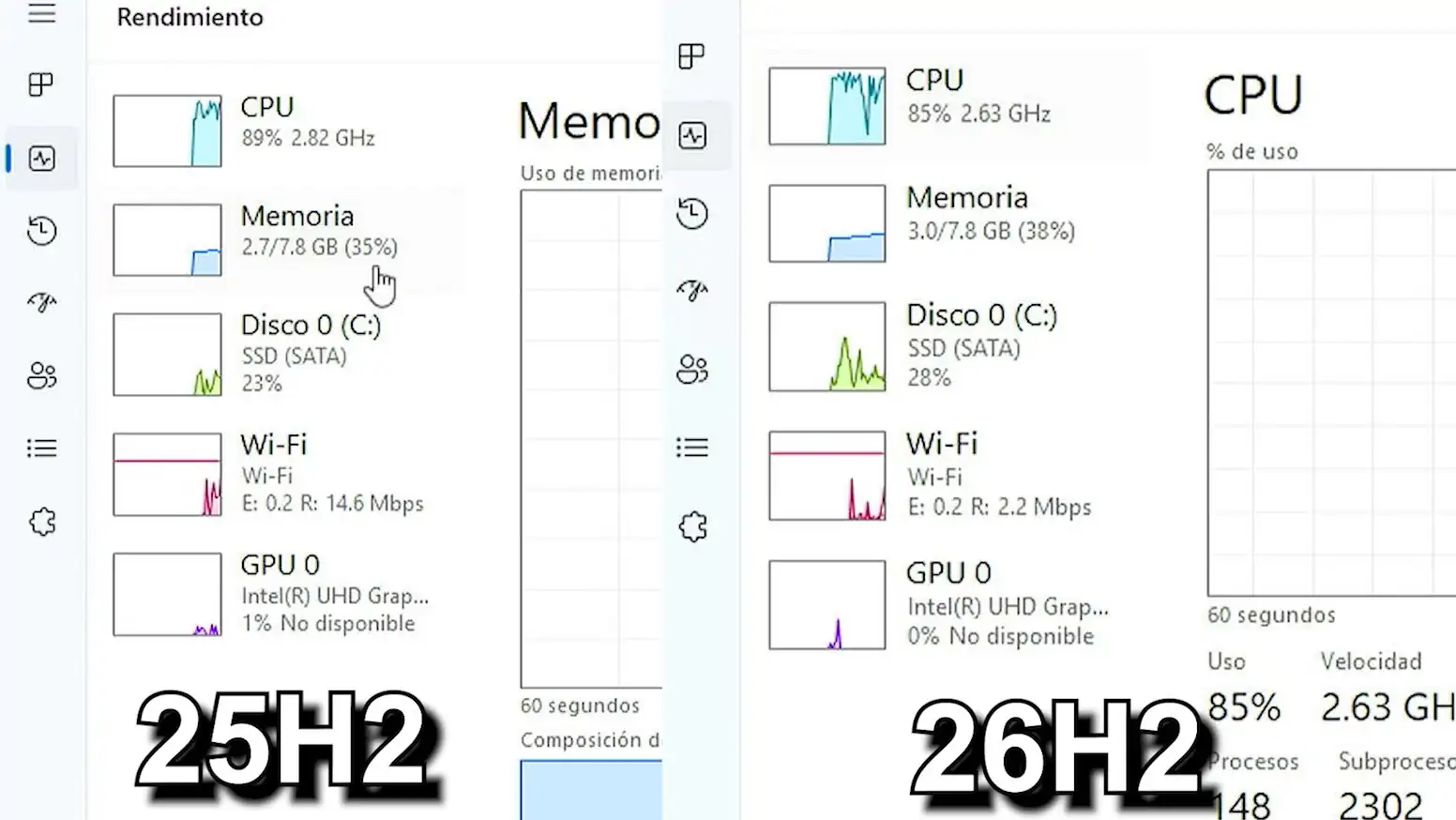
Enthusiasts ran the current 26H2 version against the previous 25H2 release on three benchmark computers under identical operating conditions. The first independent benchmarks on real-world configurations cast doubt on the optimization story, and the numbers point the wrong way for anyone hoping for a leaner system.
Idle Memory Went Up, Not Down
Memory consumption at idle stayed largely static, with a small increase on the newer build.
- 25H2: 2.7 GB used of 7.8 GB, about 35% utilization
- 26H2: 3.0 GB used of 7.8 GB, about 38% utilization
That marginal rise directly contradicts the widespread claims. Overall performance also showed no noticeable gains, and preliminary measurements show basic system processes, processor frequency, and disk activity are unchanged. The findings suggest reports of a sharp drop in memory consumption were exaggerated.
Maxim Boldson, writing for HARDWARE, noted that the tests directly refuted the online claims. The community is invited to share results and debate performance on social platforms like X.
Hashlytics Take
A 3 GB saving was never plausible on these machines. The entire 25H2 system sat at 2.7 GB used at idle, so there was barely that much memory to give back. Idle usage is also a single measure, and a 7.8 GB setup says little about larger configurations. These results rebut the hype well, though they leave broader behavior open. For now, expect no memory dividend from the upgrade and wait for wider testing before changing any plans.
Follow Hashlytics on Bluesky, Facebook, LinkedIn , Telegram and X to Get Instant Updates