
-0.04%
-0.51%
+26.80%
-0.77%
+0.62%
+1.20%
Understanding the Closure of Chimoney’s Web3 Fintech Operations
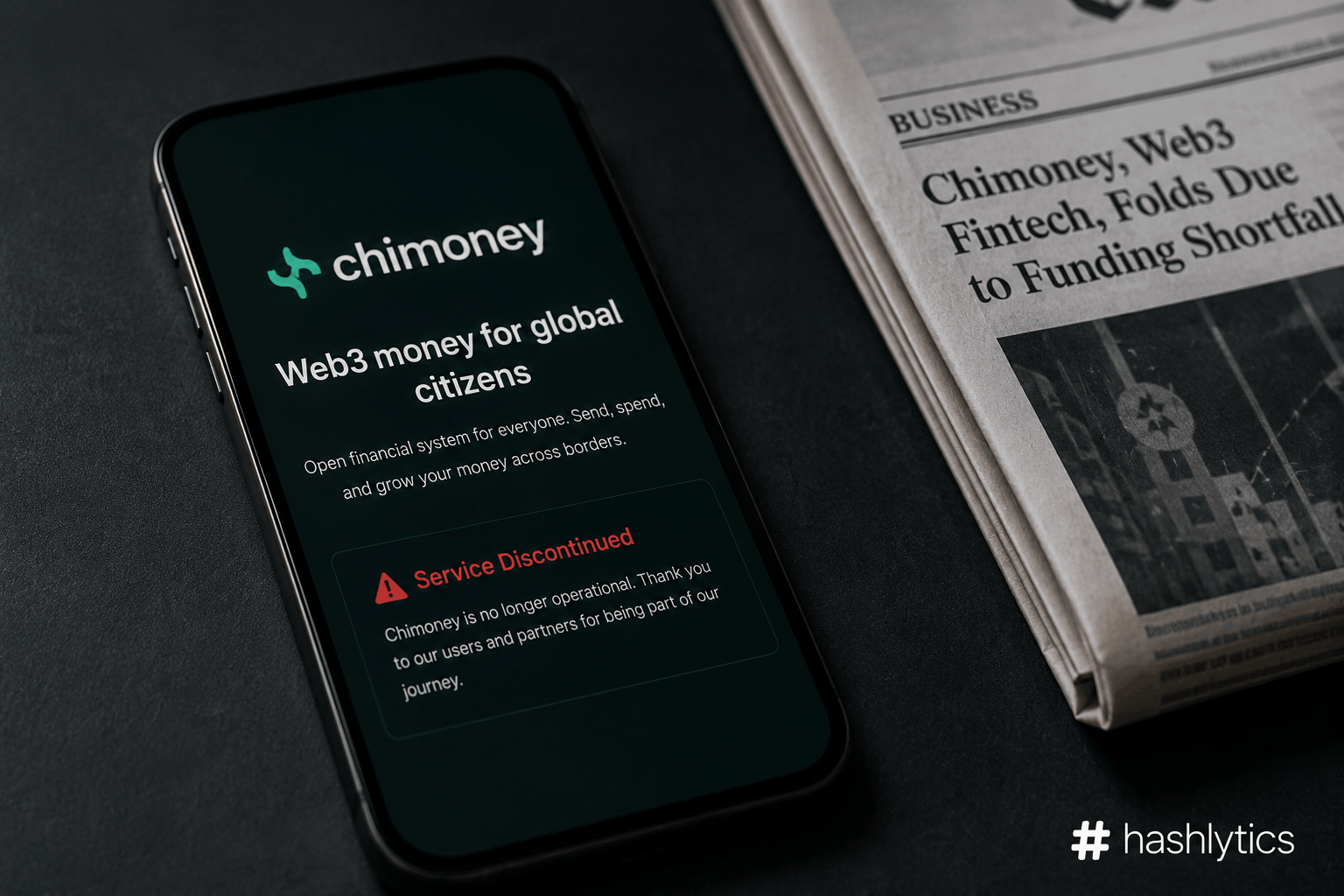
Chimoney, founded in 2022 by Uchi Uchibeke, announced its shutdown in an email to customers in May 2026. The company confirmed it had stopped processing new transactions and integrations and initiated the refund process for customer balances, according to a local media report from BitcoinKE. This move marks another casualty in Africa’s increasingly selective venture funding environment, where investor participation in startup deals has reportedly fallen by 26% in the first four months of 2026 compared to the previous year, as per data from Africa: The Big Deal.
The startup’s core offering was a payment infrastructure allowing businesses to disburse funds to freelancers, contractors, and vendors across Africa, North America, and Latin America via a single API. This platform supported payouts in 41 currencies through various methods, including bank transfers, mobile money, airtime, gift cards, and stablecoin off-ramps.
Navigating Your Chimoney Account Status
For individuals and businesses who utilized Chimoney’s services, understanding the immediate implications for their accounts is crucial. The company’s final operational email provided clear guidance on existing balances.
- Check for an existing balance: Review your records to confirm if you held any funds with Chimoney at the time of the shutdown.
- No balance on file: If your account had no outstanding balance, Chimoney stated that no further action is required on your end.
- Customer balance refunds: The company has begun refunding customer balances. Users with funds on file should monitor their linked accounts for these refunds.
Chimoney had previously secured a payment service provider (PSP) license under the Bank of Canada in November 2025, operating under the Retail Payment Activities Act (RPAA). The company intends to retain this license under dormant status.
Steps for Businesses and Developers Using Chimoney’s Infrastructure
Businesses and developers who integrated Chimoney’s API for cross-border transactions face the immediate need to transition to alternative solutions. While specific migration guides are not detailed in the public announcement, the company did publish resources for developers prior to ceasing transactions.
- Consult migration guides: If you are a developer, refer to any migration guides or documentation Chimoney published before April 30, 2026, to understand the process for transitioning off their API.
- Identify alternative providers: Begin researching and integrating with other cross-border payment providers that can support your operational needs across the target regions.
- Update payment systems: Ensure all internal payment systems and integrations are updated to reflect the change in your payment infrastructure provider.
Note: Chimoney informed investors of its planned shutdown in February 2026 and notified customers in April 2026, with transactions stopping on April 30, 2026.
The Broader Impact on African Fintech and Web3 Ventures
Chimoney’s closure underscores the vulnerabilities within startup infrastructure, particularly for companies operating across multiple jurisdictions with limited funding. According to Uchibeke, the company raised approximately $280,000 in disclosed funding, as per Crunchbase data, though he claims total capital and grants were closer to $1 million. He noted that “Under $1 million is too thin for a venture-scale fintech across multiple jurisdictions,” attributing the shutdown to struggles in scaling distribution with insufficient capital.
The startup had received backing from several Web3 entities, including Celo, Interledger Protocol, Ripple, and Moonbeam. This highlights the challenges even Web3-backed ventures face in navigating a tightening global funding environment. The decision to wind down was made when revenue remained flat and no clear path to additional capital emerged, prioritizing the return of client funds and meeting regulatory obligations.
Ensuring Business Continuity and Future Payment Strategies
With Chimoney’s services discontinued, businesses and individuals have now successfully navigated the initial phase of understanding and responding to the shutdown. The crucial next step involves establishing robust and reliable alternative payment solutions.
It is imperative for businesses to diversify their payment infrastructure and thoroughly vet providers, especially in the volatile startup ecosystem. This incident serves as a reminder for companies relying on third-party payment rails to maintain contingency plans and stay informed about the financial health of their service providers. Exploring established platforms or those with demonstrable funding and stability can mitigate future risks in cross-border transactions.
Follow Hashlytics on Bluesky, LinkedIn , Telegram and X to Get Instant Updates