What Sonnet 5 Actually Delivers
Sonnet 5 is the model for users who found Opus 4.8 too expensive and Sonnet 4.6 too limited. On agentic coding benchmarks it scores 63.2%, against Sonnet 4.6’s 58.1% and Opus 4.8’s 69.2%. On knowledge work, it slightly outperforms Opus 4.8 entirely. The practical gap that matters most: previous Sonnets would stop mid-task on complex, multi-step jobs and require prompting to continue. Sonnet 5 pushes through, checks its own output without being asked, and handles browser and terminal tool use that previously required Opus-tier models.
Zapier’s senior engineer Daniel Shepard confirmed this directly: a two-part job updating Salesforce tiers and sending a launch email, which previously stalled halfway, now finishes end to end with Sonnet 5. That is the benchmark that matters for product builders, not the lab score.
Introductory API pricing is $2 per million input tokens and $10 per million output tokens through August 31, moving to $3 and $15 thereafter. That makes Sonnet 5 cheaper than OpenAI’s GPT-5.6 Sol at launch and cheaper than Google Gemini 3.1 Pro, though still above Gemini 3.5 Flash. Developers should note the tokenizer change increases token counts roughly 1.0 to 1.35 times depending on content, which affects real-world cost projections more than headline prices suggest.
The Export Ban Reversal and What It Signals
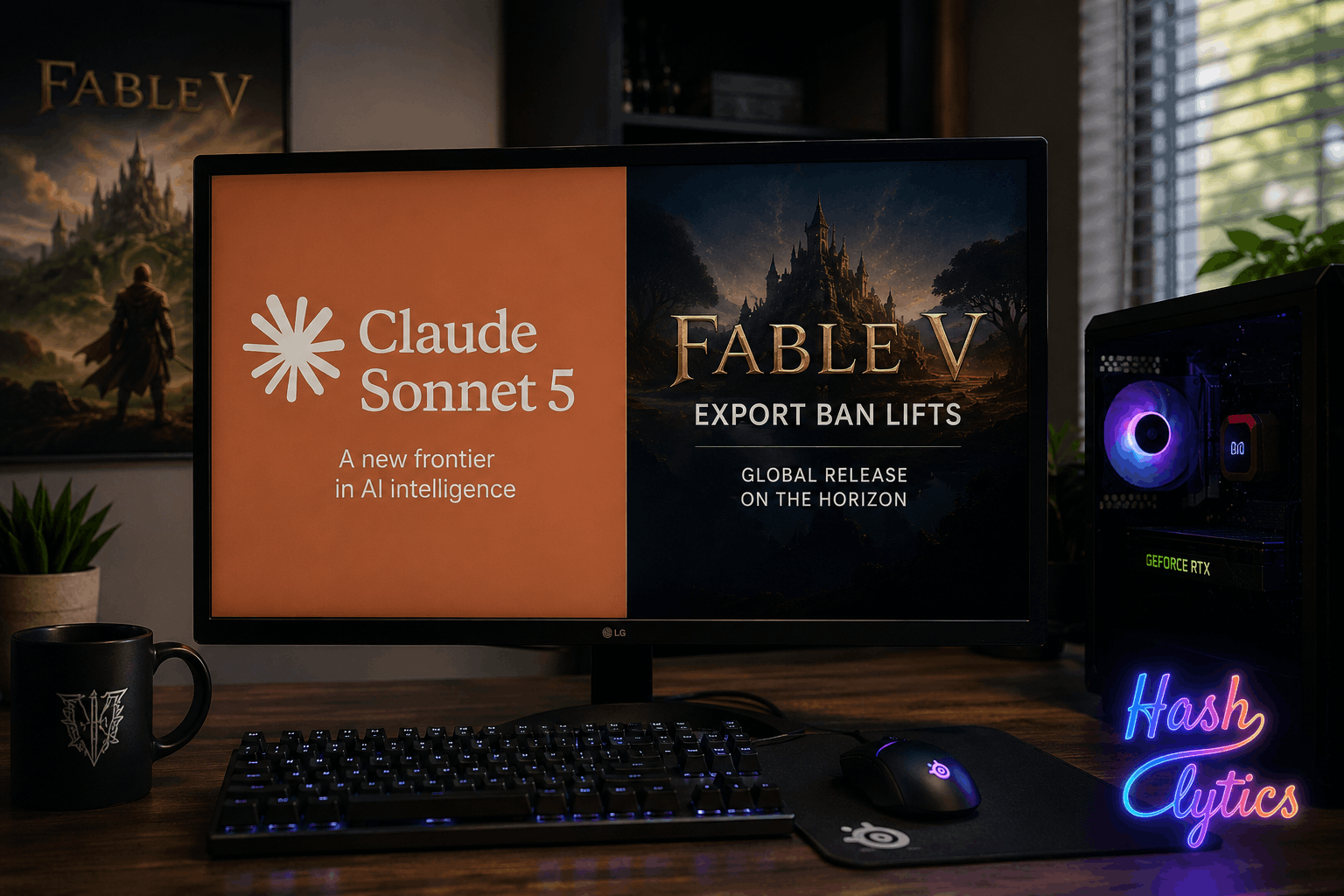
The lifting of export controls on Fable 5 and Mythos 5 is the more politically consequential development. The Commerce Department’s intervention earlier this month established that the US government could restrict AI model access on national security grounds without legislation, just an executive determination. That precedent did not disappear with the reversal.
What the reversal confirms is that the model worked as leverage: Anthropic’s Washington team negotiated access restrictions, the government evaluated the outcome, and access was restored. OpenAI is running a parallel track with GPT-5.6 Sol under a government-limited rollout, suggesting the pattern is coordinated policy rather than one-off friction.
What comes next is the harder question. The infrastructure for restricting frontier model access by geography and user category now exists and has been used. The Commerce Department’s willingness to lift controls suggests industry pressure and export compliance frameworks can move faster than legislation. But the controls were never about Sonnet 5. They targeted the models capable of what the US government classified as dangerous cybersecurity uplift, and Anthropic’s own system card confirms Sonnet 5 has significantly lower cybersecurity capability than Fable 5 or Mythos 5 at Opus tier. The ceiling on what gets exported freely, and what requires a political negotiation to restore, has now been set in practice rather than theory.
Follow us on Bluesky, LinkedIn, X, and Telegram to Get Instant Updates