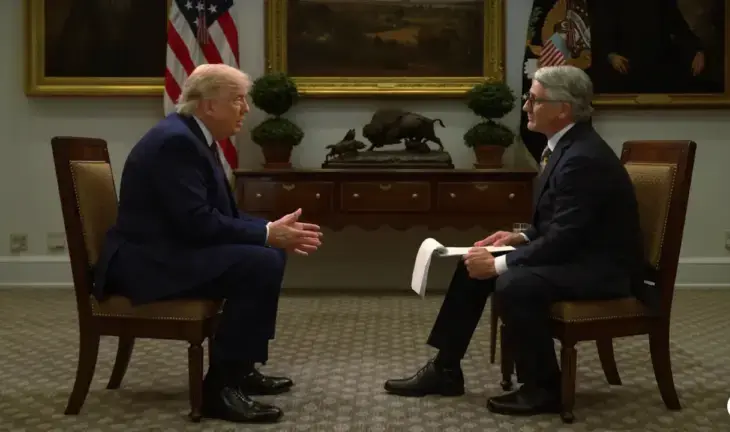
Well, not now, but a week ago, maybe.
The reversal marks a significant shift in the administration’s stance. Yet despite Trump’s verbal softening, the formal policy restrictions remain firmly in place.
Export Controls Still Active
Trump’s comments do not automatically lift the existing restrictions on Anthropic. The Commerce Department’s export-control order from June 12 continues to require federal approval for foreign nationals to access Anthropic’s Mythos 5 and Fable 5 models. Additionally, the Pentagon’s March 3 supply-chain risk designation remains in effect, barring federal agencies from using Anthropic technology.
The company was given only 90 minutes to take both models offline after the June 12 directive, affecting all users including non-US staff. Anthropic was unable to reliably enforce nationality-based access controls, forcing a complete shutdown of the platforms.
Amazon’s Complaint Triggered the Crisis
New reporting reveals that a competitor-investor was behind the initial alarm leading to the June 12 directive. According to Trump, the source of concern for Commerce Secretary Howard Lutnick was a competitor who also held ownership in Anthropic. This description aligns with Amazon, which has invested $8 billion in Anthropic while operating competing AI models.
Amazon detailed a vulnerability in Anthropic’s Mythos model to the administration. Following pushback from Anthropic leadership, Lutnick issued the export-control letter. The company was then forced to disable both Mythos 5 and Fable 5 globally.
G7 Meeting Changed the Calculus
The G7 summit in Évian-les-Bains, France provided a critical venue for Amodei to address the escalating tensions. During a working lunch on June 17, Amodei alongside DeepMind CEO Demis Hassabis proposed a coalition framework. This initiative aims for democracies to coordinate frontier AI trade and standards under US leadership, specifically excluding China.
Amodei urged global leaders to resist the temptation to splinter
their AI regulatory approaches. Trump later described Amodei as both smart and personable. This positive impression is significant, given that the Pentagon and a February Truth Social directive had previously characterized Anthropic’s leadership as ideologically hostile to the Defense Department.
The IPO Valuation Question
This policy reversal carries substantial financial implications for Anthropic. The company closed a $65 billion Series H-1 round in late May, achieving a post-money valuation of $965 billion, surpassing OpenAI. Anthropic confidentially filed its S-1 with the SEC on June 1, targeting an October 2026 Nasdaq listing.
The June 12 export controls hit Anthropic at a critical juncture. Annual recurring revenue had reached approximately $47 billion in early June, up from $9 billion at the end of 2025. The company’s competitive standing relies heavily on its Mythos and Fable lines, which remain offline. The longer these controls persist, the harder it becomes to justify the May valuation for its expected IPO.
Allies Seek AI Independence
The fluctuating US stance on Anthropic has broader international consequences. Canadian Prime Minister Mark Carney noted that the restrictions highlight a need for countries to build out and diversify
their AI capabilities. Canada announced a plan in June to support middle powers in developing alternatives to major US AI players.
Similarly, Japan’s draft policy revealed on June 19 commits to continuously reviewing AI laws, reflecting concerns over rapidly changing US export controls. Allied governments are finding it challenging to establish stable policy responses when US directives can shift within days. The original June 12 shutdown, which gave Anthropic only 90 minutes of warning, underscored this volatility.
Follow Hashlytics on Bluesky, LinkedIn , Telegram and X to Get Instant Updates