What Was Exposed
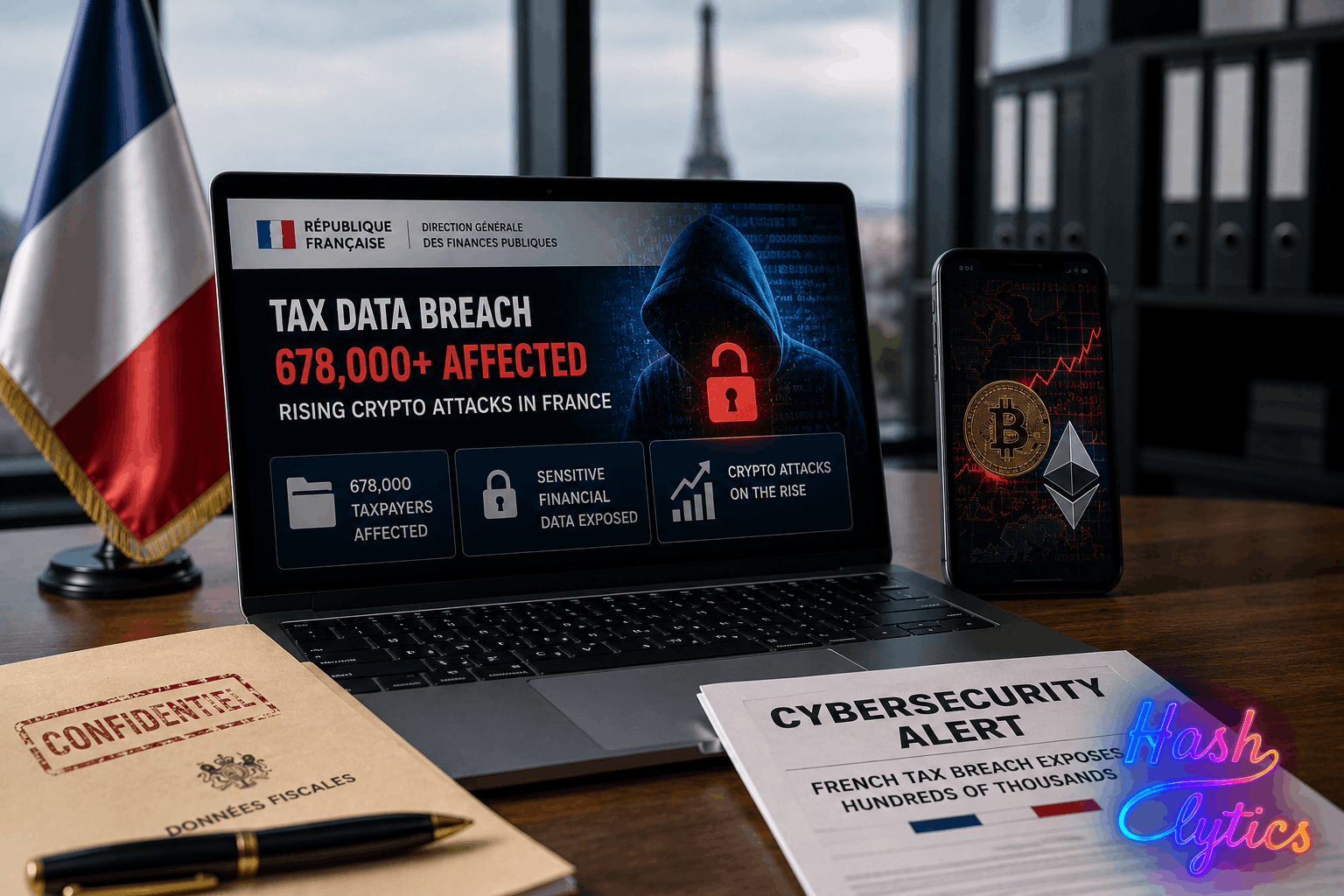
The General Directorate of Public Finances in France experienced a cyberattack that reportedly exposed data for 678,437 taxpayers on August 15, 2026. The compromised information includes:
- Names, dates of birth, and addresses
- Telephone numbers and email addresses
- Tax related financial details
Among those affected, nearly 27,000 individuals declared incomes exceeding 100,000 euros. Another 386 reported incomes over 1 million euros, and eight declared more than 10 million euros. The database does not identify crypto ownership directly, but this high income demographic overlaps heavily with the population criminals already target.
Physical Attacks Against Crypto Holders Are Rising
This breach lands amid a sharp increase in physical attacks targeting crypto users, often called wrench attacks. CertiK recorded 52 verified wrench attacks globally during the first half of 2026. France alone accounted for 33 of those cases, the highest national total in CertiK’s dataset.
Security experts point to a clear shift in tactics. Criminals are moving away from exploiting vulnerabilities in blockchain code and toward targeting individuals directly. That shift makes personal data breaches like this one a genuine security concern for the crypto industry, not just a privacy footnote.
How Leaked Data Becomes a Targeting Tool
Detailed identity and income data becomes valuable intelligence once it lands in the wrong hands. Criminals combine tax records with public blockchain activity and social media profiles to build precise profiles of potential targets, then use that information to plan attacks.
A separate breach in August involving Trezor’s logistics provider, ShipMonk, illustrates the same pattern. Nearly 14,000 customers had their names, addresses, phone numbers, and emails exposed. Trezor confirmed its own systems, devices, and wallet security remained uncompromised, but the customer data leak alone creates real risk.
Why Self Custody Alone Isn’t Enough
The overlap between data breaches and physical crypto crime strengthens the case for privacy conscious security practices. Self custody through non custodial wallets keeps private keys out of centralized databases, which reduces the impact of conventional account breaches.
The problem is that ownership related information remains a significant vulnerability regardless of how well your keys are secured. Names, addresses, phone numbers, and purchase records can all be used to identify and locate a target, even if the wallet itself is never touched.
Steps Crypto Holders Should Take
Protecting personal data has become as important as protecting private keys. A few practical steps go a long way:
- Separate your public identity from your wallet activity whenever practical
- Avoid publishing your holdings or portfolio size publicly
- Treat unsolicited messages requesting wallet credentials as phishing attempts by default
- Use privacy preserving tools where available to limit how easily activity connects to a real world identity
Blockchain transparency still serves a purpose for auditing transactions, but it becomes a liability when combined with leaked personal data. France’s breach, exposing 678,437 individuals, is a reminder that personal data protection has become inseparable from crypto security itself.
Hashlytics Take
The wrench attack numbers tell a story most crypto coverage still misses. The industry spent a decade hardening smart contracts and exchange security, and criminals simply walked around all of it by targeting the person instead of the protocol. France leading global wrench attack statistics while sitting on one of the largest tax data leaks of the year is not a coincidence worth ignoring. If you hold meaningful crypto and your name is tied to public records anywhere, operational security now matters as much as which wallet you use.
Follow Hashlytics on Bluesky, Facebook, LinkedIn , Telegram and X to Get Instant Updates