-0.04%
-0.51%
+26.80%
-0.77%
+0.62%
+1.20%
Most Crypto Firms Withdraw FCA Applications
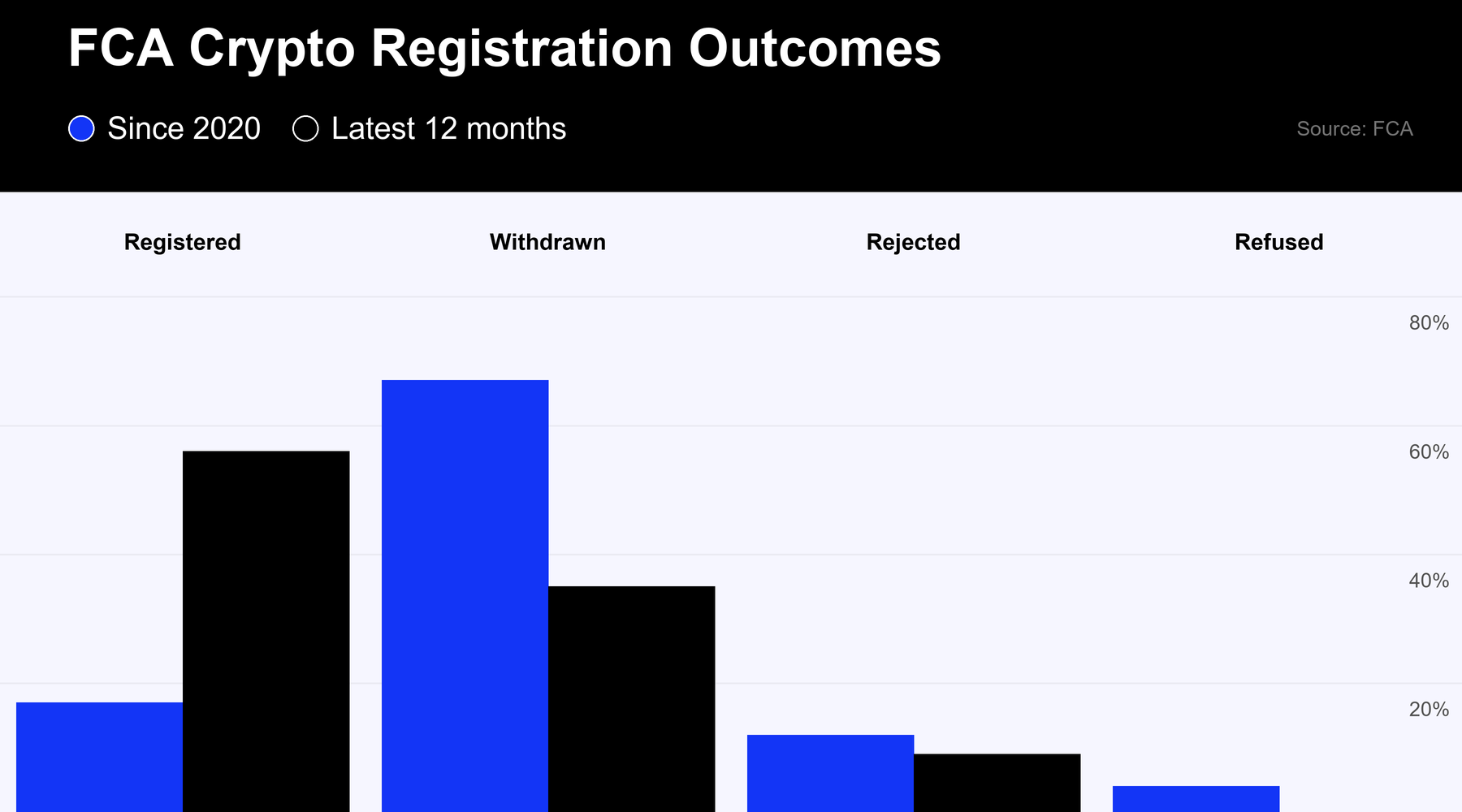
Out of 391 crypto registration cases handled by the FCA through August 1, 2026, 263 concluded with a withdrawal. That represents 67% of all determinations. Only 17% of applications resulted in full registration, while a mere 4% faced formal refusal by the regulator, according to the FM Intelligence report.
Why Withdrawal Isn’t the Same as Rejection
The high withdrawal rate doesn’t mean the FCA formally rejected two thirds of applicants. Withdrawal is a distinct outcome, and the reasons behind it vary.
- Firms may need more time to complete their application
- Some cannot meet the FCA’s standards and choose to exit voluntarily
- Others anticipate a refusal and withdraw before that becomes official
Formal refusals only capture the final stage of the process. Cases can exit much earlier, even after the FCA has already raised concerns internally.
Recent Trends Tell a Different Story
The most recent 12 month window paints a more encouraging picture. Registrations accounted for 13 of 23 decisions, or 56%. Withdrawals fell to 35% during this same period.
This shift does not necessarily mean the FCA has lowered its standards. The small sample size of 23 decisions limits how much anyone can conclude from it. Cases often cross reporting windows, and firms that withdrew once can always reapply later.
A New Regulatory Gateway Is Coming
The UK is preparing to roll out a new regulatory test for crypto firms. Companies can apply for authorization under the Financial Services and Markets Act starting September 30, 2026, with the application window expected to close on February 28, 2027.
This new framework goes well beyond anti-money laundering controls. It will include governance requirements, operational resilience standards, prudential rules, and Consumer Duty obligations. Existing registrations under the Money Laundering Regulations will not automatically convert to the new system.
Firms that apply late may face restrictions on new UK business while their applications remain pending, according to previous reporting from FinanceMagnates.com.
What This Means Going Forward
The historical 17% registration rate is a poor predictor for how the 2027 regime will actually perform. Both the applicant pool and the legal standards will look completely different once the new framework takes effect.
Even firms already registered under the current system must reapply under the new rules. The older data still matters though, because it shows why looking only at formal refusal rates understates how many applicants actually drop out of the process.
The complete FM Intelligence report examines outcome definitions and market segments not captured by current statistics. The FCA’s official guidance outlines the current registration process in detail.
Hashlytics Take
What stands out here is how easily a single statistic gets weaponized in crypto coverage. A 67% withdrawal rate makes for a dramatic headline, but it tells you almost nothing about regulatory hostility toward crypto without the context of why firms actually leave. For founders watching the UK market ahead of the 2027 gateway, the real signal isn’t the withdrawal number itself. It’s that the FCA is about to raise the bar significantly, and firms that treat this as a compliance afterthought will be the ones padding next year’s attrition statistics.
Follow Hashlytics on Bluesky, Facebook, LinkedIn , Telegram and X to Get Instant Updates