Answering the Real Questions About the Project
- Docker or native? Both. A one-command installer handles macOS and Linux natively, Windows has its own guide, and an official Docker image (palashdeb/omnivoice-studio) is documented separately for containerized deployment
- VRAM requirements: 4GB VRAM runs it, with TTS auto-offloading to CPU under that threshold; 8GB+ is comfortable for smoother real-time work. No GPU at all still works, the entire pipeline falls back to CPU, just significantly slower
- Is 646 languages exaggerated? Not fabricated, but conditional. That figure reflects the combined coverage across all 14 supported engines, not what any single engine, including the default OmniVoice, delivers alone. Coverage and voice-cloning quality vary meaningfully by engine and language, per the project’s own engine catalog
- How does OmniVoice compare in naturalness? The repo does not publish independent naturalness benchmarks against ElevenLabs. It links its own internal benchmarks and a gallery of sample outputs, but treat vendor-published audio demos the way you’d treat any self-reported AI benchmark, useful for a first impression, not a substitute for testing on your own reference clips
The License Detail That Changes the Business Conversation
VoiceStudio ships under AGPL-3.0, not a permissive MIT or Apache license. That distinction matters enormously for anyone planning to build a paid product on top of it. AGPL requires that if you modify the software and offer it as a network service, even without distributing the code itself, you must release your modified source under the same license.
The project’s own license notice also states explicitly that the underlying speech models carry separate licenses that must be reviewed before commercial use, and that voices should only be cloned with the speaker’s permission. A business built on an unmodified, self-hosted copy for internal use faces no issue; a business that modifies VoiceStudio’s code and resells access to it as a hosted service inherits real open-source-license obligations most first-time founders do not budget for.
What Can Actually Be Built On This
Within those license terms, the commercial surface area is genuinely large, and this is where the free-hardware, high-skill, low-capital reality of many young Nigerian developers becomes relevant:
- Local dubbing-as-a-service: a laptop with 8GB VRAM can dub YouTube or Nollywood content into regional languages like Yoruba, Igbo, or Hausa where commercial TTS providers offer little to no support, charging per-minute of dubbed content without ElevenLabs’ per-character API costs
- Audiobook production for indie authors: Nigerian self-published authors currently priced out of professional narration could get full-length audiobooks from a single machine, sold as a service rather than software
- Accessibility tooling: dictation and transcription products for visually impaired users or professionals who need hands-free workflows, an area with real demand and limited local competition
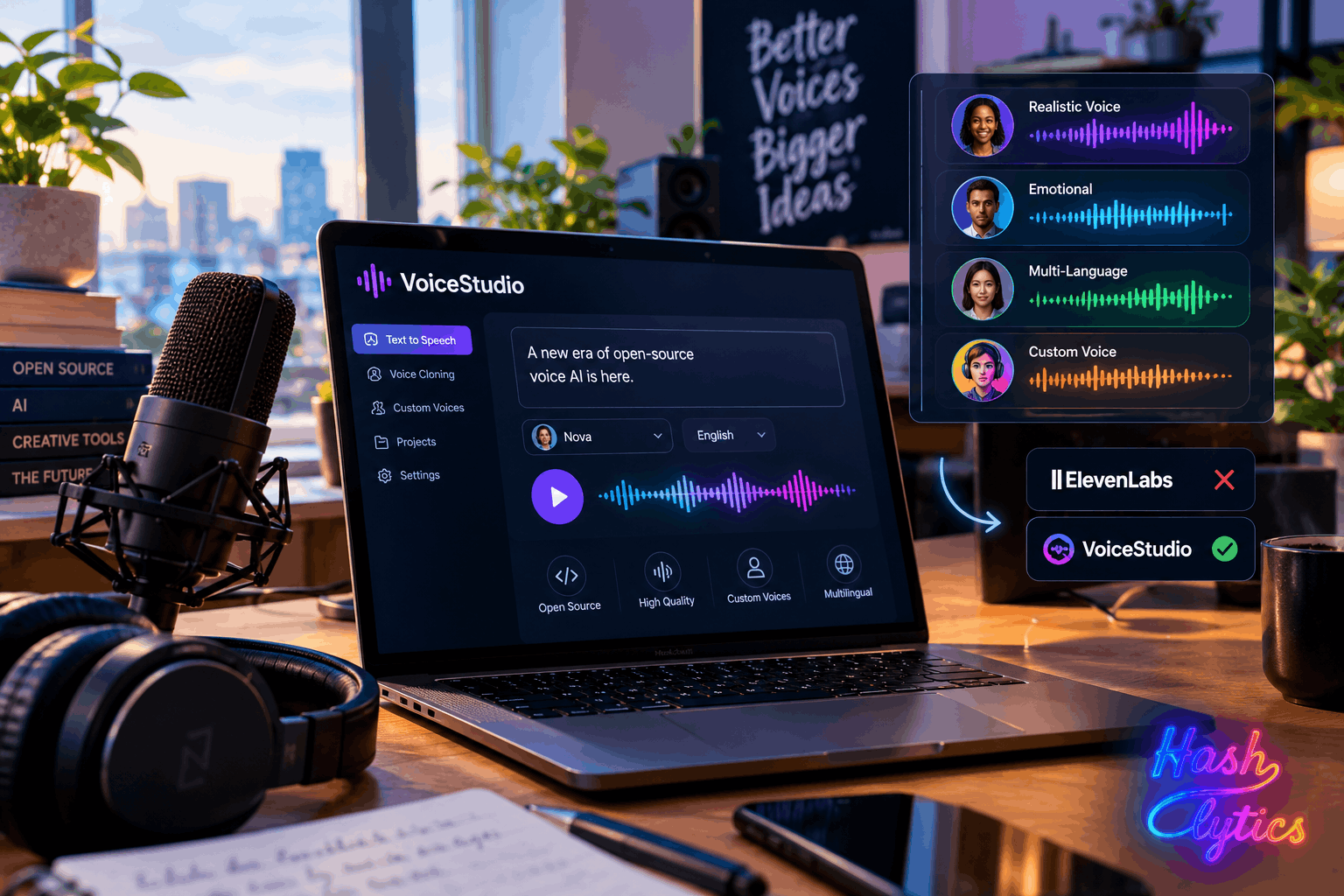
- MCP-integrated voice agents: the project ships native Model Context Protocol support, meaning a developer can wire VoiceStudio’s voice output directly into an AI agent product without touching ElevenLabs’ billing infrastructure at all
The realistic path for a Nigerian developer with a laptop and no capital is not reselling VoiceStudio itself, that runs straight into the AGPL wall, it’s building a service or workflow around it: dubbing, narration, accessibility, or agent tooling, where the value delivered is labor and integration, not the redistributed software. That is a legitimate, capital-light business model that a 4GB-VRAM laptop and consistent internet can actually support. Visit project link
Follow us on Bluesky, LinkedIn, X, and Telegram to Get Instant Updates