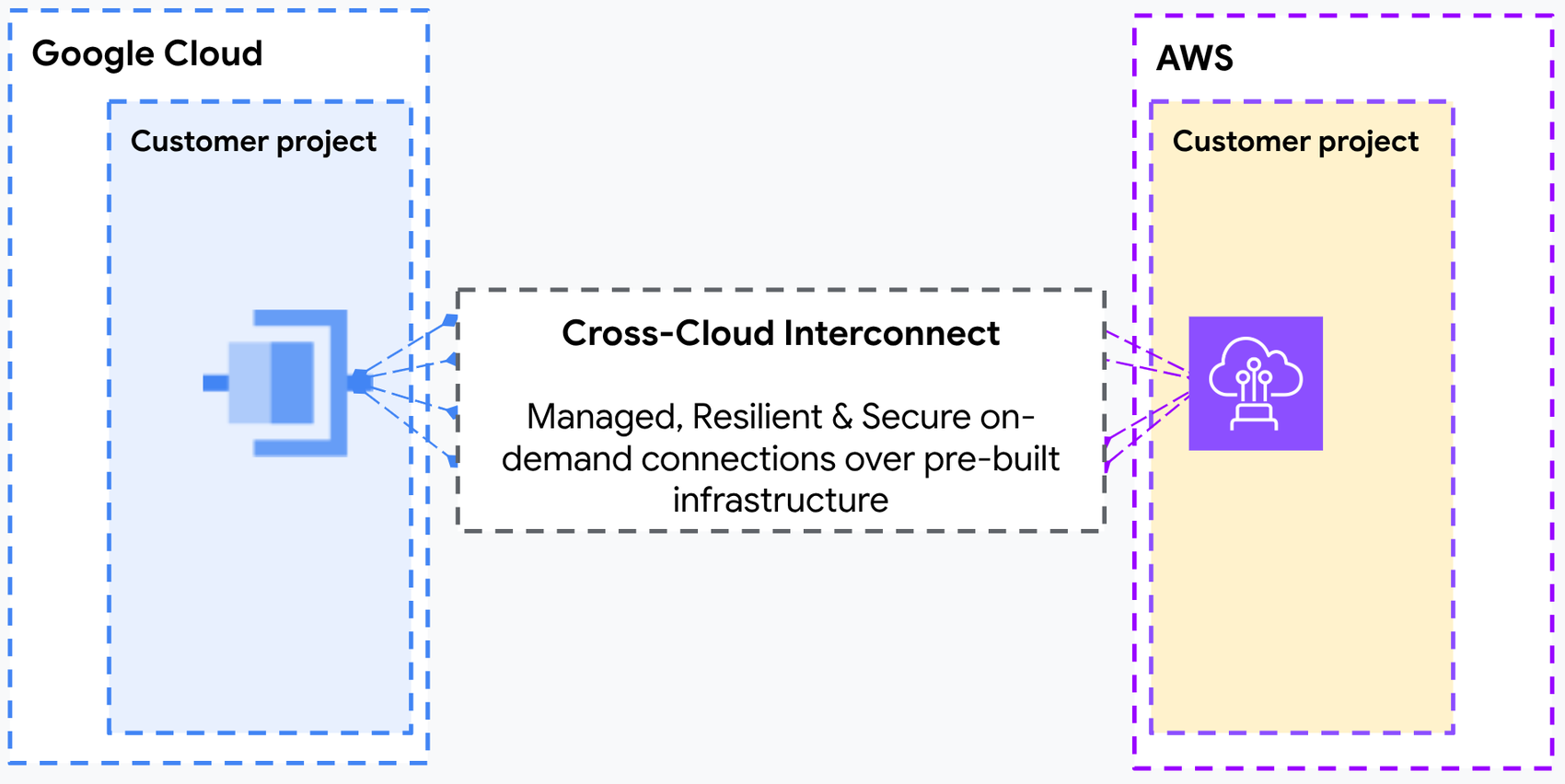
Google and AWS have announced a collaboration to expand cross-cloud network access, aiming to streamline the creation of applications that span both Google Cloud and AWS environments. This initiative, based on an open specification, addresses the increasing demand for multicloud solutions driven by the rise of AI. The partnership intends to remove barriers to multicloud adoption by providing a managed, secure, and on-demand solution for cross-cloud connectivity, fostering a more interconnected cloud ecosystem.
The demand for multicloud solutions is growing rapidly. A survey indicates that a significant majority believe the expansion of AI services will further accelerate multicloud networking due to the limited availability of specialized AI accelerators and the variety of AI agents across different vendors. Organizations are increasingly pursuing best-of-breed services, optimized workloads, and data residency options, all contributing to a multicloud future.
Google’s existing Cross-Cloud Network already has substantial adoption, with over half of the Fortune 500 using it. The new collaboration with AWS builds upon this foundation.
The core of the collaboration is the Cross-Cloud Interconnect for AWS, a solution developed from an open specification. This enables on-demand connections between Google Cloud and AWS VPCs in minutes, a significant improvement over previous complex and time-consuming processes.
This collaboration seeks to fundamentally change how enterprises approach multicloud deployments.
Key benefits of this collaboration include:
- Simplicity and Speed: Setting up a cross-cloud connection is simplified to peering two VPCs, reducing setup time drastically. Bandwidth options range from 1 Gbps to 100 Gbps at general availability.
- Enhanced Security: Connections between cloud edge routers are MACsec-encrypted, offering line-rate performance with always-on encryption, emphasizing data security.
- Inherent Resilience: The architecture is designed for high availability, with multiple layers of protection against failures.
- Open and Optimized: The open specification encourages industry-wide adoption, while the on-demand service model optimizes total cost of ownership.
Initial availability includes regions like N. Virginia, Oregon, London, and Frankfurt, with plans for global expansion.
Previously, building applications across multiple clouds was a complex undertaking involving intricate steps, cross-functional teams, and long lead times, often hindering multicloud adoption.
Traditionally, companies faced these challenges:
- Procurement: Acquiring physical connections and managing the infrastructure for network availability and separation.
- Logical Configuration: Establishing basic connectivity, managing overlapping IP addresses, and setting up VLANs.
- Routing Setup: Configuring BGP sessions, assigning AS numbers, and creating complex routing policies.
- Security Implementation: Conducting security reviews and implementing custom encryption solutions.
The partner Cross-Cloud Interconnect offering eliminates much of this complexity. Customers can now use pre-built connections with built-in security and resilience.
The process is simplified to configuring a “transport” resource in Google Cloud and accepting it in AWS. This action provisions the interconnects, VLAN attachments, and Cloud Router instances, enabling end-to-end connectivity quickly.
The solution is co-designed to provide a secure and resilient foundation while maintaining enterprise availability.
- Privacy and Security: Peering relationships are built between link-local addresses, facilitating connectivity between IPv4 and IPv6 private address spaces. All physical connections are MACsec-encrypted, with managed key rotation.
- Quad-Redundancy: Connections between Google Cloud and AWS regions leverage quad-redundant connections, ensuring facility and edge-router redundancy.
- Managed Operations: A proactive monitoring system detects and reacts to failures, with coordinated maintenance and streamlined support operations.
The new network connections enable various applications:
- Infrastructure and AI deployments supporting active-active or active-standby configurations, synchronizing state across cloud boundaries.
- AWS customers securely accessing Google Cloud APIs without traversing the public internet.
- Google Cloud customers privately pulling large datasets from AWS data stores like S3 or RDS.
This provides application teams with the flexibility to automate network builds for diverse use cases.
Organizations seeking simple, secure, and robust on-demand connectivity between Google Cloud and AWS can now build applications across clouds and let Google and AWS manage their network infrastructure.
The collaboration is intended to expand beyond Google Cloud and AWS, with other cloud and service providers invited to offer similar capabilities. The open specification is available for review. This initiative represents the beginning of a more interconnected and collaborative cloud landscape, offering opportunities for innovation and efficiency.