Microsoft’s Formal Commitment
Pavan Davuluri, President of Windows and Devices, posted an update on X, reiterating Microsoft’s commitment to Windows quality. Memory optimization stands out among four key focus areas through 2026.
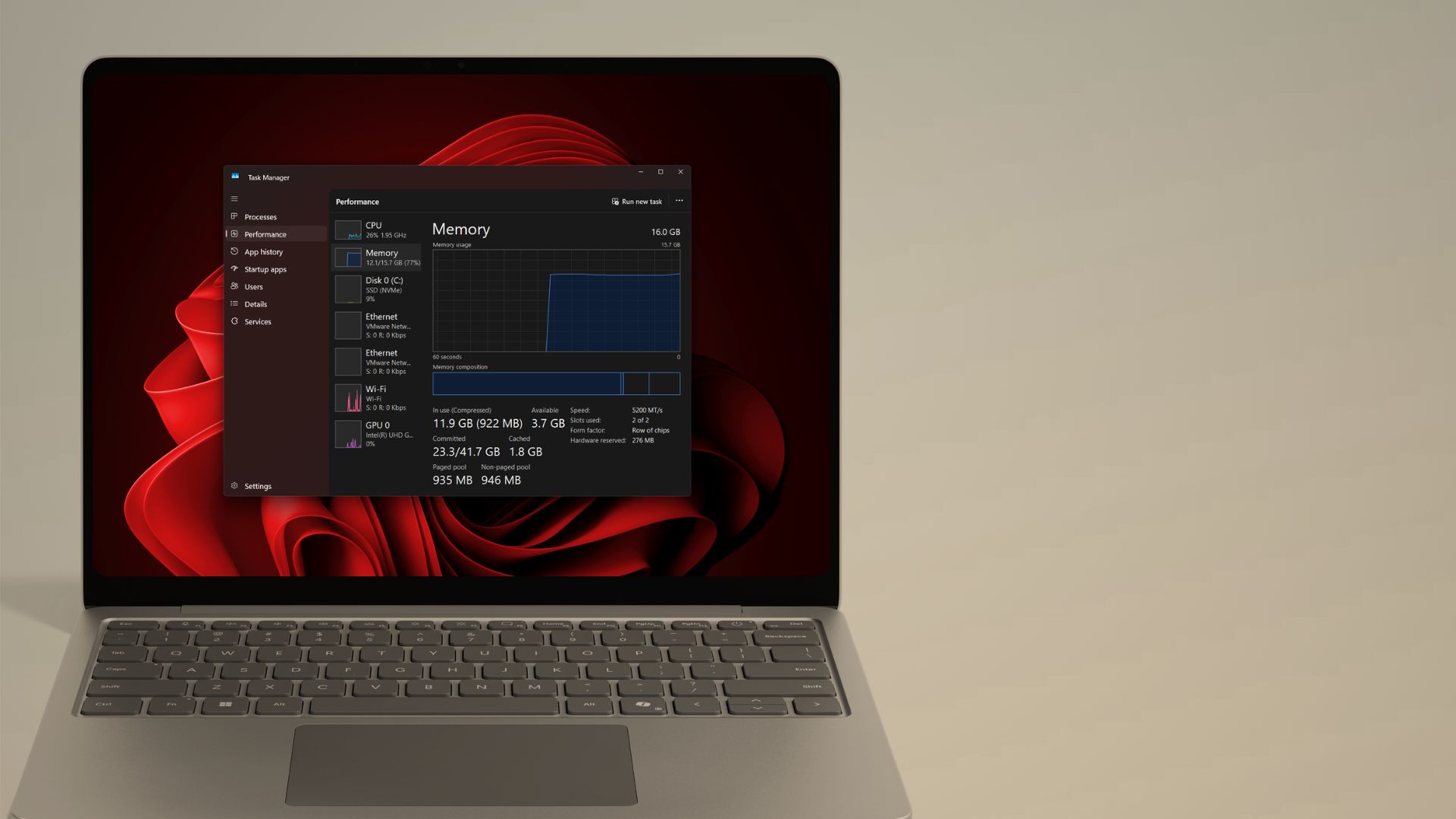
Microsoft explicitly stated its goal: Reducing Windows memory footprint to deliver a fast and responsive Windows experience across the PCs customers use every day.
This acknowledgment is significant because Windows 11 itself contributes heavily to memory consumption.
Why Windows 11 Uses So Much RAM
Windows 11 has struggled with memory usage for years. The primary culprit is WebView2, a Chromium-based engine that powers numerous OS components and Microsoft’s own applications.
The problem is architectural. Each WebView2 instance acts like a mini browser tab, complete with its own rendering engine. These instances run across multiple OS surfaces:
- Widgets
- Settings
- Start menu
- Windows Search
Even at idle, this distributed browser engine approach consumes significant RAM. Third-party developers make the problem worse by bundling Electron and WebView2 wrappers into their apps, each adding its own browser engine rather than sharing system resources efficiently.
WinUI Is Microsoft’s Path Forward
Microsoft plans to tackle this by migrating more of the OS to WinUI, its native user interface framework. WinUI is significantly lighter than WebView2 because it doesn’t require a full browser engine to render UI elements.
The company has already rebuilt parts of File Explorer using WinUI, including the Properties dialog. More legacy dialogs are slated for conversion. This architectural shift aims to reduce the OS’s core memory footprint substantially.
Microsoft is also pushing developers to adopt native WinUI applications instead of web-based wrappers. This counters the industry trend toward Electron and web components that have inflated memory demands across the entire ecosystem.
The Apple Factor
Microsoft’s focus on 8GB optimization is somewhat ironic given the company’s recent contradictions. The company previously pushed 16GB as the baseline for Copilot+ PCs, then launched an 8GB Surface Laptop that contradicted its own recommendations.
The success of Apple’s MacBook, which runs smoothly on 8GB of macOS, likely influenced this pivot. That comparison put pressure on Windows OEMs to release 8GB configurations without adequate OS-level optimization to back them up.
What Changes for Users
This optimization effort serves multiple audiences:
For 8GB systems: The goal is to make everyday tasks feel faster and more responsive, closing the gap with Apple’s performance on equivalent hardware.
For 16GB and 32GB systems: A leaner OS frees up memory for demanding applications like games, video editing, or running local AI models.
However, 8GB will likely remain insufficient for future-proofing against local AI workloads. These models demand substantial memory, and as they become more integrated into Windows, the baseline will shift upward again.
Timeline and Rollout
Microsoft expects to roll out these changes incrementally throughout 2026, beginning with Insider builds. The company hasn’t specified which optimizations will ship first or how aggressively the memory footprint will shrink, but the commitment to completion by year’s end is firm.
This represents one of Microsoft’s most concrete pledges to address a widespread complaint about Windows 11. Whether the execution matches the commitment will determine whether mainstream 8GB PCs finally deliver the responsive experience users expect.
Follow Hashlytics on Bluesky, LinkedIn, Telegram and X to Get Instant Updates