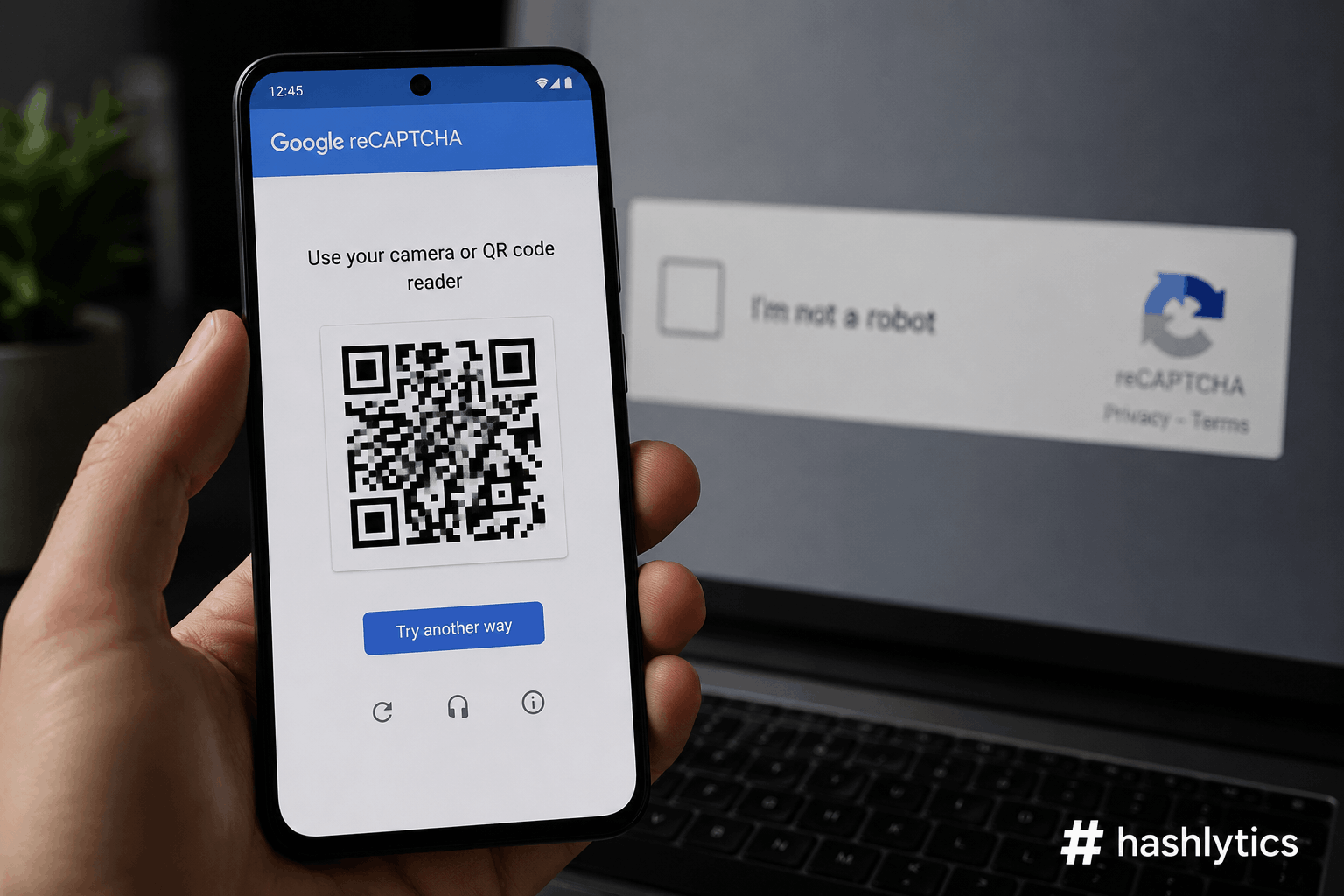
Google is rolling out a significant change to its reCAPTCHA system, introducing QR codes that will require Google Play services for verification on Android devices. This update poses a substantial challenge for users who opt for Google-free Android versions, potentially locking them out of websites that implement the new security measure. The move is part of Google’s broader initiative to combat sophisticated AI bots, but it inadvertently creates a barrier for privacy-conscious users.
QR Codes and Cloud Fraud Defense: The New Verification Standard
The innovation stems from Google’s new platform, Google Cloud Fraud Defense, which the company unveiled in April. Described as the “next evolution” of reCAPTCHA technology, this platform aims to differentiate not only human users from traditional bots but also to detect advanced AI agents. In scenarios involving suspicious activities, such as risky online orders, users will encounter QR codes that necessitate scanning with a smartphone. Crucially, Android devices performing this scan must have Google Play services installed.
Long-Term Development and User Privacy Concerns
Evidence suggests Google has been developing this feature for some time, with a related support page appearing in the Internet Archive as early as October 2025, according to the portal Piunikaweb. Google Play services have long faced criticism for transmitting telemetry data to Google, with users having limited control over this data transmission. Consequently, many users turn to Google-free Android systems, such as /e/OS or LineageOS, to maintain greater privacy and data control.
The Dilemma for De-Googled Android Ecosystems
The increasing reliance on proprietary Google services presents a growing problem for the open-source Android ecosystem. Over the years, Google has integrated fundamental functionalities into these services, making many apps incompatible with Google-free Android versions. While alternatives like microG services exist to emulate Google Play services’ functions and APIs, they still communicate with Google servers to a lesser extent. Moreover, microG requires signature spoofing, a process that can introduce security risks. Discussions surrounding data privacy and platform control continue to be a significant topic across the tech industry, including on professional networks like LinkedIn.
Navigating a More Fragmented Android Future
This reCAPTCHA update underscores the persistent tension between security enhancements and user autonomy in the Android landscape. As Google continues to evolve its security measures, users committed to Google-free Android distributions face an increasingly fragmented experience. The challenge now lies in how these communities will adapt to maintain accessibility while upholding their privacy principles, or if Google will eventually offer alternative verification methods that do not mandate its proprietary services.
Follow Hashlytics on Bluesky, LinkedIn , Telegram and X to Get Instant Updates