not credibleto the media. The documents do not show whether any of it was carried out.
Haidt is the author of The Anxious Generation, which argues that smartphone use contributes to a youth mental health crisis. His work has fueled calls for regulation, including social media bans for under-16s. The court documents surface while scrutiny of tech platforms and their effect on young people continues to grow.
A Plan to Enrage, Not Argue
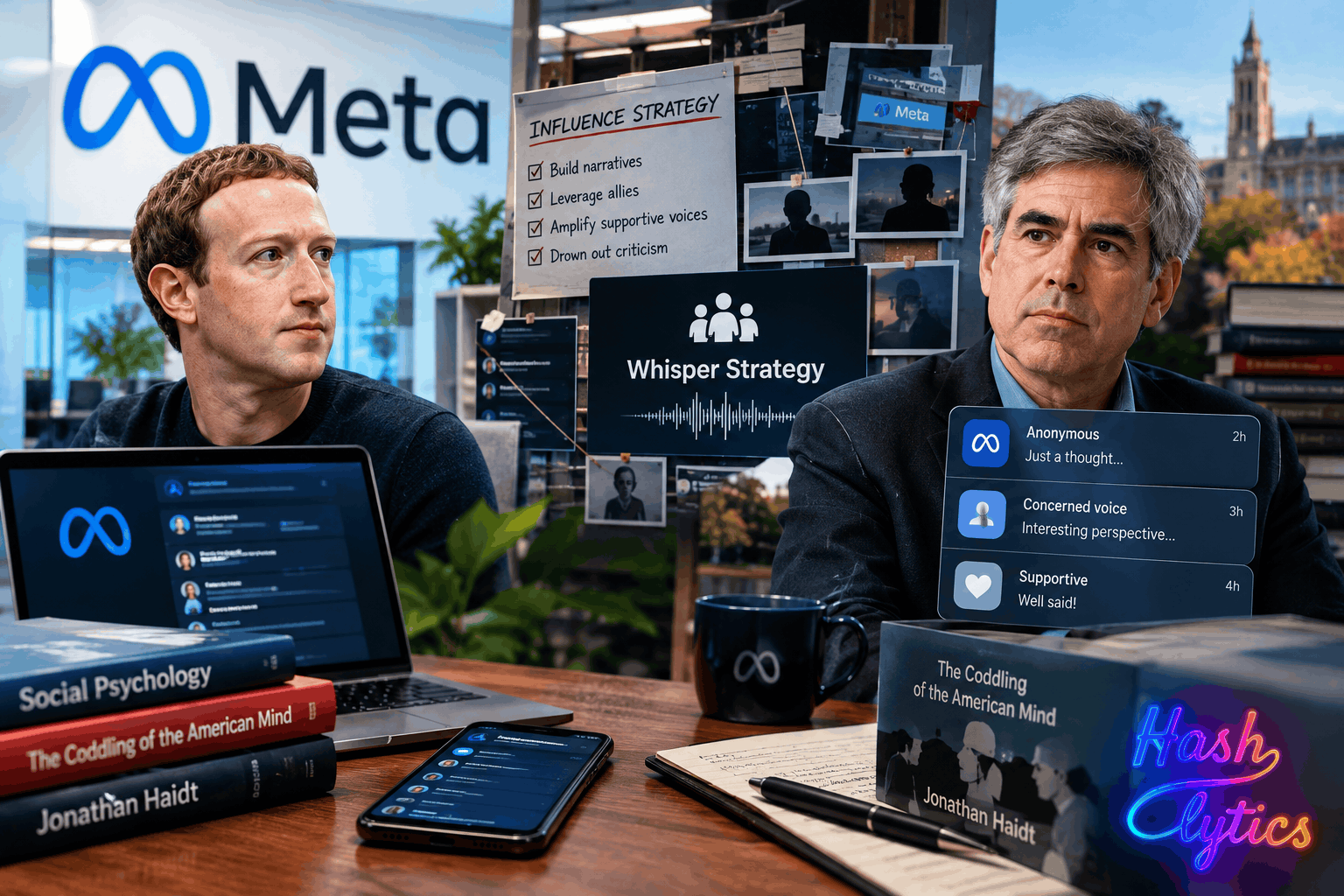
The material comes from internal “Well-being Meeting Sound-check Notes” included in a recent legal filing. At a meeting on , attended by Curtiss Cobb, then Meta’s vice-president of research, the stated goal was: how do we get the academic community to disavow Haidt.
The notes add that Meta can’t co-opt them, so how do we enrage them.
The approach described was a below-the-line campaign
rather than a loud strategy
, and the notes also mention “debunking” Haidt’s work. They propose getting someone named “Gellman” to write a takedown piece.
Andrew Gelman, a Columbia University professor who has been critical of Haidt’s work, wrote in a blogpost that he was never hired by Facebook to do a hit job on Jonathan Haidt.
He did confirm receiving past “no-strings” payments from Mark Zuckerberg’s company.
Haidt: “They Go After the Messenger”
Haidt told The Verge he was “not surprised.” When companies can’t dispute the evidence, they go after the messenger,
he said.
The timing of the notes matters. They were written before Haidt published his book in 2024 and discuss how to respond to a Substack post he had written. His influence has only grown since: earlier this year, UK Health Secretary Wes Streeting asked Haidt to address officials on a possible social media ban.
The filings do not say whether Meta ever acted on the “whisper strategy” ideas, and the minutes reflect internal discussion from March 2023 only. The documents emerged from litigation by school districts suing Meta, and the company has been approached for comment.
Hashlytics Take
The most telling line is not “disavow” but “how do we enrage them.” It treats an independent researcher as an audience problem to be managed rather than evidence to be answered, and it prefers a quiet, deniable route over a public rebuttal. That choice says more about how Meta viewed the strength of its own case than any denial could. Gelman’s disclosure of past “no-strings” payments also shows why the plan was workable on paper: when the same company funds parts of the academic world it wants to steer, the line between research relationships and reputation management gets thin. Until the filings show execution, this remains a record of intent, but in a case about what Meta knew and how it responded to outside warnings, intent is exactly what the plaintiffs are looking for.
Follow Hashlytics on Bluesky, Facebook, LinkedIn , Telegram and X to Get Instant Updates