+0.25%
-0.42%
-1.99%
+0.07%
-1.00%
-2.13%
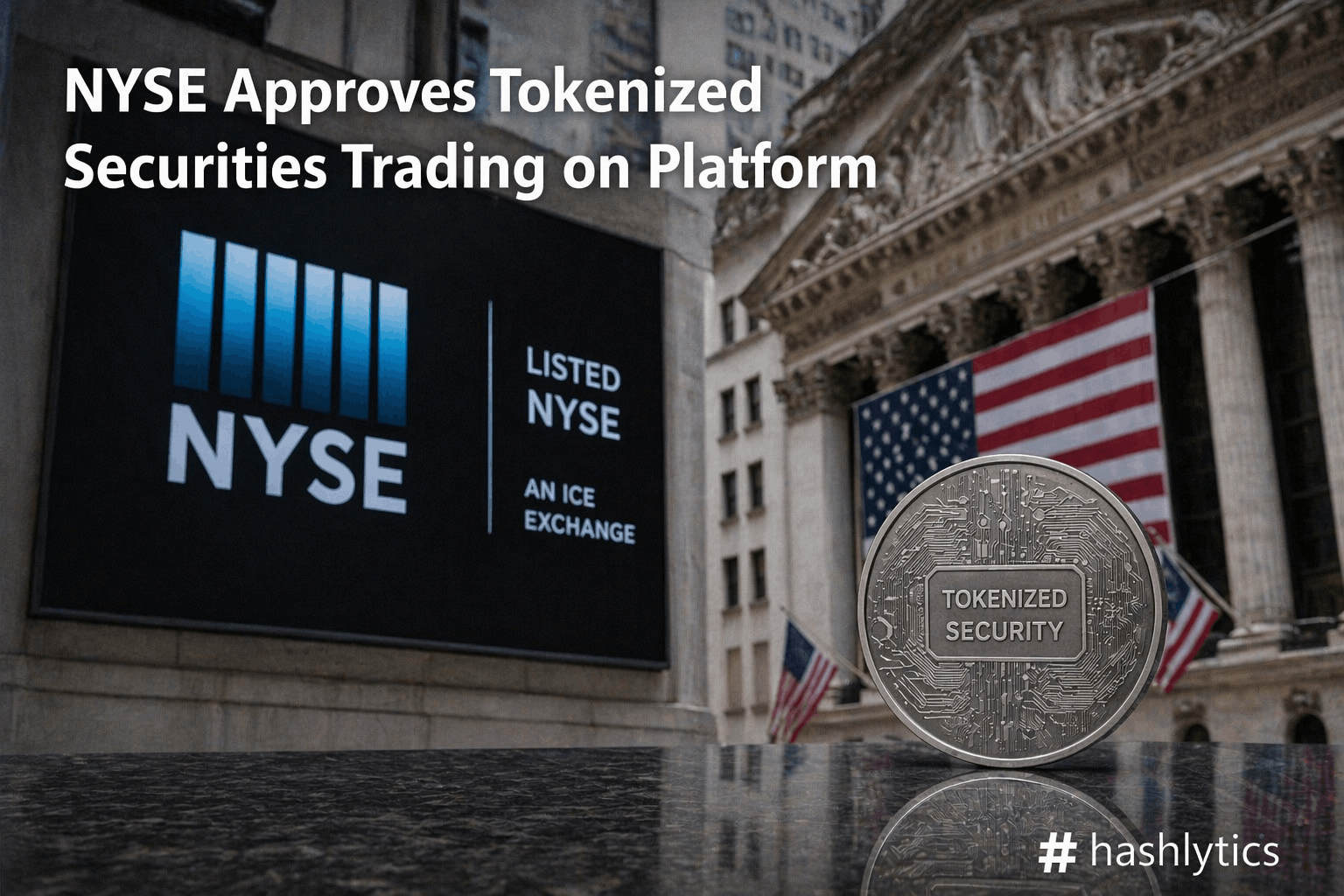
SEC Greenlights NYSE Tokenized Securities Trading
The SEC approved with immediate effectiveness NYSE’s proposed rule change (SR-NYSE-2026-17), enabling the listing and trading of tokenized securities on the exchange. Tokenized and conventional shares will trade on the same order book with identical execution priority, sharing the same CUSIP identifier and settling T+1 through the Depository Trust Company.
At launch, eligible securities are limited to Russell 1000 constituents and ETFs tracking major indices such as the S&P 500 and Nasdaq-100. Member organizations can flag a tokenization preference at order entry by specifying blockchain and wallet address. The DTC then tokenizes or de-tokenizes the entitlement post-settlement.
Building on Established Blockchain Infrastructure
The NYSE rule builds directly on the DTC’s tokenization pilot program, which received SEC staff no-action relief in December 2025. This foundational work demonstrated the technical and operational feasibility of blockchain-based settlement within existing market infrastructure.
The NYSE’s approach mirrors Nasdaq’s previously approved tokenization rule, creating consistency across major U.S. trading venues. If eligibility issues or blockchain selection problems arise, trades automatically settle in conventional form as a fallback mechanism.
Broader Exchange Strategy Beyond Traditional Hours
Tokenized trading on the NYSE represents one component of a larger modernization strategy. The exchange separately plans to launch a dedicated trading venue enabling 24/7 operations with instant settlement, orders sized in dollar amounts, and stablecoin-based funding.
The NYSE will notify members at least 30 calendar days before tokenized trading goes live on the main exchange. This implementation window allows brokers and institutional investors to prepare systems and train personnel for the new asset class.
What Traders and Institutions Should Watch
The parallel approvals at Nasdaq and NYSE signal regulatory confidence in blockchain-native settlement mechanisms. Institutional adoption hinges on custody solutions, wallet infrastructure maturity, and real-time trading volume migration from conventional to tokenized forms.
Member firms must assess blockchain compatibility and wallet management protocols before the launch window. The fallback settlement mechanism reduces execution risk but does not eliminate the operational complexity of managing dual-form asset inventories during the transition phase.
Follow Hashlytics on Bluesky, LinkedIn , Telegram and X to Get Instant Updates