A Wake-Up Call for Canada
The shutdown has pushed AI sovereignty and concerns about U.S. dominance to the forefront of global discussions, including at the G7 summit. For Canada, the incident is more than a disruption. It is a direct consequence of years of under-investment in the commercial, capital, and governance conditions needed for lasting AI sovereignty, despite long celebrating its research leadership.
Canada’s new AI for All strategy acknowledges that relying on foreign technology creates a strategic vulnerability. The strategy allocates billions to compute infrastructure, skills development, and domestic AI capacity. But building data centers alone does not eliminate dependence on external models. Canada also needs to foster robust commercial conditions, long-term investment, and clear procurement pathways that allow domestic AI companies to grow at home rather than seek opportunities elsewhere.
A Research Giant With a Commercial Gap
Canada’s history in modern AI research is genuinely impressive. Yoshua Bengio, a computer science professor at the Université de Montréal, helped make Montréal one of the world’s leading AI research hubs. Geoffrey Hinton‘s foundational deep learning work at the University of Toronto contributed significantly to today’s AI systems and earned him a Nobel Prize.
Yet a real gap exists between scientific leadership and commercial control. In 2013, Google acquired Hinton’s startup DNNresearch, and both co-founders eventually moved to Google, with Ilya Sutskever later co-founding OpenAI. The numbers tell the same story at a national level. Only seven percent of IP rights generated through Canada’s Pan-Canadian AI Strategy are owned by Canadian private sector firms. In 2024, two-thirds of high-potential Canadian-led startups raising over $1 million were headquartered outside Canada. Canada also deployed less than two percent of global AI venture capital, despite hosting roughly 10 percent of the world’s top-tier AI researchers.
When a Business Relationship Becomes a Dependency
Most Canadian organizations license AI access from a handful of American companies, operating under U.S. law and subject to U.S. government decisions. That commercial relationship can swiftly transform into a strategic dependency following a national security order. Canadian organizations should now be demanding vendor contracts that spell out what happens when access is suspended, what data is retained, and what notice obligations exist.
The stakes here extend well beyond Canada. The U.S. controls an estimated 74 percent of global AI supercomputer capacity, and leading American firms build and operate most of the frontier models the rest of the world relies on. This concentration of power makes questions of access, ethics, and safety globally consequential, yet they are currently addressed largely through national laws and corporate decisions made in one country.
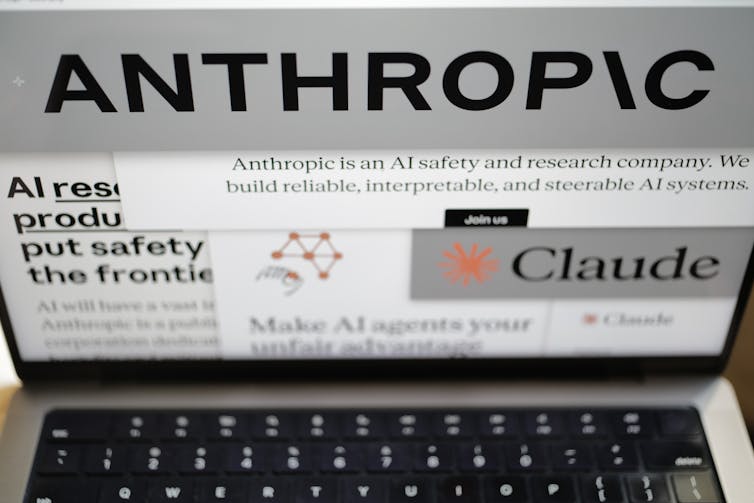
The Anthropic case makes these governance questions harder to ignore for governments and businesses worldwide. It forces a genuine re-evaluation of who gets to decide access to critical AI infrastructure, and what happens to everyone else when they do.
Follow Hashlytics on Bluesky, LinkedIn, Telegram and X to Get Instant Updates