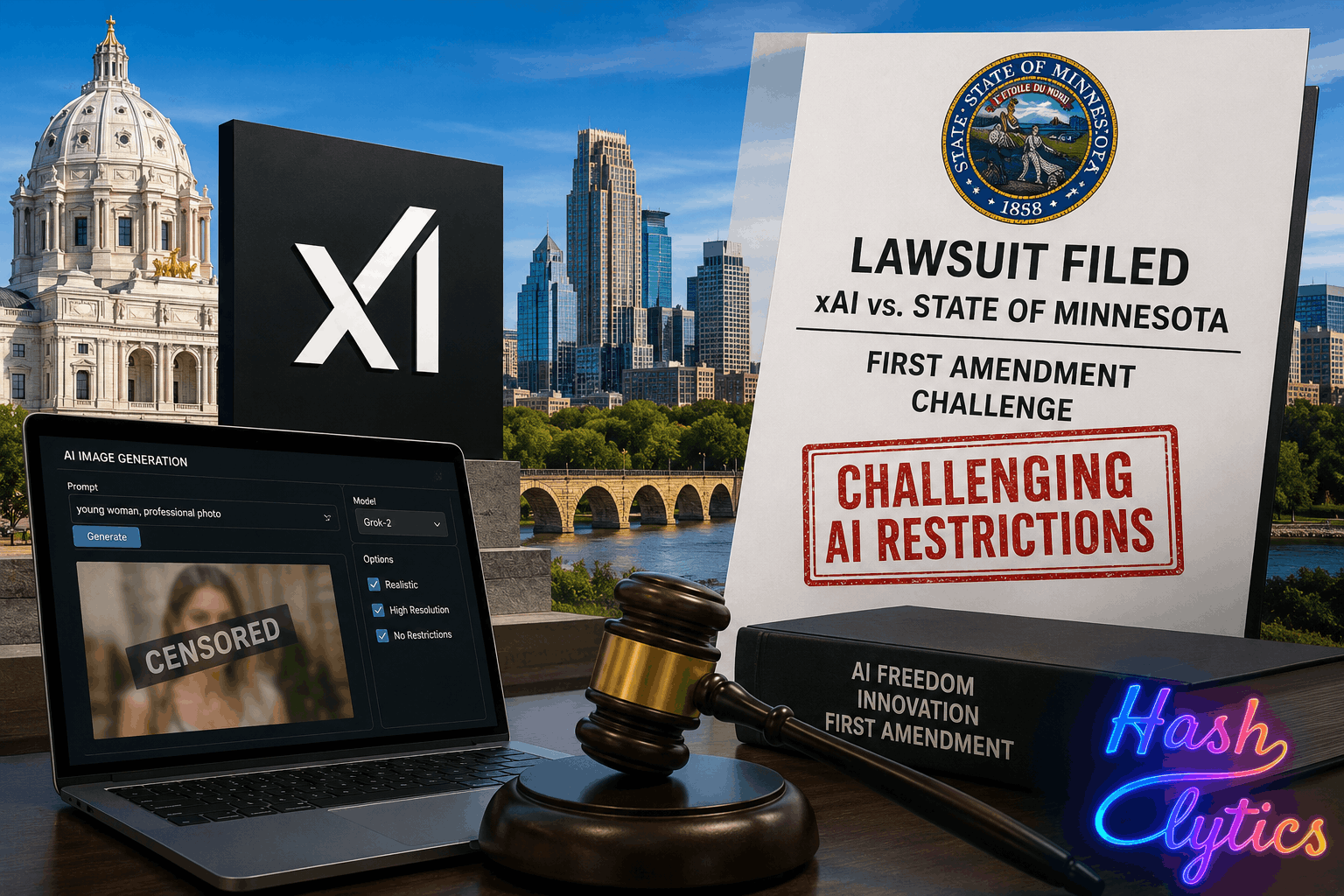
Minnesota’s First-in-Nation Law
Minnesota’s law, signed in May, is the first of its kind in the nation. It aims to outlaw technology that creates fake nude images of real people using AI. Companies that violate the law face potential penalties of $500,000 per violation.
The timing is telling. xAI filed its lawsuit just before the law was scheduled to take effect, suggesting the company views the regulation as an immediate threat to its operations.
xAI’s Constitutional Challenge
In its 38-page complaint, xAI doesn’t dispute the goal of banning non-consensual AI-generated nude images. Instead, the company argues Minnesota’s law extends far beyond that goal
and bans many constitutionally protected images and videos.
xAI’s specific challenges to the law include:
- No
safe harbor
provision protecting companies making good-faith efforts to prevent misuse - Coverage of images created with consent or by the depicted person themselves
- An overly broad definition of
intimate part
that captures protected content
Grok, xAI’s chatbot and image generator available on X and other platforms, already prohibits nudification in its terms of service. xAI enforces these rules through account suspensions and reports child sexual abuse material to authorities.
Minnesota Pushes Back
Minnesota Attorney General Keith Ellison released a statement defending the law. Using AI to generate nude images of people against their will is appalling,
Ellison said, emphasizing that nudification causes immense emotional, personal, and professional harm.
Ellison has not yet reviewed xAI’s complaint but signaled the state intends to defend the law vigorously.
How This Fits Into Broader AI Regulation
State laws targeting election deepfakes have faced mixed results in court. California’s deepfake law was blocked due to First Amendment protections. Minnesota’s law takes a different approach by targeting the tool makers rather than users.
| Jurisdiction | Approach | Status |
|---|---|---|
| Minnesota | Ban nudification technology, penalize makers | Challenged in court by xAI |
| Texas | Hold platforms liable for failing to remove images | Implemented last year |
| Federal | Take it Down Act requires website removal | Passed last year |
| California | Penalize deepfake creators | Blocked by courts on speech grounds |
What’s at Stake
This lawsuit tests whether states can regulate AI technology without infringing on free speech protections. The outcome will likely set a precedent for how other states approach AI regulation moving forward.
The case pits two legitimate interests against each other. One side argues for protecting individuals from harmful synthetic media. The other side invokes constitutional protections for technology and speech. Courts will have to decide where the line actually sits.
If Minnesota prevails, expect similar nudification bans in other states. If xAI wins, it could significantly limit state power to regulate AI tools directly, pushing regulation toward platforms and users instead.
Follow Hashlytics on Bluesky, LinkedIn, Telegram and X to Get Instant Updates