One Memory, Not Two Separate Products
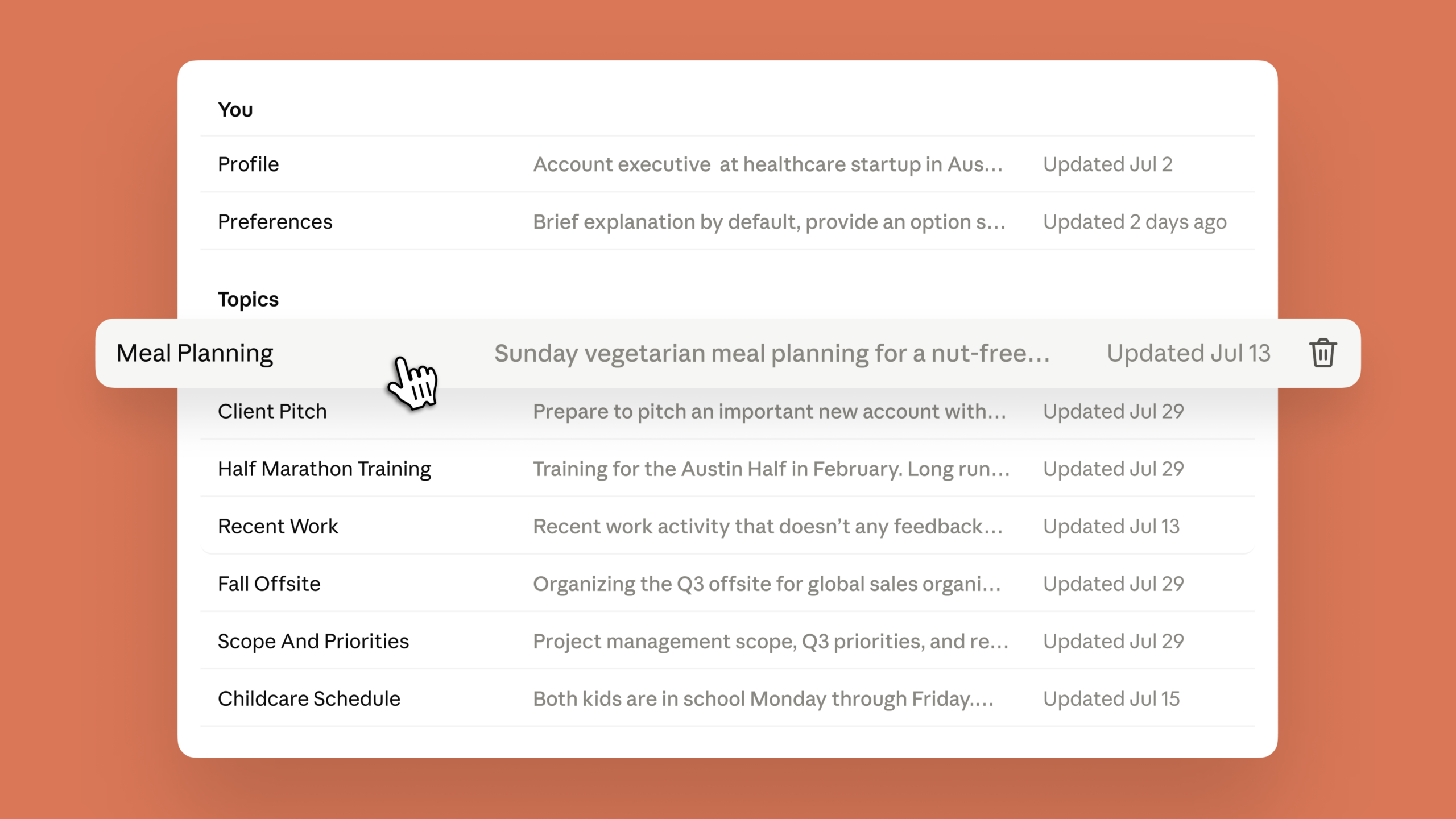
Starting Tuesday, Claude will retain information learned in one interaction even when a user switches to a different context. That means continuity across chat and Cowork rather than two assistants that happen to share a name. Anthropic is also giving users direct control to read, edit, or delete any information Claude has stored.
Previously, developing a project idea in chat meant starting over with all the same details once a user moved to Cowork, which was a common source of frustration. Now Claude functions as one continuous assistant, removing the feeling of using two separate tools under a shared brand.
Anthropic offers an example: drafting an update for a manager or building an agenda for a conference. Cowork will already understand references from earlier chats, including details like headcount, city, or speaker names, without the user typing them in again. Claude also now adds topics to memory as conversations happen rather than waiting until a chat ends to summarize it, which speeds up how quickly information becomes available across both products.
What Claude Will and Won’t Remember
By default, Anthropic states Claude will not store personal or sensitive information, including:
- Health data
- Race and ethnicity
- Religious beliefs
- Political views
- Gender identity
Users can opt in to include sensitive topics through a toggle, and the app will notify them when sensitive information gets saved to memory. Some categories are excluded entirely regardless of user settings. Claude will never save government issued IDs, Social Security numbers, criminal history, or immigration status, along with any other information that violates Anthropic’s acceptable use policy.
The feature is enabled by default across Free, Pro, and Max plans on web, desktop, and mobile. iOS and Android users need to update to the latest app version to access it.
Hashlytics Take
The interesting tension here isn’t the memory feature itself, it’s the default setting. Most AI companies ship privacy-sensitive features as opt-in, then quietly wonder why adoption stays low. Anthropic flipped that by making unified memory the default while carving out a genuinely long exclusion list for sensitive categories. That’s a bet that most users want continuity more than they want to manually configure it, and that the excluded categories are narrow enough to avoid a backlash. Whether that holds depends entirely on how well Anthropic’s filtering actually works in practice, not just what the policy says on paper.
Follow Hashlytics on Bluesky, Facebook, LinkedIn , Telegram and X to Get Instant Updates