EU Battery Rule Forces Global Design Standards
Article 11 of the EU regulation on batteries and battery waste, adopted July 12, 2023, requires all mobile phones sold in the European Union to feature removable batteries that users can replace themselves. This marks a departure from the sealed-battery designs that major manufacturers adopted over the past decade.
The regulation applies to all major handset makers operating globally, including Transsion, Huawei, Samsung, Apple and Xiaomi. Manufacturers cannot justify maintaining different design standards across markets if they can produce durable, repairable devices for Europe.
Battery Degradation Drives Device Obsolescence in Africa
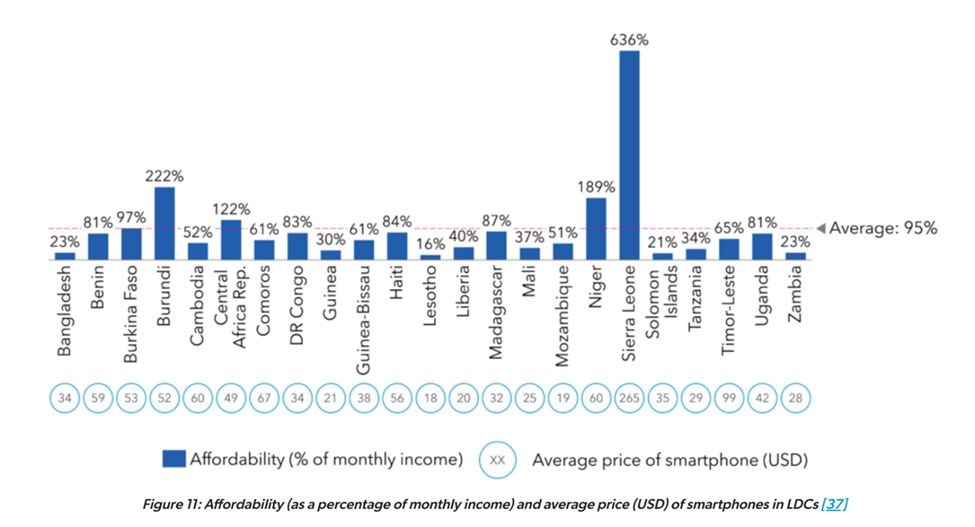
In sub-Saharan Africa, a smartphone costs approximately 45% of average monthly income, according to the International Telecommunication Union. Device affordability remains the primary barrier to digital access across the continent.
Battery failure presents a critical problem in this context. Even when screens remain intact, processors function and applications remain relevant, deteriorating battery life renders otherwise functional phones unusable. Without affordable replacement options, consumers discard entire devices, amplifying both financial hardship and environmental damage.
The GSMA reported in 2026 that affordability continues driving low smartphone adoption rates. Extended device lifecycles, not rapid product turnover, match African consumer behavior and purchasing constraints.
Electronic Waste Crisis Accelerates Without Intervention
Global electronic waste generation reached 62 million metric tons in 2022, with only 22.3% formally collected and recycled, according to the ITU and the United Nations Institute for Training and Research. Projections indicate volumes could reach 82 million metric tons by 2030, growing five times faster than documented recycling capacity.
Africa remains particularly vulnerable. Formal e-waste collection and recycling rates fall below 1%, compared with 42.8% in Europe. Mobile phones contribute significantly to this problem, with millions of devices abandoned due to battery failure despite retaining functional components.
Regulatory Precedent Opens New Possibilities for African Policymakers
The European framework demonstrates that regulation can influence product design at a global scale. African states and regional bodies can pursue similar discussions on repairability standards, spare parts availability, product lifespan transparency and manufacturer accountability for electronic waste.
Governments have concrete levers available. Regulatory frameworks aligned with local realities can drive the circular economy beyond policy rhetoric into measurable industrial outcomes. Removable batteries represent not outdated technology but a shift toward durability and accessibility, creating a different innovation benchmark centered on longevity rather than performance alone.
Market Expectations Align with Durability Standards
Consumer behavior across Africa contradicts the rapid upgrade cycles that manufacturers traditionally justified. Device owners keep phones longer, making durability, repairability and local maintenance capacity essential rather than optional features. This demand profile creates natural alignment between EU regulatory requirements and African market realities.
Manufacturers face a strategic choice: maintain sealed designs for African markets while producing repairable devices for Europe, or adopt uniform standards that serve both regions. The first option invites regulatory scrutiny and reputational risk. The second reduces manufacturing complexity while improving customer retention and brand loyalty in price-sensitive markets.
EU Mandate Becomes Africa’s Structural Opportunity
The removable battery requirement is not a technical regression but a recognition that innovation must serve human and environmental needs alongside performance metrics. For Africa, where purchasing power remains constrained and device lifecycles extend naturally, this shift validates a market reality that manufacturers long ignored. The question is no longer whether removable batteries will arrive in African markets, but whether African policymakers will demand them proactively or wait for manufacturers to comply with European standards.
Follow Hashlytics on Bluesky, LinkedIn , Telegram and X to Get Instant Updates