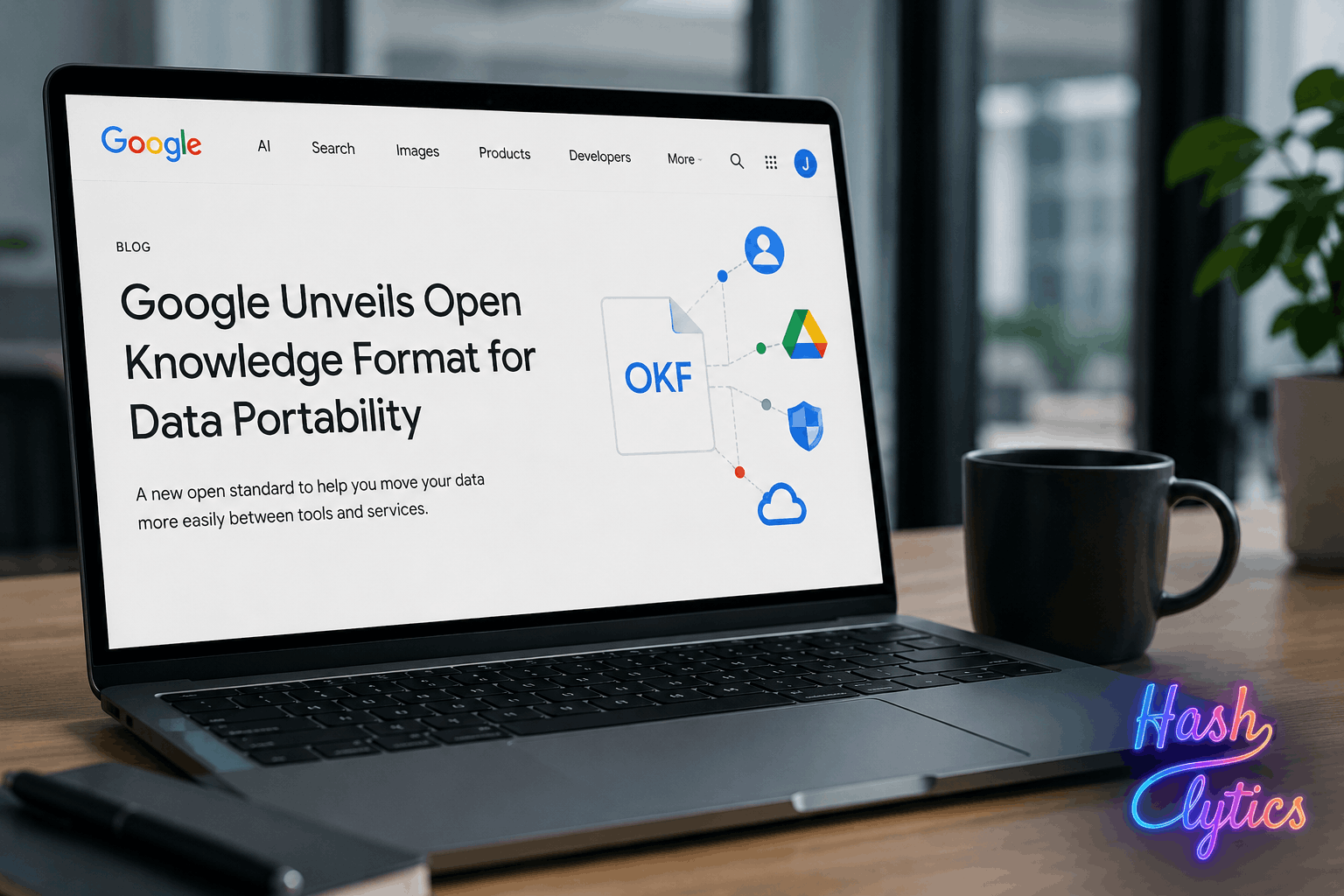
What Is OKF v0.1?
OKF packages curated knowledge using Markdown files paired with YAML frontmatter. The approach is deliberately simple. Each concept lives as a single Markdown document, with a required type field and optional metadata including title, description, resource, tags, and timestamp.
This design means OKF bundles can be stored directly in Git repositories, enabling review processes that feel familiar to documentation workflows. Google Cloud positions it as an open standard for representing the metadata, context, and curated knowledge that AI systems increasingly need to function effectively.
How It Works in Practice
The real strength of OKF is its simplicity. These bundles integrate into existing Git workflows without requiring a central registry, fixed taxonomy, or dedicated storage backend. Concepts can be linked using standard Markdown links, making the bundles both human-readable and machine-parseable.
Think of it this way: dataset descriptions, API notes, and runbooks become easily inspectable by your team while remaining structurally transparent to AI agents. No complex runtime dependencies. No proprietary tools. Just well-organized knowledge that lives where your team already works.
Google released reference tooling in its knowledge-catalog repository on GitHub to support early adoption, and third-party projects like Kiso are already showing how OKF bundles can generate static websites and outputs for large language models.
Why This Matters for Data Teams
The minimal structure of OKF v0.1 makes incremental adoption straightforward for data and platform teams. Organizations already manage knowledge across catalogs, wikis, and documentation repositories. OKF provides an explicit interchange convention that lets teams consolidate those scattered sources into a portable, standardized format.
| What OKF Enables | Benefit |
|---|---|
| Git-based versioning and review | Familiar workflows for technical teams |
| Portable knowledge bundles | Move data between platforms without lock-in |
| Machine-readable metadata | AI agents can parse and understand context |
| No central registry required | Teams control their own knowledge organization |
What Comes Next
OKF’s success depends on whether the industry adopts it beyond Google’s initial tooling. Watch for several key indicators in the coming months.
First is ingestion support from competing catalog vendors and cloud providers. Second is adoption across various agent frameworks. Third is the development of validators to catch broken links and missing metadata, which will be crucial for widespread implementation.
If OKF gains traction, it could become the standard interchange format for knowledge in the AI era. If adoption stalls, it remains a useful tool for Google Cloud customers but loses the vendor-neutral promise it’s built on.
Follow Hashlytics on Bluesky, LinkedIn, Telegram and X to Get Instant Updates