The new model guarantees GPU capacity sales to select AI cloud providers, known as neoclouds, over several years. In return, NVIDIA receives a share of revenues earned above a guaranteed level. The structure aims to help startups, model builders, enterprises, research organizations, and regional AI players secure better terms from cloud service providers without requiring massive upfront capital commitments.
How the Model Works
Previously, AI cloud providers required long-duration contracts from customers to support their own infrastructure spending. NVIDIA’s new arrangement lets these providers secure better creditor terms and offer shorter-term contracts to their clients. This lower barrier to entry could unlock GPU access for organizations that previously couldn’t afford it.
NVIDIA CFO Colette Kress and VP of Global AI Clouds and Infrastructure Ecosystem Raj Mirpuri explained the rationale in a joint statement: This new model enables AI clouds to procure NVIDIA infrastructure for AI-native, enterprise and ISV customers through economic alignment with a revenue-sharing and credit-support model.
Two providers have already committed. Australian firm Sharon AI will purchase up to 40,000 NVIDIA Grace Blackwell GB300 GPUs. Indonesian company Firmus is building a data science express AI factory in Indonesia, projected to eventually house up to 170,000 NVIDIA GPUs across 360 megawatts of power capacity.
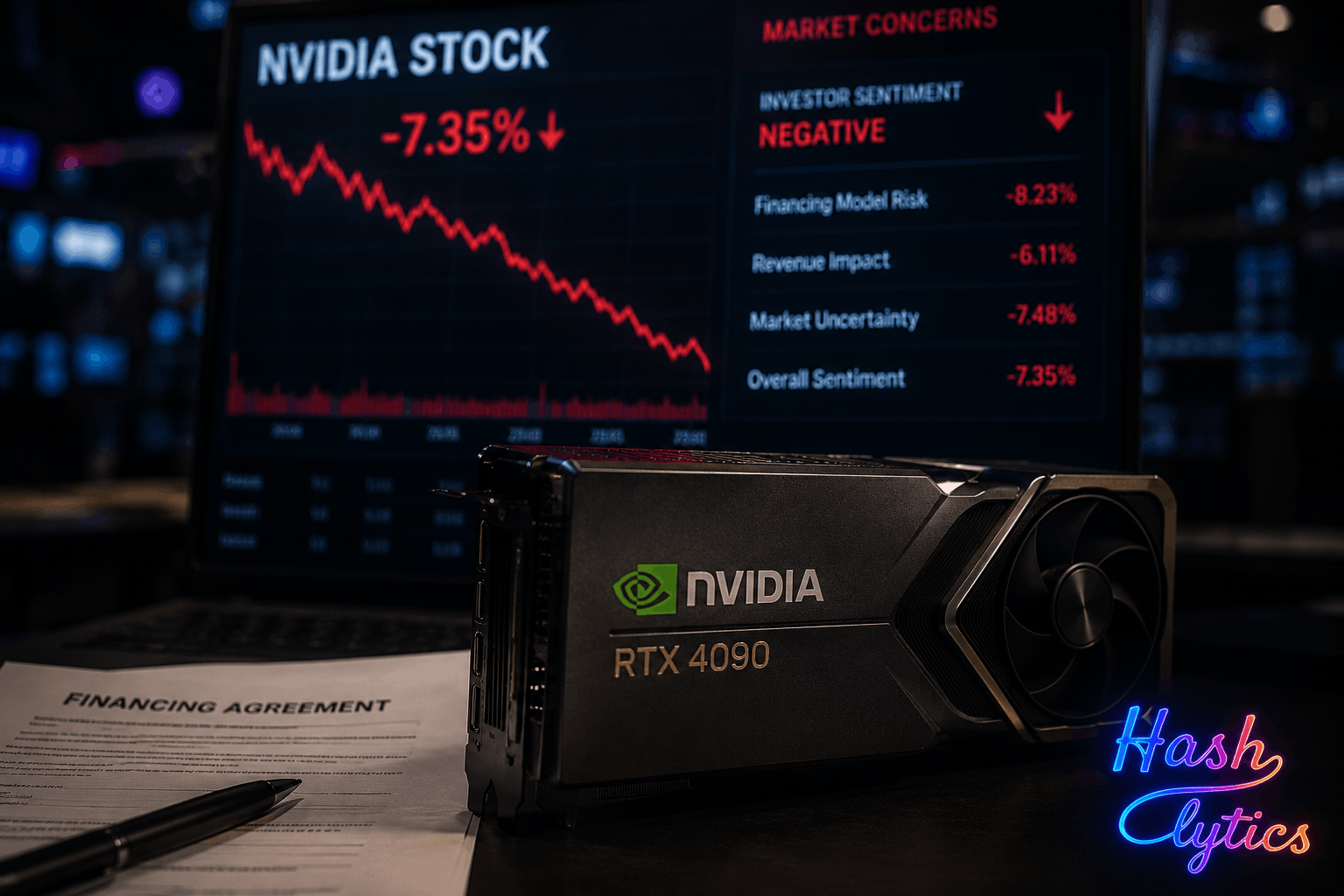
Why Investors Are Nervous
The stock decline reflects deeper doubts about AI demand trajectory. Investors question whether NVIDIA is accurately measuring long-term compute consumption. Some analysts point to reports that hyperscalers are selling excess GPU capacity, suggesting possible overbuild in AI infrastructure.
The timing made matters worse. On the same day NVIDIA announced the new model, Bloomberg reported that Meta is launching a cloud-based business to sell AI compute and models. Meta had previously planned to purchase millions
of GPUs from NVIDIA earlier this year. This perceived shift triggered investor concern about sustained hyperscaler demand.
NVIDIA CEO Jensen Huang had praised Meta’s AI efforts last year, stating that no one deploys AI at Meta’s scale, integrating frontier research with industrial-scale infrastructure to power the world’s largest personalization and recommendation systems for billions of users.
The company’s pivot to selling rather than just buying compute raised questions about future demand strength.
The Circularity Question
Investors also raised concerns about what they view as circular arrangements in NVIDIA’s business model. NVIDIA maintains a backstop deal with CoreWeave since 2023, committing up to $6.3 billion through 2032 if CoreWeave fails to sell a specified amount of NVIDIA GPU capacity. NVIDIA has also invested in CoreWeave, which provides infrastructure to customers like OpenAI, another NVIDIA investment.
The revenue-sharing model means NVIDIA earns revenue from the sale of its own chips when cloud providers resell them. During the Q4 FY2026 earnings call in February 2026, Huang dismissed these concerns as ridiculous
, emphasizing the ongoing necessity for computing power. He stated: Without compute, there’s no way to generate tokens. Without tokens, there’s no way to grow revenues. In this new world of AI, compute equals revenues.
Manufacturing Questions Add Pressure
Additional pressure came from research firm SemiAnalysis, which reported manufacturing setbacks for NVIDIA’s Kyber NVL144 rack system. An NVIDIA spokesperson confirmed the issue but downplayed concerns: Our road map is intact. Vera Rubin Ultra will scale up to a larger NVL576 domain in its planned 2027 timeline.
What Comes Next
NVIDIA’s new financing model could genuinely increase GPU adoption among startups and smaller enterprises that were previously locked out of the market. However, investor skepticism persists about the true scale of AI demand and whether NVIDIA’s interconnected business arrangements create sustainable value or simply shuffle revenue among the same ecosystem players.
The answers will likely emerge in NVIDIA’s next quarterly earnings reports, which will reveal how the financing model is performing and whether investor concerns about demand sustainability prove warranted.
Follow Hashlytics on Bluesky, LinkedIn, Telegram and X to Get Instant Updates