+1.04%
+0.60%
+0.00%
+0.05%
+6.04%
+0.88%
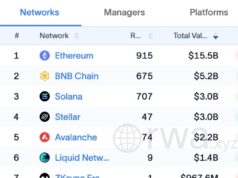
The International Monetary Fund (IMF) is warning that the $65 billion real-world asset (RWA) tokenization market faces four obstacles that could stand in the way of safe expansion. In its latest Global Financial Stability Report, the fund says these problems feed into one another, so progress on one front depends on progress on the others.
Four Constraints That Reinforce Each Other
The IMF names legal certainty, regulatory clarity, interoperability, and safe settlement assets as the conditions the market needs before it can grow. These gaps persist even as investor interest in the sector keeps rising.
- Legal certainty: Investors need to be confident they can enforce the rights a tokenized asset represents.
- Regulatory clarity: Regulators need to spell out how existing rules apply to new distributed ledger technologies.
- Interoperability: Trading remains fragmented across networks that do not easily work together.
- Settlement assets: The market needs safe, widely accepted assets to settle trades.
The fund describes these four constraints as mutually reinforcing, which means weak progress on one makes the others harder to fix.
Investors Are Already Showing Up
Interest is clearly there. The IMF found that more than half of tokenized trades happen outside traditional market hours, and about 80% of tokenized equity trades involved amounts smaller than one share. That points to retail investors looking for fractional ownership and lower entry costs.
Conventional equity prices also tend to reflect overnight tokenized equity returns. Both markets appear to react to the same information, even though they operate in very different ways.
Thin Liquidity and Fire-Sale Risk
Tokenized markets are less active and more volatile than their traditional counterparts, and fragmentation makes liquidity worse. That can push prices away from where they should be.
Repurchase agreements (repo) account for most tokenized activity, averaging $300 billion to $350 billion in daily transactions. That is still a fraction of the roughly $13 trillion in daily U.S. repo volume. The IMF warns that continued growth could amplify risks like fire sales and liquidity runs, because tokenized markets can be more tightly interconnected and more leveraged than traditional ones.
What the IMF Wants From Regulators
The fund wants rules that treat similar activities the same way regardless of the technology behind them. It also calls for connections between tokenized platforms and traditional financial systems, and for authorities to watch emerging vulnerabilities closely.
Traditional finance’s sequential processes add costs but also provide crucial safety buffers. Those protections would largely disappear in a fully tokenized environment, which is why safeguards against interconnectedness, leverage, and liquidity risk are, in the fund’s view, paramount as RWA tokenization expands.
Hashlytics Take
The most useful point in the IMF’s analysis is the one about friction. Traditional settlement adds cost and delay, and tokenization sells removing both as the fix. But the sequential steps the IMF describes are also the brakes that keep one failed trade from spreading to others. The industry pitch is, in effect, a request to remove those brakes, and the fund is saying they are doing real work. Until tokenized markets build their own equivalents, speed should not be counted as an unambiguous improvement.
Follow Hashlytics on Bluesky, Facebook, LinkedIn , Telegram and X to Get Instant Updates