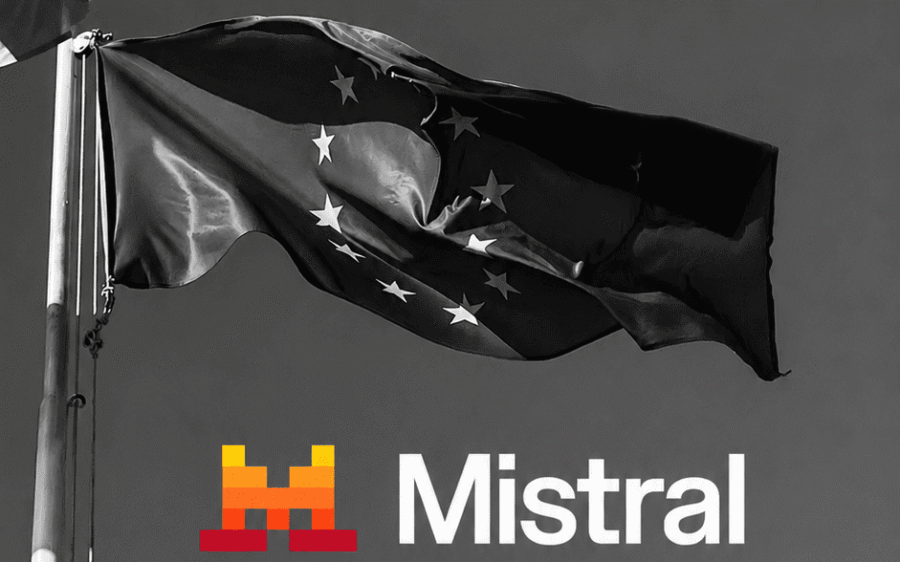
Mistral AI, a prominent European artificial intelligence firm, is making a strategic push to dominate the European sovereign AI infrastructure market. The company aims to capture significant spending from regulated industries and public institutions across the continent, offering a compelling alternative to US-based cloud providers. This move presents a unique challenge, as Mistral simultaneously distributes its models through major American hyperscalers while advocating for European AI autonomy.
The Sovereign AI Play
Mistral AI has positioned itself as a critical player in Europe’s AI landscape by focusing on sovereign inference
for sensitive workloads. This involves offering dedicated European-jurisdiction compute for running AI models, packaged as a compliant and auditable service aimed at enterprises and public sector buyers with strict legal and operational requirements.
The company’s approach is deliberate and strategic. Rather than owning vast data centers or competing directly on compute with giants like AWS, Mistral aims to be an orchestration and compliance layer. It leverages reserved capacity on European third-party data centers to navigate complex regulatory environments more efficiently than traditional hyperscalers.
€600 Million War Chest
Mistral AI’s market potential became clear when the company closed a €600 million Series B funding round in June 2024, establishing a valuation of approximately €6 billion and earning the title of Europe’s highest-valued AI startup at the time.
Yet here’s where the paradox emerges. Despite its sovereign aspirations, Mistral distributes its models through marketplace listings on Microsoft Azure, Google Cloud, and Amazon Web Services. At the same time, it is developing La Plateforme, its direct API and enterprise hosting offering, to serve its European-focused strategy.
The Regulatory Tailwind
The demand for sovereign AI infrastructure is heavily influenced by Europe’s evolving regulatory landscape. The EU AI Act, which entered into force in August 2024, imposes tiered obligations on foundation model providers. A European-incorporated entity like Mistral is better positioned to navigate these compliance requirements than US-based competitors.
Legal precedent also favors sovereign infrastructure. The 2020 Schrems II ruling highlighted persistent legal uncertainty regarding US surveillance law’s reach over data processed by US-owned entities, even within European facilities. Coupled with national frameworks like France’s SecNumCloud and Germany’s BSI C5, this creates concrete compliance checkboxes favoring European providers.
A 2024 survey by CISPE found that approximately 72% of European enterprise IT decision-makers cited data sovereignty as a primary or secondary factor in cloud vendor selection.
The Hyperscaler Dilemma
Mistral’s dual strategy creates what amounts to a fundamental tension. Its reliance on US cloud platforms for revenue and reach could directly conflict with its long-term sovereignty goals. Workloads run on American hyperscalers do not validate the sovereign model. More critically, enterprise buyers integrating Mistral models through these platforms may build entire workflows anchored to them, creating friction for future migration to La Plateforme.
US hyperscalers are not standing still either. Microsoft’s EU Data Boundary initiative, extended in early 2024, is specifically designed to narrow the compliance gap Mistral aims to exploit. While these efforts may not fully resolve all aspects of the EU AI Act, they do shrink the perceived jurisdictional advantage Mistral currently holds.
Mistral’s economic viability as a sovereign AI provider hinges on securing long-term access to GPU capacity and favorable data center commitments. The timing is opportune. The EU‘s AI Gigafactories initiative, announced in early 2025 with an estimated €20 billion in public investment, signals strong political support for sovereign AI compute across the continent.
Ultimately, Mistral AI serves as a crucial test case for whether European AI sovereignty can be commercially self-sustaining. Its combination of European incorporation, advanced open-weight model capabilities, and strategic regulatory positioning places it uniquely to build durable commercial relationships within Europe’s regulated sectors. The coming years will reveal if Mistral can solidify its market position before hyperscalers further diminish the jurisdictional advantages it currently holds.
Follow Hashlytics on Bluesky, LinkedIn , Telegram and X to Get Instant Updates