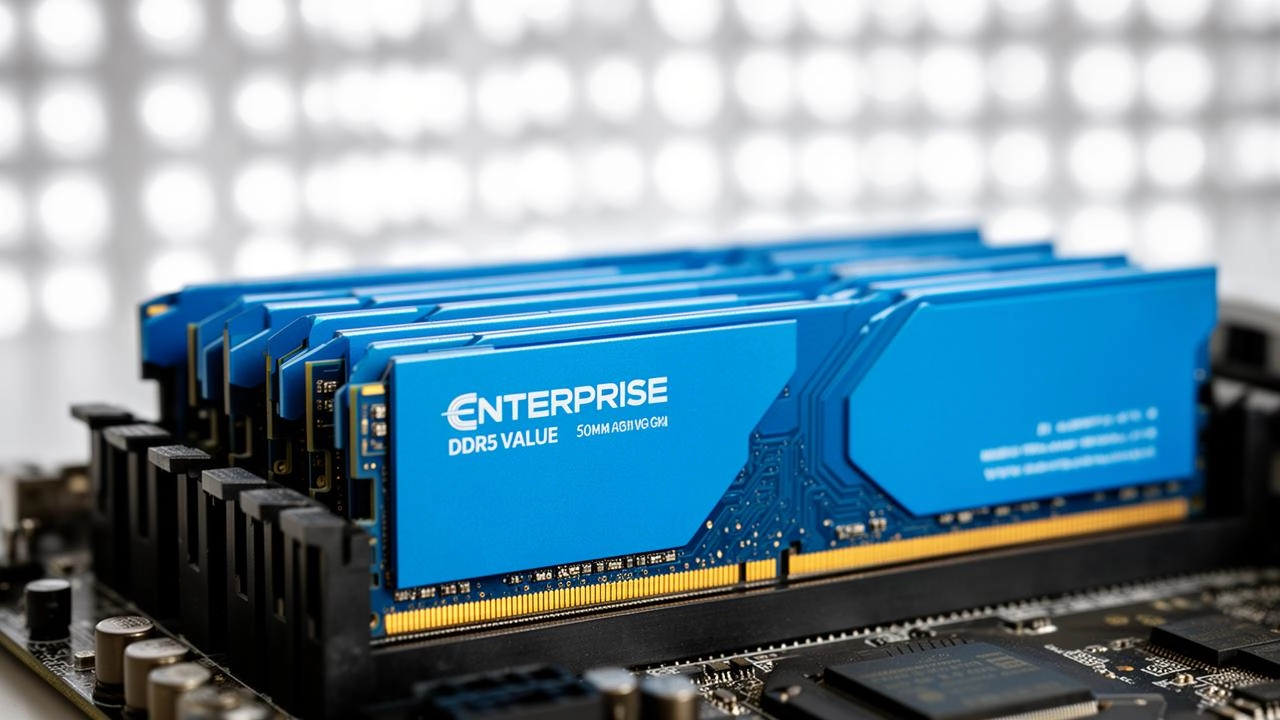
The Price Explosion: What Happened
The numbers tell the story. A 64GB DDR5 server DRAM module that cost around $1,380 at the end of June now commands between $3,100 and $3,400. That’s a 146% premium in less than six weeks.
Sovereign wealth funds from the Middle East are negotiating mid-to-long-term supply agreements directly with major manufacturers like Samsung Electronics and SK Hynix. This concentrated buying power is reshaping the entire memory market. High-end products with 6400Mbps bus speeds are being hit hardest.
| Timeline | 64GB DDR5 Price | Change |
|---|---|---|
| End of June 2026 | ~$1,380 | Baseline |
| Mid-July 2026 onwards | $3,100-$3,400 | +146% |
| Q3 2026 (projected) | 15%+ higher than Q2 | Exceeds analyst expectations |
Why Sovereign Funds Are Buying Now
This isn’t about profit. It’s about control. These nations are investing in national security and data sovereignty by building in-country data centers and running AI systems using native languages and local data. Countries like Saudi Arabia want AI infrastructure that stays within their borders.
The market structure makes their impact outsized. Memory manufacturers derive over 70% of revenue from a handful of large clients. A single sovereign buyer can shift market demand fulfillment by 3 to 5 percentage points. When that buyer is a state-backed fund with unlimited capital, prices move fast.
The Ripple Effect Hits Consumer Electronics
The damage extends far beyond data centers. Apple and Chinese smartphone manufacturers are facing real procurement challenges for the second half of 2026. Reports indicate noticeable gaps in fourth-quarter production plans. It’s not a pricing problem anymore. It’s a supply problem. There simply isn’t enough memory to go around.
This “volume allocation” issue means manufacturers can’t secure the quantities they need, regardless of price. When a sovereign wealth fund has first access to 70% of new production, consumer brands get what’s left over.
New AI Models Intensify Hardware Demand
Meritz Securities also analyzed the recent launch of Moonshot AI’s Kimi K3 model. Unlike DeepSeek, which optimized for low-cost training, Kimi K3 requires large chip clusters. The model explicitly requires at least 64 high-performance chips to run. Its per-task processing cost of $0.95 puts it on par with premium models like GPT-5.6 Sol, cementing its reliance on expensive hardware infrastructure.
This matters because it means the hardware demand isn’t slowing down. Whether closed-source or open-source, every competing AI effort ultimately needs the same servers and memory. Kimi K3 doesn’t change that calculus. It reinforces it.
Who Wins, Who Loses
Meritz Securities recommends buying semiconductor hardware stocks while reducing exposure to large-cap tech like Google and Microsoft. The thesis is straightforward: AI infrastructure investment is diversifying beyond cloud hyperscalers. Smaller AI cloud providers and enterprises are increasing their hardware spending.
The real beneficiaries are semiconductor manufacturers and hardware suppliers. They’re the ones every participant in the AI race ultimately needs. For cloud giants and smartphone makers, this is a cost problem that gets passed along to customers or absorbed as margin compression.
The Middle East’s move into memory procurement just accelerated a trend that was already underway. Hardware supply constraints are now a structural feature of the AI economy, not a temporary shortage. That changes everything about how companies plan and invest in the next 18 months.
Follow Hashlytics on Bluesky, LinkedIn, Telegram and X to Get Instant Updates