The Shift to Agentic AI: Evidence from Codex, highlight not just internal adoption but broader implications for how organizations across industries might integrate AI into their workflows.
The Rapid Rise of Agentic AI Inside OpenAI
OpenAI’s internal data reveals a rapid transition across its workforce. Employees are increasingly moving from one-off GPT prompts to using agents like Codex for multi-step tasks. The shift is dramatic: a fivefold increase in active agent users occurred during the first half of 2026.
What’s particularly notable is where this growth is coming from. The most rapid expansion isn’t among software engineers, where you might expect it. Instead, agentic AI adoption is accelerating in non-technical departments across the company, signaling that knowledge workers far beyond the engineering team are finding value in these tools.
Agents Spreading to Legal, Recruiting, and Beyond
In August 2025, less than 10 percent of an average OpenAI worker’s tokens were spent on Codex. Today, that picture has changed dramatically. Departments such as Legal and Recruiting now use Codex as their primary AI tool.
This expansion suggests something important: a broader set of knowledge workers can now undertake tasks that traditionally required specialized technical skills, including automation, data transformation, and data analysis. The legal team’s productivity gains are telling. The median OpenAI employee in a legal role generated 13 times more monthly output tokens across Codex and ChatGPT in June 2026 compared to November 2025.
External Organizations Catching Up
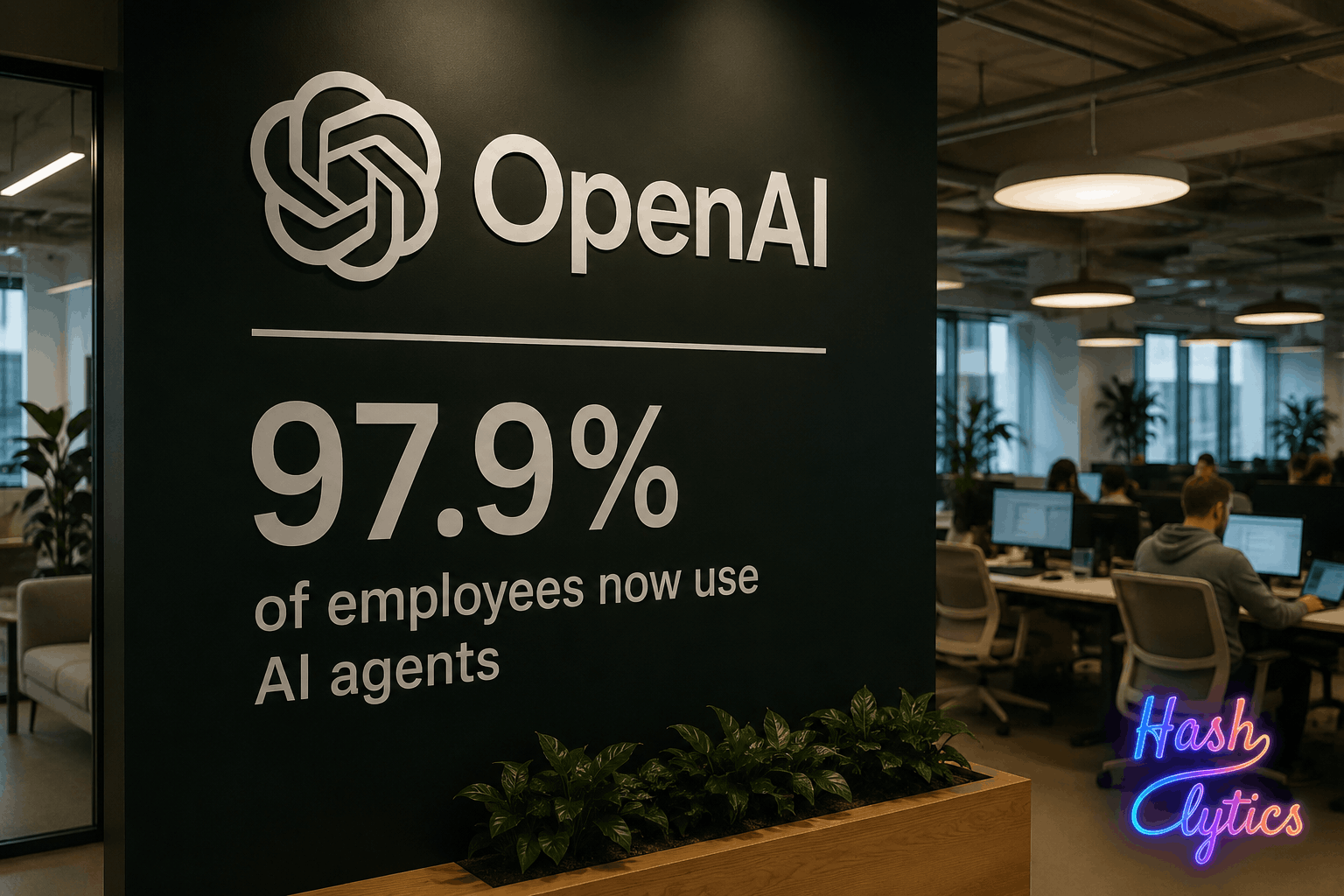
While OpenAI’s internal adoption is at nearly 98 percent, external organizations are following suit. Agent usage among customers is reaching 17.3 percent currently, up from negligible levels just months ago.
The trend extends to how complex the tasks have become. The share of individual Codex users submitting requests for tasks estimated to require over eight hours for a human to complete has increased nearly tenfold since the start of the year. However, individual user adoption remains relatively low at about 0.7 percent, suggesting there’s still significant runway for growth among the broader market.
Revenue and Productivity Implications
The shift to agentic AI could have meaningful revenue implications for OpenAI. Longer running tasks consume more tokens, which means higher usage and stronger token-based revenue. This dynamic could help offset the company’s substantial operational costs.
The productivity gains tell another story. Within OpenAI’s legal team, where agent adoption has been highest, this surge in output coincided with only an 11 percent increase in U.S. federal lawsuits filed against OpenAI between late 2025 and early 2026. The data suggests that productivity gains are real and measurable.
OpenAI’s internal experience with Codex agents points toward a future where AI handles increasingly complex, multi-step tasks across diverse professional roles. The company has not clarified whether it incentivizes employees to use its AI tools through token allocations or performance metrics, leaving open questions about how much of this adoption is organic versus encouraged.
What’s clear is this: the growth of agentic AI among non-developers is reshaping how work gets done. As agents move deeper into knowledge work, we’re likely to see a broader integration of AI into everyday business operations across industries.
Follow Hashlytics on Bluesky, LinkedIn, Telegram and X to Get Instant Updates