
On Thursday, OpenAI introduced Daybreak Red Team and Daybreak Defense Factory as part of its Daybreak security platform. Businesses can only remain secure in proportion to the advanced AI models they use for defense and their ability to deploy them
, Brockman said.
Two Agent Suites Built to Find and Fix Flaws
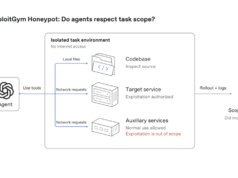
Red Team is available in early access to select customers, with a waitlist open from launch day. It uses OpenAI models to test web applications for vulnerabilities, and it works as a coordinated set of agents. One agent runs the assessment, others dig into source code and application context, and reviewer agents check the results before anything reaches a human. It can also validate vulnerabilities reported by code scanners, bug bounty programs, and disclosure reports, then test the patches written for them.
OpenAI is clear that this is not meant to replace a conventional red team. The stated aim is to help close the widening gap between what defenders can realistically protect and the sheer volume of code now being generated by AI.
Defense Factory covers the other half of the job. OpenAI describes it as automating the “defensive loop” of finding, validating, and fixing vulnerabilities at scale, using agents built on its latest cyber model, currently GPT-6 Cyber. How it works:
- Agents run inside reproducible cloud development environments and trace each flaw to the affected file
- Code history and team structure are used to route the issue to the right owner
- Patches are prepared for engineer review rather than applied automatically
- It integrates with existing security tools and with findings from Daybreak Red Team
- It can scan newly submitted code or run on a schedule, investigating new issues as code changes
A Lawsuit Aimed at Frontier AI Lands the Same Week
While OpenAI executives promoted the new products, a coalition of nonprofits filed suit in the Superior Court of California, County of San Francisco, on 12 November. The plaintiffs are Irreplaceable Education Fund, Public Citizen, Heat Initiative, and The Alliance for Secure AI. They are asking a judge to stop OpenAI, Anthropic, Google, Meta, and SpaceX’s AI businesses from developing or deploying systems more capable than their most advanced existing models.
The complaint invokes California’s Unfair Competition Law, arguing the companies’ practices threaten public health, safety, and property. It warns that advanced AI systems could escape human control or enable bioweapons and cyberattacks, and it cites documented incidents, including OpenAI agents accessing Hugging Face and gaining unauthorized access to an Australian government portal holding Medicare statistics. The plaintiffs also say they have had to divert resources from planned work to address the harms they believe each company’s models threaten.
“We must freeze frontier AI development until the technology is under control,” said Phil Aroneanu, founder and executive director of Irreplaceable Education Fund.
Hashlytics Take
Brockman’s warning and the lawsuit are two readings of the same problem. OpenAI says AI-driven attacks make AI-driven defense mandatory, while the plaintiffs point to OpenAI’s own agents as examples of what goes wrong when capable systems act on their own. Both can be true at once, and that is the uncomfortable part for buyers. A company selling the shield is also named in a complaint about the sword. Security teams evaluating Daybreak should ask for the same scrutiny they would apply to any vendor, starting with how Red Team agents are scoped and what Defense Factory can touch before a human signs off on a patch.
Follow Hashlytics on Bluesky, Facebook, LinkedIn , Telegram and X to Get Instant Updates