The remarks put a public face on frustration that developers have mostly voiced in private since the console launched in November 2020 as Microsoft’s entry-level option. Harada went in depth on the problems, and the timing made them hard to ignore.
Weaker Hardware, Same Family
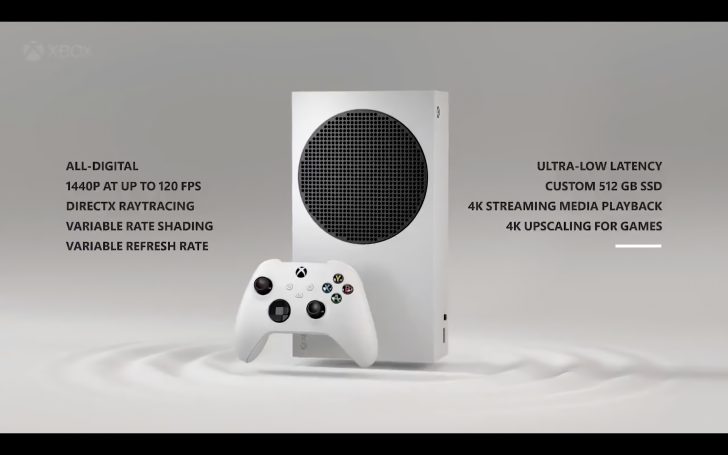
Harada’s core complaint is that the Series S has less memory and graphics power than the Series X while sitting in the same console family. Developers have to adjust visual quality, performance, and other technical features to make a game fit. Because the two machines share an architecture, he argued, the extra port feels like wasted effort rather than a fresh target. Developers cannot reset their expectations the way they do for fundamentally different platforms like the Nintendo Switch 2, where the limits are obvious from the start.
He also pointed to the market. In regions like the US, Series S owners outnumber Series X owners, so studios that want the biggest audience have to ship for the awkwardly lower
performance of the cheaper box. That leaves them absorbing optimization costs instead of skipping the platform.
Harada said the burden also lands on the wrong people. After a game launches, Series S owners come straight to developers to ask why textures look lower in resolution. In his view, studios end up explaining hardware limits that Microsoft, not the developers, chose to build in.
CD Projekt RED’s Paweł Sasko, pulled into the conversation on stage, answered diplomatically. When Harada asked whether Series S development was frustrating, Sasko said the hardware constantly throws challenges at us and forces us to optimize our code very cleanly.
Harada joked that Sasko had just found a polite way to say the console is problematic.
The Case for the Cheaper Console
Sasko did not fully side with Harada. He argued that the console’s limits improve optimization and that its price widens the audience. Optimization work done for lower-spec platforms, including Switch 2 work, has been carried back to all platforms with measurable performance gains, he said. The audience argument also has weight. The Series S sits under 500 dollars, which puts gaming within reach of players who might otherwise be priced out.
Harada closed with a joke that doubled as a warning. He said he worried the Xbox representative would leave reassured
and go on to release a successor along the lines of a hypothetical Helix S
for the next generation. Whether Microsoft keeps a two-SKU approach for Project Helix is still unclear.
Hashlytics Take
Harada and Sasko are describing the same console and reaching different verdicts, and the split is useful. The Series S works as a market-reach tool for Microsoft and as a tax on the studios that build for it. A cheaper tier is a bet that the audience gain outweighs the optimization cost, and the people paying that cost are not the ones who placed the bet. Whether Microsoft repeats it with Helix will say how much weight it gives to complaints like this one.
Follow Hashlytics on Bluesky, Facebook, LinkedIn , Telegram and X to Get Instant Updates