-0.67%
-0.88%
+9.45%
+5.61%
-2.00%
+1.64%
The Scope of the Losses
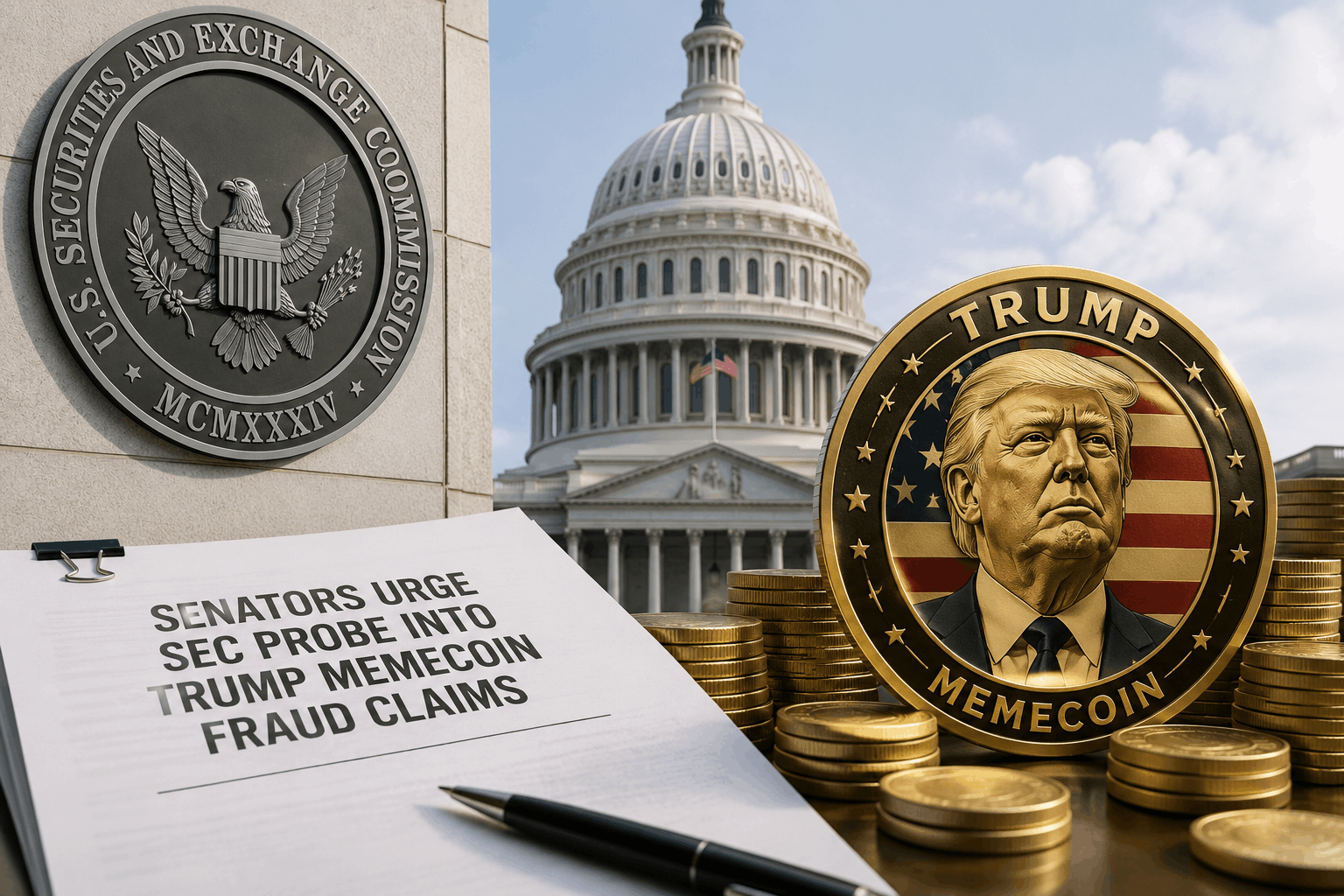
According to the senators’ letter, nearly 1 million investors have lost over $3.81 billion on the token since its peak. The coin has depreciated by approximately 98 percent from its highest price. During this collapse, Trump reportedly earned around $636 million through trading fees, regardless of the token’s price movement.
Warren and Blumenthal characterized the scheme as resembling an illegal rug pull
, a pattern where an issuer raises funds then extracts value, leaving investors holding worthless tokens. The SEC has taken enforcement actions against similar schemes in the past.
The full letter is available here.
The Broader Regulatory Battle
The memecoin investigation lands amid a larger fight over crypto regulation. On , Senate Banking Committee minority staff released an analysis of the updated Digital Asset Market Clarity Act. Their conclusion was blunt: the bill falls dangerously short
of five minimum regulatory standards.
The staff identified several critical gaps:
- Creates loopholes allowing blockchain assets to bypass SEC authority through self-certification
- Could undermine protections for pensions and retirement accounts
- Reportedly exempts DeFi platforms from anti-illicit finance duties
- Permits banks to engage in risky crypto activities without sufficient safeguards
- Fails to prevent stablecoin interest payments from draining community bank deposits
- Does not effectively prohibit presidential profiteering from crypto ventures
The full analysis is available here.
Industry Pushes Back
The Blockchain Association countered this analysis on , responding to claims made by the National Sheriffs’ Association, which urged the Senate to reject the Clarity Act. The Blockchain Association argued the NSA misconstrued the legislation.
According to the association, the act does not exempt DeFi platforms or developers from anti-money laundering obligations. Instead, it imposes substantial compliance duties on customer-facing intermediaries. The full response is available here.
DOJ Charges NFT Founder With Fraud
Separately, on , the U.S. Attorney’s Office for the Southern District of New York announced an indictment against Taj Tarsha, founder of Few and Far Limited. Tarsha faces charges of securities fraud and wire fraud related to an NFT marketplace and token offering.
Prosecutors allege Tarsha raised over $10 million from 67 investors for developing the marketplace and FAR token. Instead of using the funds as promised, Tarsha allegedly misappropriated assets for personal gambling, crypto purchases, and other unauthorized expenses. The DOJ press release is available here.
What This Signals
These three developments reveal a coordinated regulatory tightening across multiple fronts: individual enforcement actions against fraud, congressional scrutiny of major legislation, and high-profile investigations into high-net-worth figures. The pattern is clear: regulators are no longer waiting for perfect legislation before moving against bad actors.
The Hashlytics Take: The Trump memecoin investigation matters less for Trump himself than for what it signals about the SEC’s willingness to pursue high-profile cases regardless of political implications. Warren and Blumenthal are applying pressure, but the real test is whether the SEC moves independently. Meanwhile, the Clarity Act debate exposes a fundamental tension: crypto advocates want lighter regulation, but each new fraud case adds ammunition to regulators’ argument that self-regulation doesn’t work. Investors should watch the DOJ cases as leading indicators. Where the justice department prosecutes fraud successfully, the SEC typically follows with enforcement patterns that reshape entire market segments.
Follow Hashlytics on Bluesky, Facebook, LinkedIn, Telegram and X to Get Instant Updates