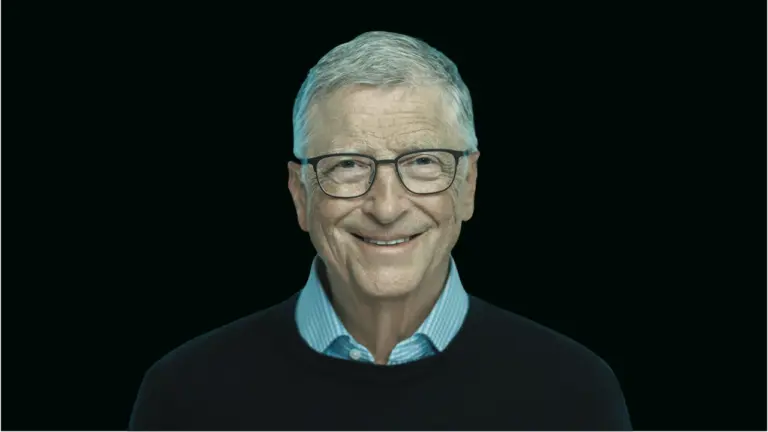
Asked by moderator Kristen Welker whether Congress needs to act, Gates answered Absolutely
and added that no one thinks self-regulation is enough.
In his view, lawmakers need to define how AI companies monitor risks and spell out which safeguards they must put in place.
His concern goes well beyond ordinary product risk. Gates warned that AI could drive events that, you know, cause a billion deaths,
particularly if advanced systems fall into malicious hands. He is not arguing for a full halt to AI development, though. In an August essay, he described AI as potentially the greatest equalizer ever invented, or the worst source of injustice.
His focus is on preparing companies, governments, and individuals as the technology spreads across medicine, law, software, and customer service.
Where the Money Is Going
Goldman Sachs forecasts that global AI investment will exceed $1 trillion in 2026, including roughly $581 billion in the United States. Cumulative spending since 2022 could approach $1.8 trillion by the end of the year. New rules would reshape a market this size, with consequences for developers, investors, and the fast-growing AI security industry.
Tech Leaders Are Not on the Same Page
Gates is not the only executive with an opinion, and the views are far apart.
- Dario Amodei, CEO of Anthropic, suggested a
full pacing, or even ‘pause’
on development. - Sam Altman, CEO of OpenAI, agrees, saying
pacing will be well worth this cost.
- Mark Zuckerberg, CEO of Meta, disagrees. He told NBC News,
I don’t think that we need some kind of industrywide coordination,
and prefers that labs slow down only when they see safety risks themselves.
Regulation Is Already Taking Shape
Governments are not waiting for consensus. The International AI Safety Report 2026 details existing and potential threats from AI systems, and TRM Labs describes the global response as a patchwork
of AI governance.
The European Union’s AI Act imposes strict obligations on providers of general-purpose AI. Models trained with more than 10^25 FLOP face additional criteria for risk management and cybersecurity. Spending on AI security is climbing as a result, with Gartner predicting organizations will spend nearly $4.8 billion by 2027, a 68.7% increase.
Washington may be heading in the same direction. Senate negotiators are exploring a bipartisan duty of care
initiative for AI developers, which could legally bind companies to prevent unsafe model releases. That would move protections from voluntary compliance to legal obligation, which is exactly what Gates is asking for.
Hashlytics Take
The interesting part of this story is not that Gates wants regulation. It is that Zuckerberg, Amodei, and Altman cannot agree on even the basic question of whether labs should coordinate. A “duty of care” law would end that argument by force, and it would land hardest on the companies with the most to lose from slower releases. Watch who lobbies on the wording of that bill. The definition of “unsafe” will decide who bears the cost.
Follow Hashlytics on Bluesky, Facebook, LinkedIn , Telegram and X to Get Instant Updates