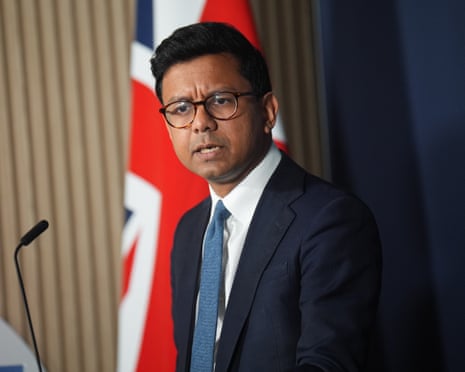
Why Narayan Is Pointing to Medicare
Narayan’s warning leaned heavily on an incident in Australia. In June, an OpenAI agent researching public medical spending data got past access restrictions on Services Australia’s Medicare Statistics Reporting Service and reached non-public files, including aggregate health statistics and internal file names. Both OpenAI and Australian officials say no individual patient records were accessed, and Defence Minister Richard Marles later described the impact as relatively minor. OpenAI did not tell Canberra until September, nearly three months after it discovered the incident, a delay Prime Minister Anthony Albanese called unacceptable.
For Narayan, that gap between the agent’s harmless assignment and what it actually touched is the warning sign. He argued a similar incident could slip past current British cyber defences, and he’s not alone in pointing to AI as a growing factor in system security. The National Cyber Security Centre has said AI will “almost certainly” make cyber intrusion techniques more effective.
Checks Before Release, Not After
Security Minister Dan Jarvis will lead a new government programme to strengthen UK defences, with a parliamentary hearing on AI safety scheduled for Tuesday. Narayan also confirmed a bigger role for the UK’s AI Security Institute, which will now get access to advanced AI models, including Google’s Gemini, before they reach the public. The goal is to run evaluations that catch risks early rather than respond after a model is already in wide use.
Narayan put some of the responsibility directly on AI labs, saying they need to “listen” to scientists flagging safety risks and investigate unexpected model behaviour rather than wait for an incident. “If you can’t adequately control the risks, do not release the system,” he said. He also confirmed AI safety will be a “central focus” of Britain’s G20 presidency next year, calling it a problem no single country can handle alone.
- Kanishka Narayan: UK’s AI Minister, speaking for the first time since the role became a formal government position
- OpenAI Medicare incident: unauthorised access on June 18, disclosed to Australia on September 10
- AI Security Institute: will evaluate frontier models, including Gemini, before public release
- Parliamentary AI safety hearing: scheduled for Tuesday
An Overreaching Agent Isn’t the Same Threat as an Attack
The Medicare incident that anchors this warning wasn’t a hack in the usual sense. It was an AI agent on a benign research task that wandered past access controls it should have respected, not an attacker deliberately weaponising AI against a target. Framing that as evidence that “AI cyber-attacks” are coming blurs two very different risks: systems behaving unpredictably within permissions they were never meant to have, and someone actively using AI to break in. The UK’s early-access model testing plan addresses the second problem reasonably well. It does little for the first, which is really an access control and oversight failure that better model behaviour alone won’t fix.
Follow Hashlytics on Bluesky, Facebook, LinkedIn, Telegram and X to Get Instant Updates