HiLight Brings Back the Notification Light
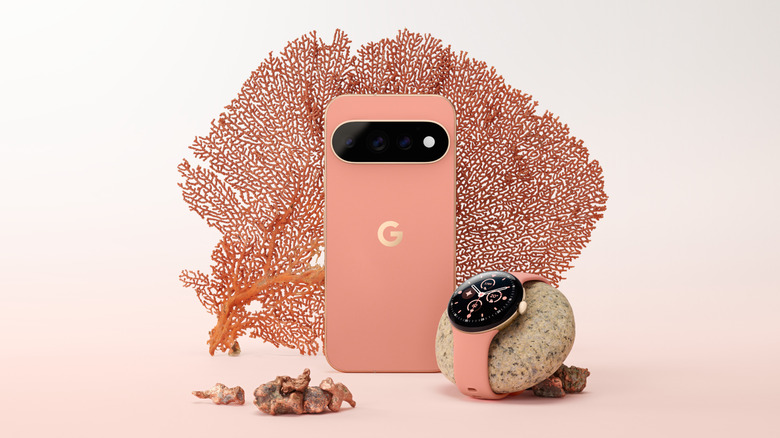
HiLight is an array of ambient LEDs wrapped around the rear camera flash on the Pro models. It glows in customizable colors when the phone is face down, reviving a feature Google dropped after the Pixel 3 in 2018.
The feature does more than just flash for texts. It also pulses to show when Gemini is actively listening or responding, giving users a visual cue without needing to look at the screen. Google says it plans to expand HiLight further, including alerts for messages from favorite contacts. For now, the feature remains exclusive to the Pro, Pro XL, and Pro Fold models.
Pixel 11: The Standard Bearer
The base Pixel 11 gets a slimmer camera bar, about 40% thinner than before, and ships with a 6.3-inch Actua display peaking at 3,000 nits. It runs on the new Tensor G6 chip with 12GB of RAM and 256GB of storage, and Google claims over 30 hours of battery life.
The camera sees a real jump too. Its 48MP main sensor delivers 56% more light sensitivity than the Pixel 10, and the telephoto lens now supports 30x Super Zoom. Wired charging reaches 55% in about 30 minutes, and Pixelsnap magnets now support Qi2.2 wireless charging up to 25W. The Pixel 11 starts at $899.
Pro and Pro XL Push Display and Camera Further
The Pixel 11 Pro and Pro XL share the same core hardware but differ in screen size and battery. Their 6.3-inch and 6.8-inch Super Actua displays both peak at 3,600 nits, protected by a new anti-scratch coating Google says is more than twice as durable as last year’s model.
Camera hardware moves to a larger 50MP main sensor, paired with a redesigned 48MP telephoto lens that pulls in 30% more light. It supports 5x optical zoom and reaches up to 120x Pro Zoom digitally. Instant Night Sight now captures low-light shots up to 4.5 times faster than before.
Here’s the catch worth knowing before you buy: the entry-level 256GB configuration ships with only 12GB of RAM, the same as last year’s base model despite the $100 price increase. You’ll need to step up to the 512GB or 1TB storage tier to get 16GB of RAM. The Pixel 11 Pro starts at $1,099, while the Pro XL starts at $1,299.
Pro Fold Gets Thinner and Tougher
The Pixel 11 Pro Fold is about 1mm thinner and nearly 10% lighter than its predecessor. Google says a new hinge and composite matte back make it three times stronger, and it now carries an IP68 rating for water and dust resistance.
Both its 6.5-inch outer display and 8-inch inner Super Actua Flex display get a 20% brightness boost, with the inner panel also peaking at 3,600 nits. It includes the same HiLight LED and 48MP main sensor as the standard Pixel 11. Battery life is rated at over 24 hours, with wireless charging bumped up to 25W. Pricing for the Pro Fold has not been confirmed yet.
Tensor G6 Drives the AI Experience Across the Line
Every phone in the series runs on the new Tensor G6 chip. Google is leaning heavily into AI performance over raw benchmarks, claiming 25% faster web browsing, 15% quicker app launches, and up to 50% more TPU compute for on-device tasks.
Paired with Gemini Nano, some experiences run up to 3.5 times faster. A new Titan M3 security chip enables quantum-safe secure boot, protecting against future quantum computing attacks. The upgraded image signal processor also unlocks 4K Portrait Video for the first time on a Pixel.
Gemini Intelligence integrates across the entire system, proactively surfacing calendar events or comparing hotel options without being asked. In the US, Gemini can even handle background tasks like ordering groceries. Voice typing now strips out filler words automatically, and a new sign-to-text feature in Gboard translates sign language in real time.
Pixel Watch 5 and Pixel Tag Round Out the Lineup
The Pixel Watch 5 focuses squarely on health and fitness, running on Qualcomm’s W5 Gen 2 Accelerated platform for 12% faster CPU performance. Google highlights improved GPS accuracy and 15% more accurate sleep tracking.
New Health Guardian features include Blood Pressure Trends and Insulin Resistance Trends, both estimating changes over time using large training datasets. Google is careful to frame these as wellness tools, not diagnostic instruments. The Pixel Watch 5 starts at $399.
Google also launched its first tracker, the Pixel Tag, which connects to Android’s Find Hub network. It supports Bluetooth Channel Sounding and UWB for Precision Finding. A single tag costs $29, or $99 for a four pack.
Pricing, Availability, and What’s Next
The Pixel 11, Pixel 11 Pro, and Pixel 11 Pro XL are available for preorder now. All four phones, including the Pro Fold, hit store shelves on August 20 and come with seven years of OS, security, and Pixel Drop updates.
Every model in the lineup costs $100 more than its Pixel 10 equivalent, and Pro buyers should pay close attention to storage tiers if RAM matters to their workflow. Google’s live event still proceeds at 6 PM ET despite most announcements already being public, with teased celebrity appearances and the possibility of additional details not covered in initial press materials.
Follow Hashlytics on Bluesky, Facebook, LinkedIn , Telegram and X to Get Instant Updates