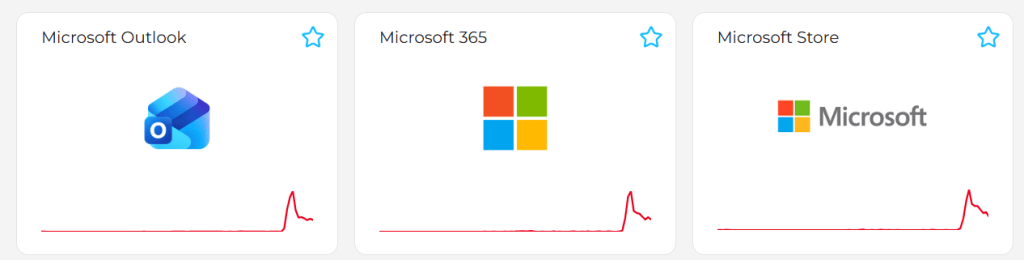
Outlook reports started spiking on Downdetector at 12:39 p.m. and email traffic stalled around midday for many of Microsoft’s 450 million users
. By evening, Outlook reports on Downdetector had fallen below 100,000 as Microsoft shifted traffic away from the troubled infrastructure.
The damage reached AI tooling too. Connectors linking OpenAI and Anthropic to Microsoft 365 accounts failed, so Copilot and rival assistants could not reach user mailboxes. With Microsoft’s own infrastructure unreachable, AI assistants also lost access to messages, calendar data and document context stored in Microsoft 365. For IT teams running hybrid AI workflows, that meant automations went blind at the same moment email stopped.
Servers Dropped Out, and Demand Was Not the Cause
Microsoft first pointed to elevated infrastructure demand across several regions. It also said no recent change lined up with the start of the outage, and that the failed health checks might come from one specific component that processes server health.
Hours later, the diagnosis shifted. The cause was not a surge in requests but a cluster of servers unexpectedly going offline, which left the remaining infrastructure straining under normal load. The recovery steps came in stages:
- 2:12 p.m.: Microsoft paused all deployments, moved more traffic off the affected infrastructure and restarted affected servers.
- 18:29 to 18:57: It moved some US traffic away, then redistributed Outlook connections worldwide, warning this could add latency.
- 4:40 p.m. ET: The company said it was restarting
affected servers to return them to service.
The source reports these times in mixed formats and time zones, so the exact order of the evening steps is worth confirming against Microsoft’s service health notes. What is clear is that the fix leaned on load balancing, a stopgap, while engineers worked to bring the failed servers back.
Teams Broke First, for a Different Reason
A separate Teams incident, tracked as TM1550488, began at 9:45 a.m. Microsoft posted at 10:40 a.m. that it was investigating problems using Teams in North America and gave a preliminary cause of resource contention
in the underlying infrastructure. From 14:45 to 15:53, users in the Americas saw delayed and failed chat messages and presence delays.
That incident cleared before the wider Exchange Online failure, which points to a distinct failure mode. Email delays still stretched into the evening, and AI integrations stayed offline while infrastructure recovery continued.
Hashlytics Take
The detail that matters is the order of Microsoft’s explanation. It blamed demand first, then admitted servers had simply gone offline, and its main remedy was to reroute traffic rather than fix the fault. That is a reasonable way to restore service fast, but it leaves the real question unanswered: what took those servers down, and why did health checks fail without any recent change to point to? Until Microsoft says, customers have no way to judge whether it can happen again. The AI connectors add a newer lesson. Teams that built assistants on top of Microsoft 365 inherited its single point of failure, so a mailbox outage now also means an automation outage. Anyone designing those workflows should plan for the connector going dark, not just the inbox.
Follow Hashlytics on Bluesky, Facebook, LinkedIn , Telegram and X to Get Instant Updates