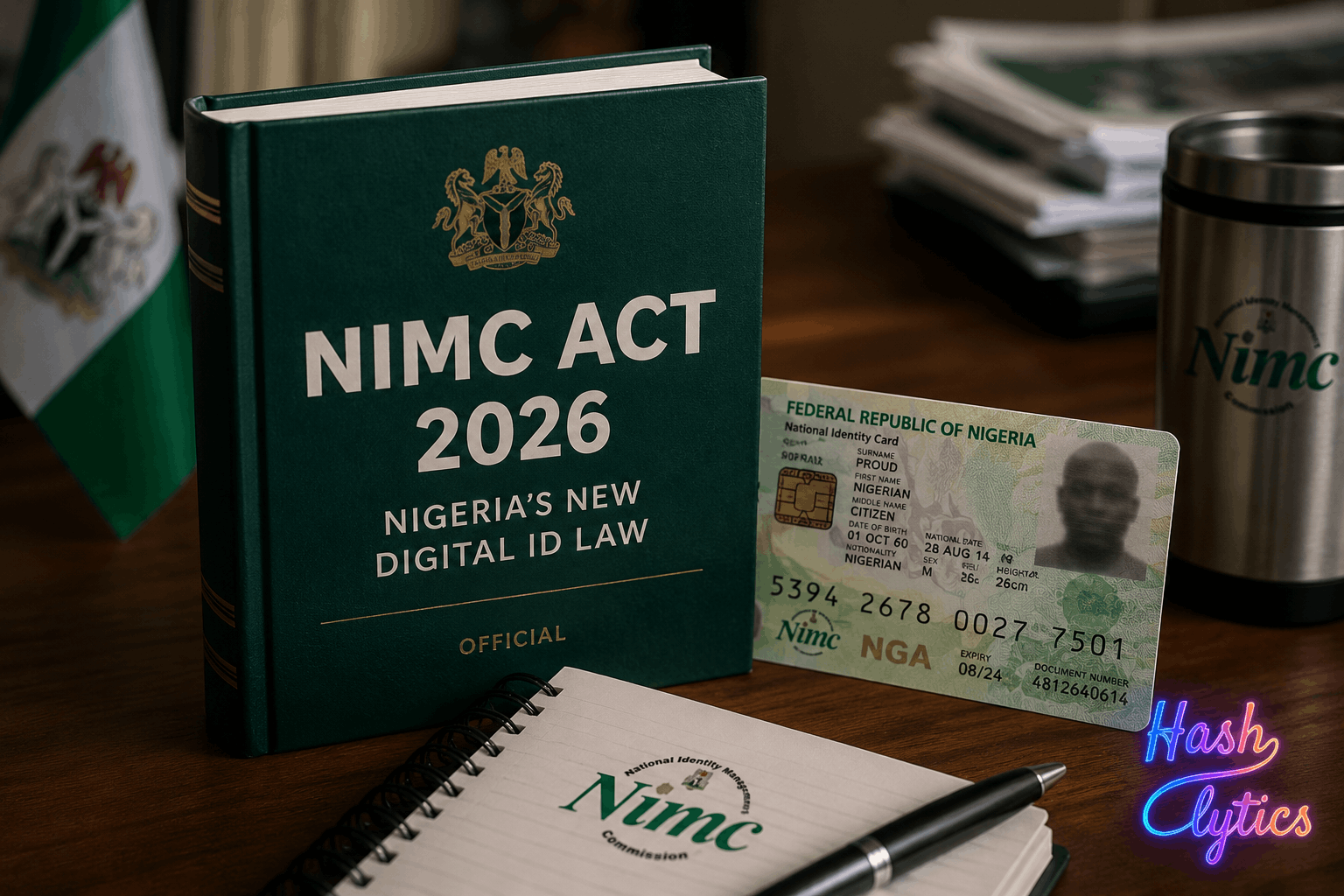
What the Law Actually Does, Simply Explained
Think of it this way. Before now, different government agencies held separate pieces of your identity. Your passport office, your bank, your tax authority, and your telecom all had their own records with no central coordination. The NIMC Act 2026 makes your National Identification Number the single master record that all of them must link to. One person. One identity. One number.
Here is what changes immediately for ordinary Nigerians:
- Your NIN is now compulsory for passports, voter cards, bank accounts, land transactions, telecoms, pensions, insurance, tax payments, and all government services. No NIN, no access.
- A new General Multipurpose Card replaces the need to carry multiple credentials. One card works across every sector.
- Your data cannot be accessed without your consent or used beyond the purpose for which you gave it, with the law expressly aligned to the Nigeria Data Protection Act.
- Vulnerable Nigerians, including those without permanent addresses, get a special identifier system so they are not left out of banking, social services, and government programmes.
- Diaspora Nigerians get broader and more convenient access to identity services from abroad.
The Security Win Nobody Is Talking About
Interior Minister Tunji-Ojo disclosed at the signing ceremony that seven suspected Boko Haram and ISWAP commanders returning from Mecca were identified and arrested at Katsina Airport because the integrated NIMC database flagged their names the moment they landed. That is not a hypothetical benefit. It is already working. As Nigeria’s digital government infrastructure expands, NIMC now becomes the Root Certification Authority, the technical body whose cryptographic seal is required to verify that any digital document, signature, or transaction is genuine. Every government agency that issues digital certificates, from the courts to the tax office, must anchor that trust to NIMC.
Penalties for those who abuse the system have increased up to 100 times from existing levels:
- Corporate bodies face fines of up to N20 million
- Individuals face a minimum five years imprisonment for unauthorised access, multiple registrations, or identity impersonation
- NIMC now has court-authorised powers to investigate, search, seize evidence, decrypt data and arrest offenders
The Questions the Law Does Not Settle
Civil society organisations have previously raised alarms about Nigeria’s data protection gaps, and those concerns do not disappear because a law says your data is protected. The Act aligns with the Nigeria Data Protection Act, but enforcement capacity, NIMC’s track record on data security, and the risk of breaches across 14 interconnected government agencies remain live concerns. Phishing campaigns already target Nigerians through banking channels. A single national identity database that links passports, bank accounts, taxes, pensions, and telecoms is a high-value target for exactly the kind of attacks CBN has been warning about.
The Act is a genuine structural leap for Nigeria’s digital infrastructure. Whether its data protection provisions hold under real-world pressure, at scale, across 14 agencies with varying technical capacity, is the question implementation will answer.
Follow us on Bluesky, LinkedIn, X, and Telegram to Get Instant Updates