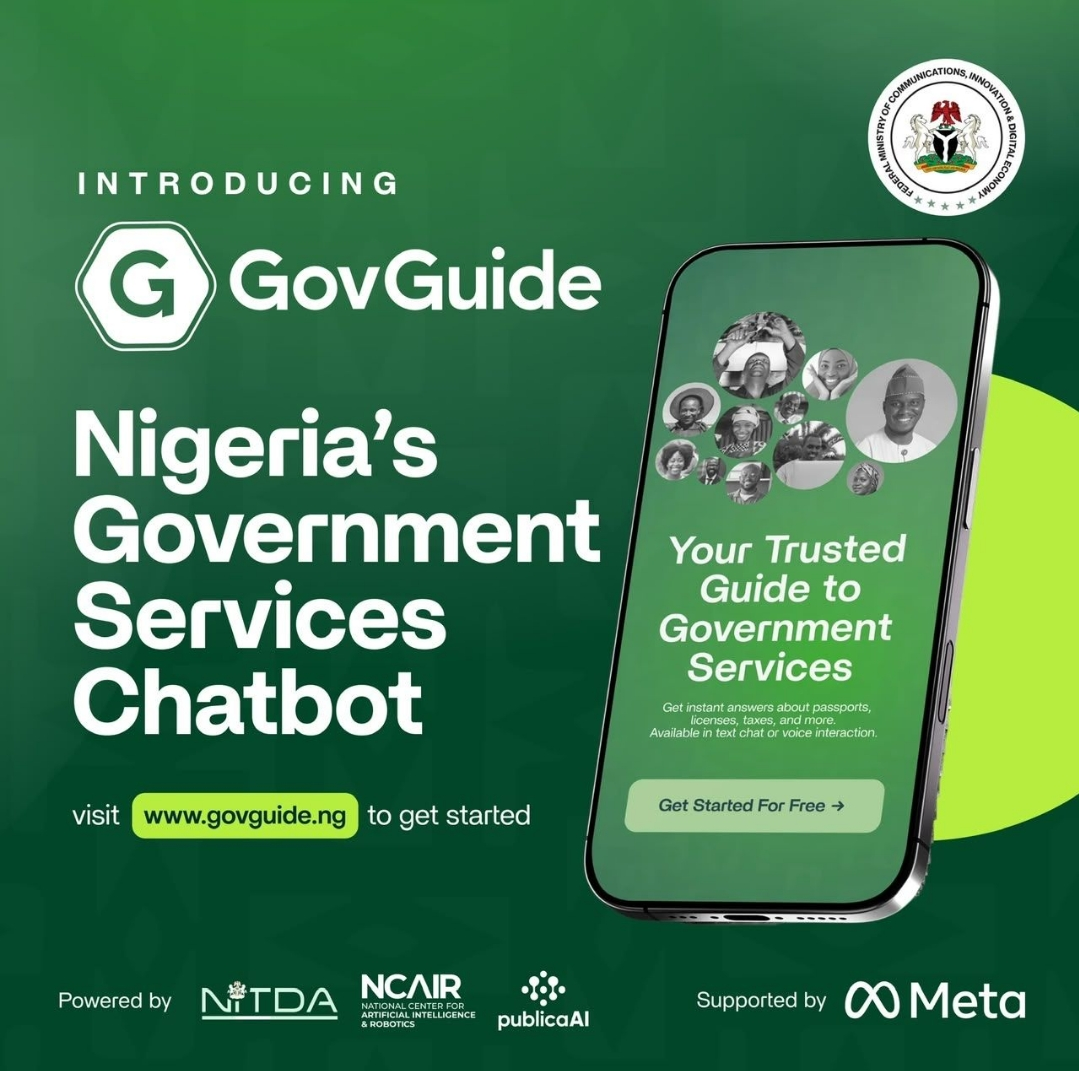
Nigeria launched GovGuide on May 22, 2026, a Meta-powered AI chatbot providing multilingual access to government services across 35 federal ministries and 60+ agencies through WhatsApp and web interfaces in English, Hausa, Igbo, and Yoruba. The announcement arrived days after Nigeria’s Central Bank locked BVN-linked phone numbers as permanent financial identity anchors, weeks after TIN requirements centralized financial surveillance, and during ongoing deployment of Nigeria’s first national AI regulation framework. The pattern suggests GovGuide isn’t just service delivery infrastructure, it’s behavioral data collection at scale, normalized through accessibility rhetoric.
What Gets Collected That Nobody Discusses
GovGuide operates as a voice and text assistant built by Publica AI using Meta’s Llama models, developed with the National Centre for Artificial Intelligence and Robotics. Minister Bosun Tijani positioned it as bridging language barriers for underserved communities. The platform answers queries about passports, licenses, taxes, and government procedures through www.govguide.ng and WhatsApp.
What the announcement doesn’t address: When Nigerians ask about passport renewal, business licenses, or tax deadlines, those queries create behavioral data revealing intent, needs, and life circumstances. Someone queries passport procedures in March, business licenses in April, tax filing in May, vehicle registration in June—that sequence suggests international travel, new business formation, compliance awareness, and major asset acquisition. A behavioral profile far richer than any single government database captures.
The WhatsApp integration creates dual custody. Meta operates the infrastructure and accesses metadata—who messages when, from where, how frequently. Conversations route through Meta’s systems before reaching Nigerian government servers. Both entities can analyze query patterns. Users have no visibility into what gets logged, retention policies, or secondary uses.
How This Fits Nigeria’s Surveillance Architecture
GovGuide doesn’t exist in isolation. The BVN system ties banking to permanent phone numbers. The Tax ID centralizes income and transaction data. The National ID links biometrics to government service access. Now GovGuide adds conversational intent data—what services people need, when, and the life events triggering those needs. Nigeria’s ministries increasingly share data infrastructure. GovGuide queries can theoretically cross-reference with NIN records, TIN filings, BVN transactions, and passport applications to build comprehensive citizen profiles.
Despite Nigeria’s AI strategy explicitly prioritizing data protection, GovGuide’s launch announcement contains zero specifics about query logging, retention limits, anonymization standards, or safeguards preventing profiling. Nigeria’s data protection framework requires appropriate security for personal data, but conversational AI exists in a gray zone—queries lack identifiers yet create behavioral fingerprints when aggregated.
The Accessibility Trap
The multilingual framing—positioning GovGuide as empowering low-literacy and underserved communities—creates a dynamic where questioning data practices appears anti-accessibility. Wrap data collection in social good narratives, then characterize privacy concerns as privileged elitism. This exploits vulnerability: rural communities with limited technological literacy are least equipped to understand how queries feed profiling systems or challenge inappropriate use.
Meta and Nigerian officials emphasize GovGuide’s foundation on Llama open-source models, framing this as democratizing AI. But open-source model weights don’t mean open data governance. Who controls training data? Who accesses query logs? What preprocessing occurs? The production infrastructure, data pipelines, and government database integration operate as black boxes.
Timing and Precedent
GovGuide launched during Nigeria’s election season ahead of 2027 general elections when service access becomes politically salient. The timing also precedes comprehensive AI governance frameworks. By launching before regulations solidify, the government establishes operational precedent that future rules must accommodate. Once millions depend on GovGuide, any regulation restricting data collection faces “don’t break what’s working” pushback.
Publica AI CEO Ignatius Willie positioned GovGuide as “proof that the next generation of public infrastructure for Africa can, and should, be built in Africa.” If Nigeria successfully deploys AI government chatbots feeding conversational data into surveillance infrastructure, other African governments will replicate the approach. Kenya, Ghana, South Africa, and Ethiopia all face similar challenges and are developing digital ID systems.
What Should Have Come First
Before launching, Nigeria needed transparent data governance answering: What queries get logged? How long is data retained? Which agencies access logs? What safeguards prevent discriminatory profiling? How can citizens audit their data? What mechanisms exist for contesting inappropriate use? Those questions have no public answers. The platform exists, data collection proceeds, and governance happens behind closed doors without citizen input or independent auditing.
GovGuide provides legitimate service value—Nigerians genuinely need easier government information access in local languages. But service delivery isn’t mutually exclusive with surveillance. The platform simultaneously helps citizens navigate bureaucracy and feeds their queries into profiling systems building behavioral maps of population-level needs, compliance patterns, and life event timing. The question isn’t whether GovGuide helps users. It’s whether that help justifies surveillance infrastructure normalized through accessibility rhetoric, and whether Nigerians are making informed decisions about that trade-off or whether the government is exploiting service access desperation to build data collection systems citizens would reject if they understood the full implications.
Follow us on Bluesky, LinkedIn, X, and Telegram to Get Instant Updates