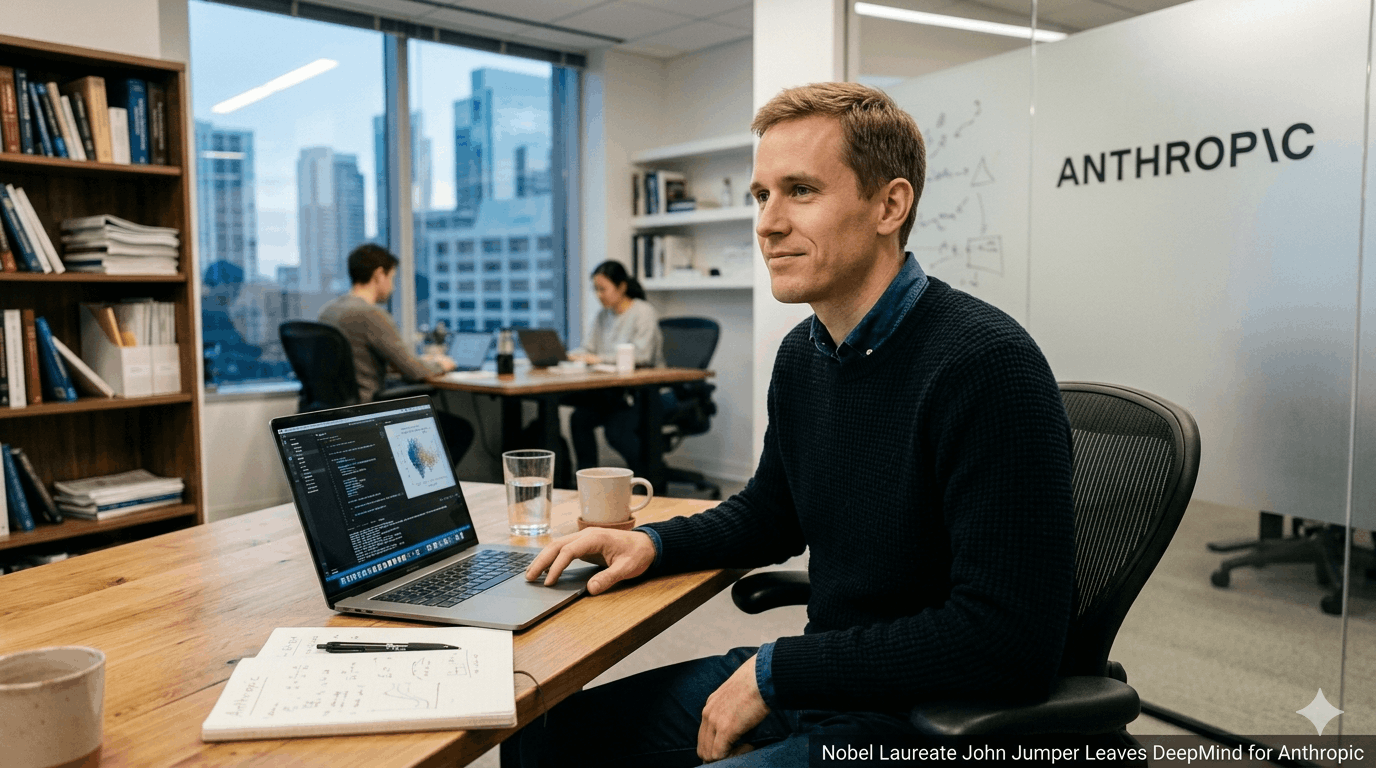
Why Jumper Matters Beyond the Headline
AlphaFold now offers over 200 million protein structure predictions and is used by more than 2 million researchers across 190 countries. Jumper did not just win a prize for this work. He led the team that turned a 50-year unsolved problem in biology into a deployable system that pharmaceuticals, academic institutions, and research programs worldwide now treat as basic infrastructure. Winning a Nobel and then immediately switching employers is a strong signal about where someone sees the future heading. Demis Hassabis responded publicly, calling their collaboration “extraordinary” and saying AlphaFold “changed the world,” which is a gracious but accurate send-off that also underscores how much of DeepMind’s scientific credibility Jumper carried.
His role at Anthropic has not been formally detailed. Anthropic has been expanding an AI-for-science footprint in 2026, including wet labs, agent-in-biology research, and partnerships with research institutions. A Nobel laureate in computational biology arriving inside that programme is not a coincidence. Anthropic’s advanced model work, including Fable and Mythos, has already drawn US government scrutiny, and adding a researcher of Jumper’s calibre to its science division raises the stakes of that conversation further.
What This Signals About the Talent War
A small group of researchers can shape what a lab builds next, and rival firms know it. The Shazeer-Jumper-Silver pattern at DeepMind is not random attrition. It reflects a structural shift in where elite researchers believe the most consequential work is happening. Google’s scale, compute access, and publishing record have historically been its strongest retention tools. None of those advantages held. Anthropic, still private and mid-IPO process, attracted a Nobel laureate away from the organisation that gave him the work that won him the Nobel. That is a recruiting outcome that no compensation package fully explains.
Jumper’s departure further strains Google’s efforts to beat Anthropic, OpenAI, and Elon Musk’s xAI in the race to build the most powerful AI models. For Google shareholders, the concern is compounding. Losing Shazeer, who helped architect the reasoning approach inside Google’s latest models, alongside Jumper, who represents the company’s most globally recognised scientific achievement, raises a harder question than any single departure would: whether scale is actually an advantage in attracting the researchers who determine where the frontier moves.
Follow us on Bluesky, LinkedIn, X, and Telegram to Get Instant Updates