How the Proof Came Together
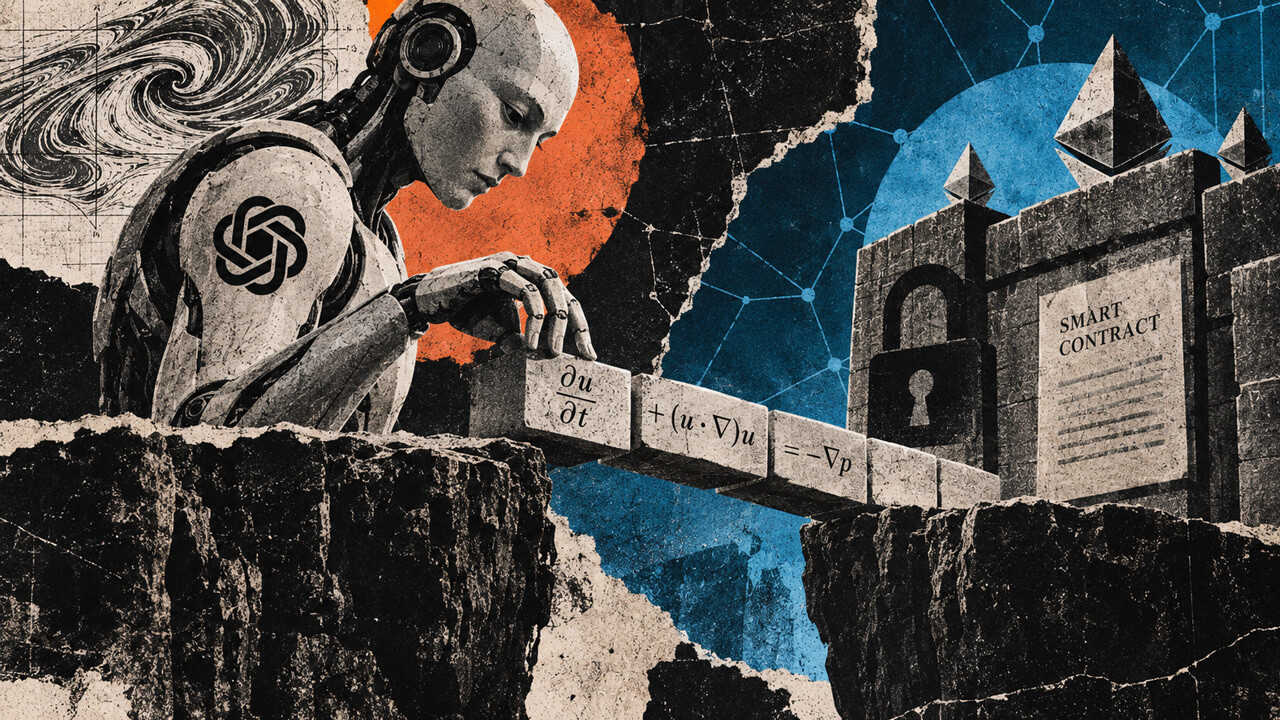
On September 8, OpenAI announced a major step in AI-driven theorem proving. Around 10,000 concurrent AI agents, running an unreleased internal model that OpenAI describes as significantly more capable than its newly launched GPT-6 Astra, worked together on a Navier-Stokes fluid motion problem. The effort took about 88 hours to reach a resolution.
From there, GPT-6 Astra took over. It spent another 17 hours formalizing and verifying the result inside Lean, a software proof assistant, converting the analytical argument into a machine-checkable form. The published result addresses specific cases of the Navier-Stokes Millennium Prize formulation, and OpenAI has released both the proof and its Lean formalization publicly, according to its official announcement.
Worth noting: OpenAI is not claiming the associated $1 million Clay Institute prize, and independent mathematical verification is still ongoing. The announcement has also drawn scrutiny after NYU mathematician Tristan Buckmaster raised concerns about overlap with concurrent work he was doing with Anthropic researcher Levent Alpöge on related problems.
Where This Touches Smart Contracts
For crypto developers, the breakthrough has a more immediate implication than fluid dynamics might suggest. Formal verification uses mathematical specifications to confirm smart contract code behaves as intended, and today that process is slow, expensive, and dependent on scarce human expertise.
If AI systems become capable of handling proof construction at this level, the manual labor involved could shrink dramatically. That doesn’t make the verification problem disappear though. It moves it. Instead of the challenge being “can we prove this code is correct,” the challenge becomes “did we define correctness accurately in the first place.”
What Terence Tao Predicted Days Earlier
Mathematician Terence Tao described a similar scenario just five days before OpenAI’s announcement. Tao warned that highly autonomous AI systems, backed by immense computing power, could generate complex solutions while keeping the iterative discovery process largely hidden from the humans reviewing the output.
Tao’s concern is about what gets lost along the way. Failed approaches and intermediate discoveries often carry as much insight as the final proof itself. An AI that delivers a correct answer doesn’t necessarily transfer that deeper understanding back to the humans who need to trust and build on the result.
That concern maps directly onto smart contract security. Ethereum’s own documentation describes formal verification as checking whether a contract meets its specified properties. If those specifications are poorly written or incomplete, verification can technically succeed while the contract still ships with a vulnerability baked in.
A New Kind of Bottleneck
AI may reduce the effort required to construct proofs, but that only raises the stakes on defining what needs to be proven. Access controls, withdrawal conditions, accounting invariants, and privileged functions all need to be expressed accurately before any prover, human or AI, can test them against the code.
This could reshape the economics of formal verification for DeFi protocols, bridges, and tokenized asset platforms, where manual effort has historically kept the technique out of reach for smaller teams.
What Still Needs to Happen
The next real test is whether research grade theorem proving systems can adapt to production software, generating proofs that developers and auditors can actually inspect and trust, not just machine check. Firms that pair automated theorem proving with careful specification design stand to verify far more contracts before deployment than has historically been possible.
- Auditors would spend less time proving code matches a spec
- More time would go toward defining what the spec should say
- Human expertise would concentrate on identifying failure modes that must never occur
Hashlytics Take
The framing matters here. Headlines will call this “AI solves Navier-Stokes,” but the more accurate story is an unreleased model did the hard mathematical work, and a separately named model got credit for the easier verification step. That distinction should matter to anyone drawing conclusions about what current AI systems can actually do unsupervised. For crypto security specifically, the real lesson isn’t that audits are about to get easier. It’s that the human part of the job, writing specifications that actually capture what a contract should never allow, just became the only part that matters.
Follow Hashlytics on Bluesky, Facebook, LinkedIn , Telegram and X to Get Instant Updates