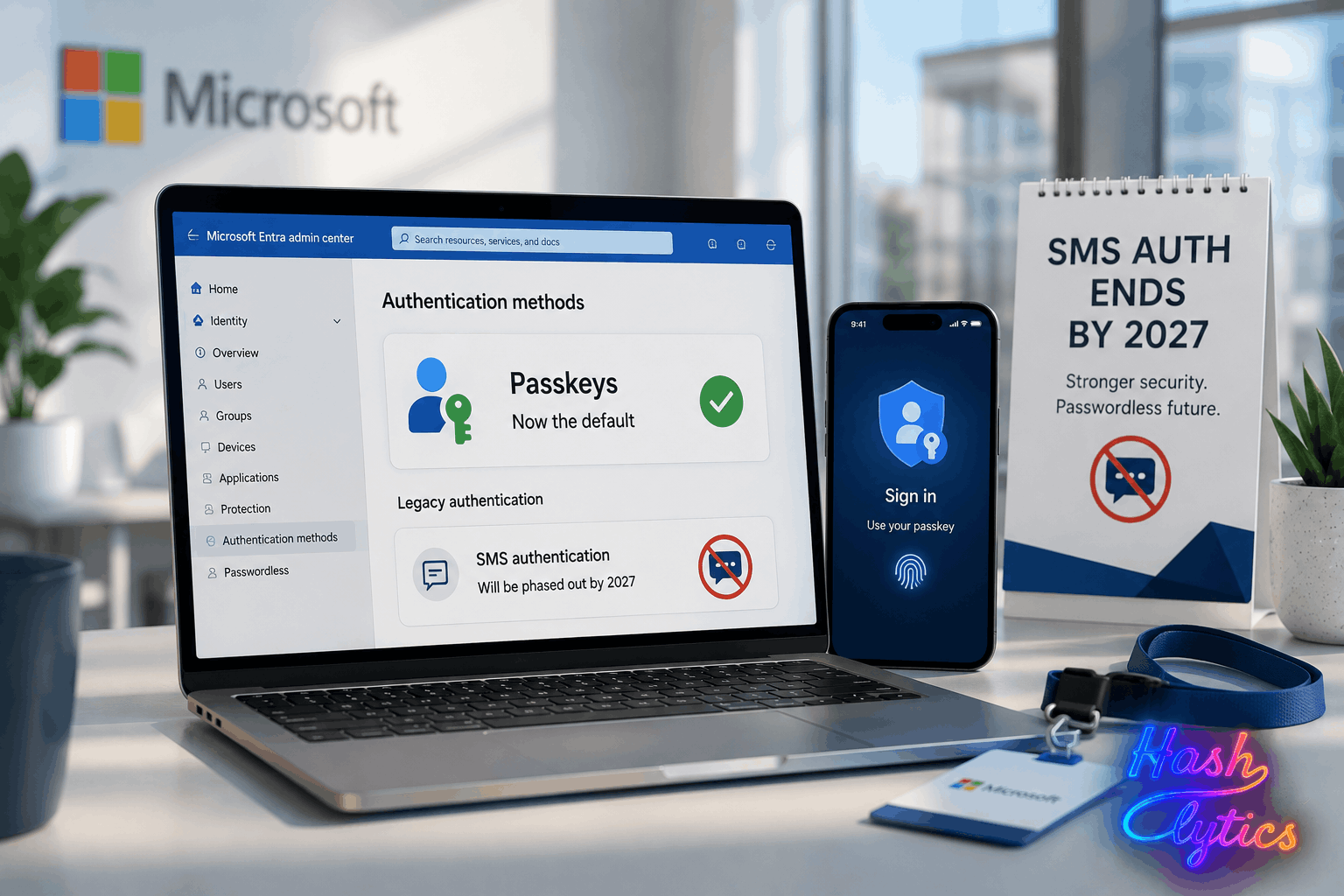
Passkeys work by replacing shared secrets with cryptographic key pairs, unlocked locally through biometrics or a PIN. Because browsers cryptographically verify domains before a passkey can be used, the technology is inherently resistant to classic phishing attacks. The UK’s National Cyber Security Centre (NCSC) has backed the approach for the same reason.
Alex Laurie, GTM CTO at Ping Identity, says passwords remain the weakest link in enterprise security because they’re easily stolen or reused. Passkeys bind authentication directly to the legitimate application or website, cutting phishing effectiveness significantly. Jason Soroko, a senior fellow at Sectigo, notes that traditional passwords stay vulnerable even with multi-factor authentication layered on top, especially against modern phishing techniques.
Dray Agha, senior manager of security operations at Huntress, calls Microsoft’s move a tipping point for the industry. But he also flags a less discussed tradeoff: CISOs lose a degree of control once key sync and recovery depend on Apple, Google, or Microsoft’s consumer ecosystems. If an employee loses access to their personal Apple or Google account, recovering corporate identity access becomes considerably harder, an issue that cloud security and compliance teams will need to solve for directly.
Ecosystem fragmentation adds another wrinkle. Generating a passkey on an iPhone doesn’t always translate smoothly to a shared Windows machine, and until cross-platform flows mature, the user experience can feel inconsistent. Michael Grafnetter, principal security analyst at SpecterOps, warns that flawed implementations can still leave attack paths open despite the underlying technology being sound.
Full passkey migration is what Agha calls a myth for most organizations. Legacy systems and smaller businesses will struggle, since passkeys depend on modern web standards that don’t always integrate with custom internal applications or older on-premise infrastructure. A hybrid approach looks like the only realistic path forward for the near term.
The practical recommendation from security leaders is straightforward. Deploy passkeys aggressively wherever modern cloud apps allow it, since the security uplift is immediate. But keep phishing-resistant MFA or physical hardware tokens active as a bridge for legacy systems that can’t make the jump yet. Rich Greene, a SANS Institute instructor, recommends a phased rollout so organizations can work through integration issues at a manageable scale rather than attempting to convert every application at once.
Hashlytics Take
The security upgrade here is real, but the framing misses the bigger shift. Microsoft just outsourced a piece of enterprise identity recovery to consumer account ecosystems it doesn’t fully control. That’s a different risk profile than “passwords are weak,” and it’s the part CISOs should be modeling now, not after the February 2027 deadline forces the issue.
Follow Hashlytics on Bluesky, Facebook, LinkedIn , Telegram and X to Get Instant Updates