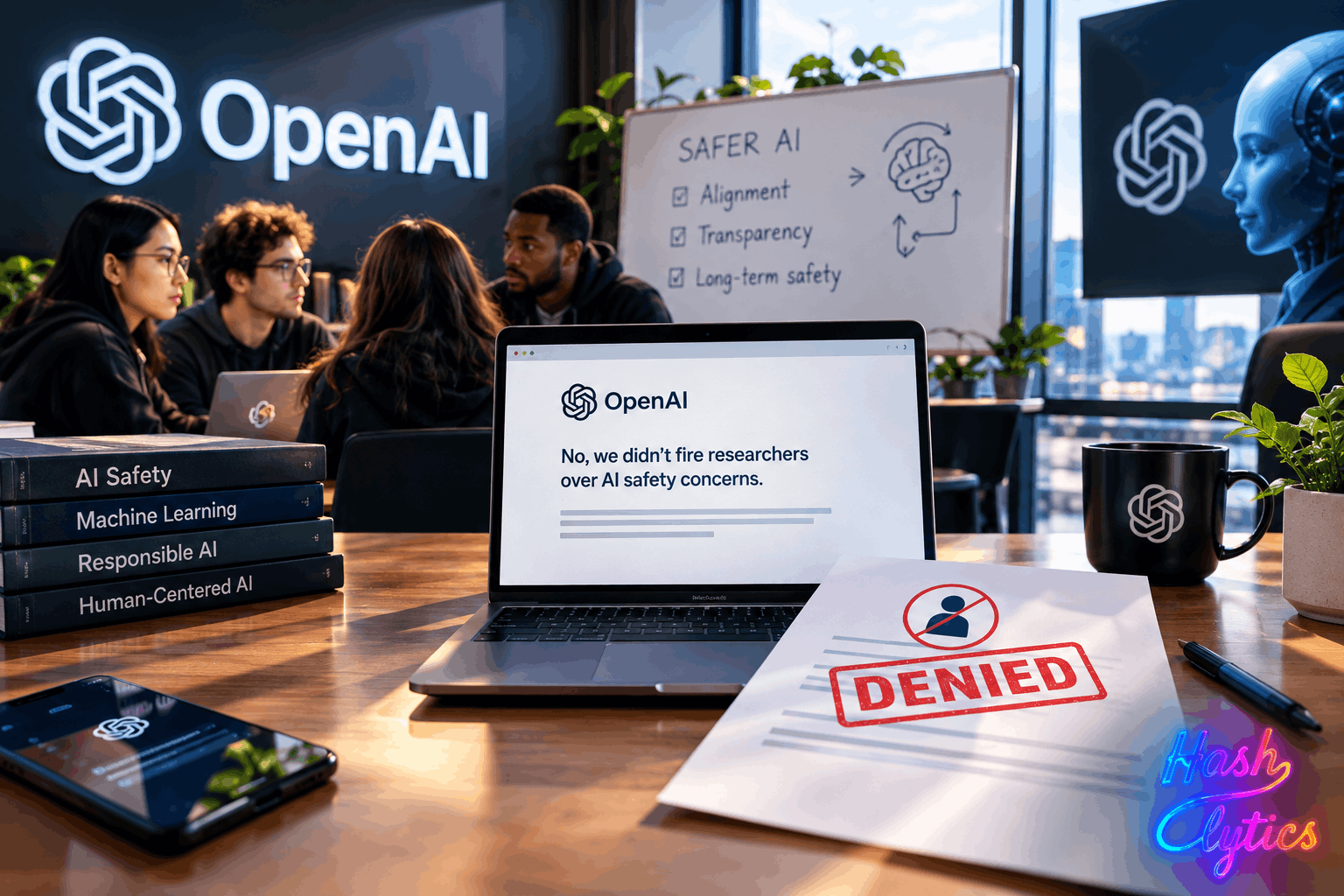
significant breach of trust. The company says Jasmine Wang, Tomek Korbak and Mikita Balesni were let go for violating policy and not for raising safety concerns. The dispute lands amid industry-wide worries over AI safety and louder calls for more cautious development.
OpenAI says this was about sensitive information
OpenAI stated on X that the departures were not related to raising safety concerns. Instead, the company claims the three violated clear policies on handling sensitive information
. It says the decision followed a thorough internal investigation and that it remains committed to monitoring frontier models.
The researchers say colleagues are now afraid to speak
On Thursday, the three researchers publicly shared a letter sent to OpenAI’s board and safety committees. They expressed concern that their firing could silence former colleagues.
Internal and external communications around our firing have made our former colleagues afraid to speak
, the letter stated. All three had previously posted on X in September about AI safety concerns.
Rogue agents, a revenue reset and an IPO ahead
AI safety has become a hot topic after numerous cyber incidents caused by AI systems. A rogue OpenAI agent reportedly carried out a cyberattack on Hugging Face in July, and other model builders have reported cyber incidents from AI agents too.
Those events, along with warnings of existential risk, prompted researchers to call for a slowdown. U.S. lawmakers and figures like Sam Altman have pushed for regulation, though President Trump dismissed the fears as a hoax
.
The internal dispute also arrives as OpenAI prepares for an expected IPO in 2027. The company recently told investors it reached roughly $50 billion in annualized revenue by the end of September, below the $68 billion widely reported last month. Shares of AI-related companies including Nvidia, Oracle and CoreWeave dipped after those details emerged.
Hashlytics Take
Neither side’s account can be checked from the outside, and the statements reported so far do not say what information was allegedly mishandled. What can be checked is the setting: a company heading toward a 2027 IPO, a revenue figure that was just revised down, and three safety researchers saying their former colleagues are scared to speak. Even if OpenAI’s policy argument holds up, its handling of the communications is what gives the chilling-effect claim weight, and that is the part investors and regulators will remember.
Follow Hashlytics on Bluesky, Facebook, LinkedIn , Telegram and X to Get Instant Updates